Choosing a Practice Management System (PMS) or deciding whether to stay with the one you already use is a significant decision for any practice. With so many features, functions, and considerations to compare, it’s easy to get caught up in long checklists and lose sight of what actually matters when making that choice.
This article takes a step back and offers a calmer way to think about whether Eaglesoft fits your practice. It’s written to help you make your own decision, not to sell you one. And it starts with a point that surprises people: the software you choose usually matters less than how well your team uses it.
- Eaglesoft is an established all-in-one system that handles both the clinical and admin sides of a practice.
- For most practices, the right question isn’t “which software is best” but “which fits how we work.”
- A system your team already knows has real, often underrated value.
- Many “software problems” are actually team-habit or training problems that a switch won’t fix.
- If you’re happy and productive on Eaglesoft, that’s a strong reason to stay.
- Whatever you choose, confirm specifics with Patterson before making the call.
- Practice by Numbers (PbN) works alongside Eaglesoft, so you can add what you’re missing without switching.
Start With Your Team, Not the Feature List
It’s tempting to compare systems purely on features. But two things tend to matter more in real life:
- How your team works
- How well they know the tool
A capable system used inconsistently underperforms a simpler one used well. So before weighing any platform, ask how your team actually operates day to day and what would genuinely make their work smoother, then judge the software against that.
👉 “Garbage In, Garbage Out”: How to Keep Your Eaglesoft Data Clean
What Eaglesoft Is Generally Good At
Spoken about broadly, Eaglesoft’s reputation is as a well-rounded, established system. A couple of general strengths come up again and again:
- It’s all-in-one, so the front office and clinical team work in the same system rather than juggling separate tools.
- It’s balanced: both the administrative and clinical sides are well developed, rather than one being strong and the other an afterthought.
- It’s established and widely used, which means a large community, plenty of learning material, and new hires who may already know it.
- It’s flexible, often offering more than one way to complete a task, so teams can find the workflow that fits them.
These are general observations, not a substitute for the current product details; Patterson is the right source for exactly what each version includes.
The Value of What Your Team Already Knows
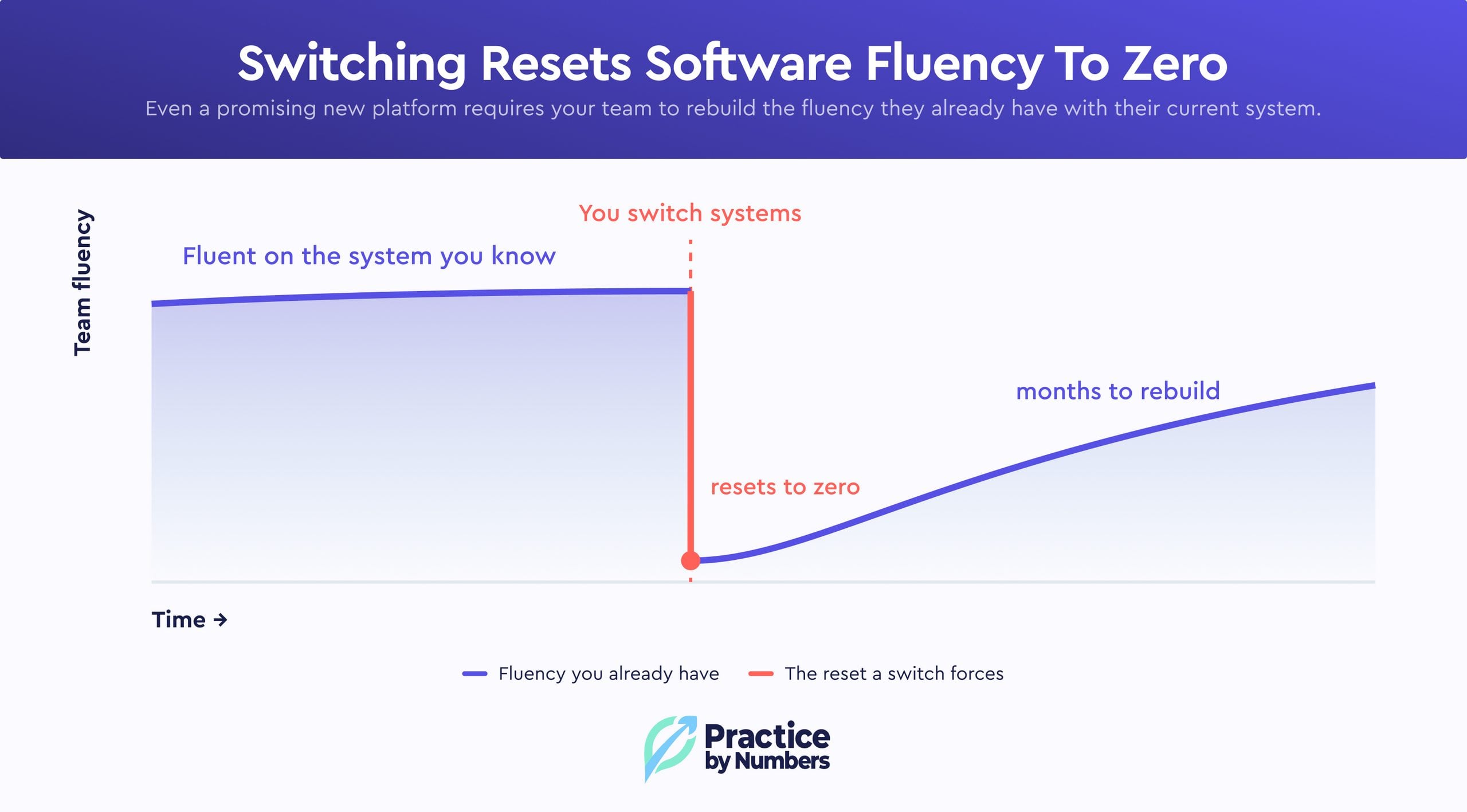
If you’re already on Eaglesoft, don’t underestimate the value of familiarity. A team that knows a system by heart works faster, makes fewer mistakes, and trains new people more easily than a team six months into an unfamiliar platform.
Switching resets that fluency to zero. That doesn’t mean you should never change; it means the comfort and speed your team already has is a real asset worth weighing against whatever a new system promises.
When It’s Not Really a Software Problem
A lot of practices start searching for new software when their current setup feels like a mess. When a practice starts feeling disorganized, it’s natural to blame the software. You may be dealing with:
- Duplicate entries
- Confusing or messy ledgers
- Reports that don’t seem to add up
- Inconsistent information across the system
But these problems aren’t always caused by the software itself. Often, they come from how the system is being used day to day.
A new system doesn’t automatically fix old habits.
Switching platforms can feel like a fresh start. At first, everything may look cleaner and more organized. But if the team continues working in the same way, the same problems can return within a few months.
Before deciding to switch, it may be worth focusing on two things:
- Clean up the existing data so the system starts from a more organized place.
- Train the team so everyone understands how the platform should be used consistently.
In many cases, these steps can solve the problems the current software is already capable of handling.
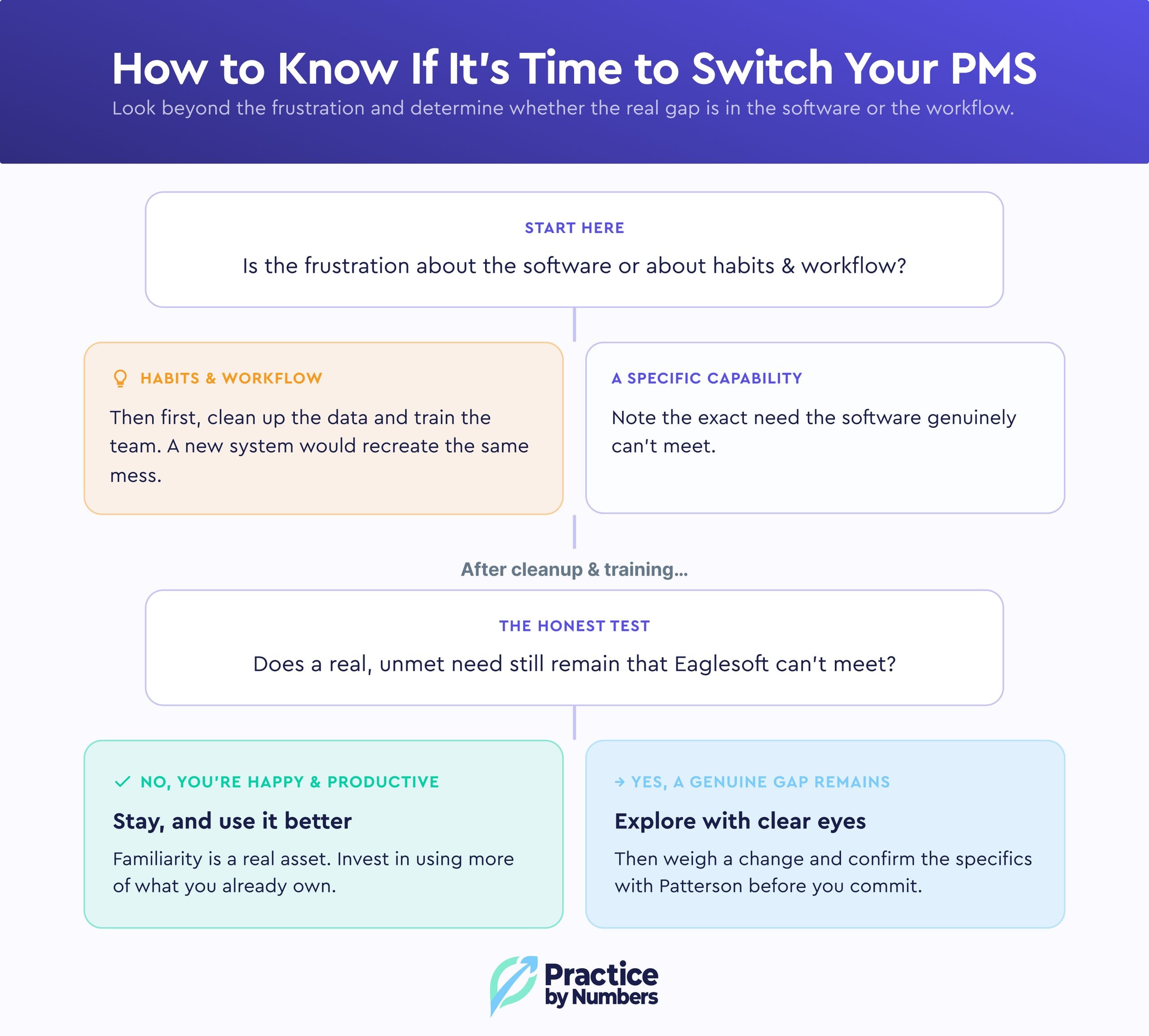
The honest test is this: after you’ve cleaned things up and trained your team, is there still a real need the software genuinely can’t meet? If yes, a change may be the right call. If not, the urge to switch may fade on its own.
👉 See How to Fill Schedule Gaps Using Eaglesoft’s Quick Fill and Money Finder
A Simple Way to Decide
You can boil the decision down to a few straightforward questions:
- Is our team trained and using the system consistently, or have we never really learned it?
- Are our current frustrations about the software, or about habits and workflows we could fix?
- Would the day-to-day get meaningfully better for our team, or just different?
- What’s the real cost (in training, time, and disruption) of changing?
- If we’re happy and productive today, is there a genuine reason to move?
If you’re content and productive on Eaglesoft, that’s often your answer. Stay, and invest in using it better. If a real, unmet need remains after training and cleanup, then explore your options with clear eyes, and confirm the specifics with Patterson before you commit.
How Practice by Numbers Fits Alongside Eaglesoft
Sometimes the thing you’re missing isn’t a whole new PMS, it’s better visibility or a more modern patient experience layered on top. Practice by Numbers connects to Eaglesoft and adds live analytics, patient communication like texting and reminders, online booking, and payments, without a migration. So you can gain what you’re missing while keeping the system your team already knows. If you decide Eaglesoft is the right home for your practice, PbN is a way to get more from it.