If you’ve been researching phone systems for your dental practice, you’ve probably come across the term VoIP. While it sounds technical, the concept is surprisingly simple. VoIP (Voice over Internet Protocol) lets your practice make and receive phone calls using an internet connection instead of traditional landline phone lines.
For dental offices, this means more than just replacing old desk phones. A modern VoIP system can reduce communication costs, help your front desk manage calls more efficiently, and connect directly with your practice management software to create a better patient experience.
Here’s how VoIP works and why more dental practices are making the switch.
- VoIP (Voice over Internet Protocol) lets businesses make and receive phone calls over an internet connection instead of traditional landlines.
- It works by converting your voice into digital data that travels over the internet and is converted back into audio almost instantly.
- Compared to traditional phone systems, VoIP is typically more affordable, easier to scale, and includes features like call routing, voicemail transcription, mobile access, and call recording.
- Most dental practices only need reliable internet, VoIP-compatible devices, and a business VoIP provider to get started.
- When integrated with dental software, VoIP can streamline patient communication by connecting calls with patient records and practice workflows.
How VoIP Works
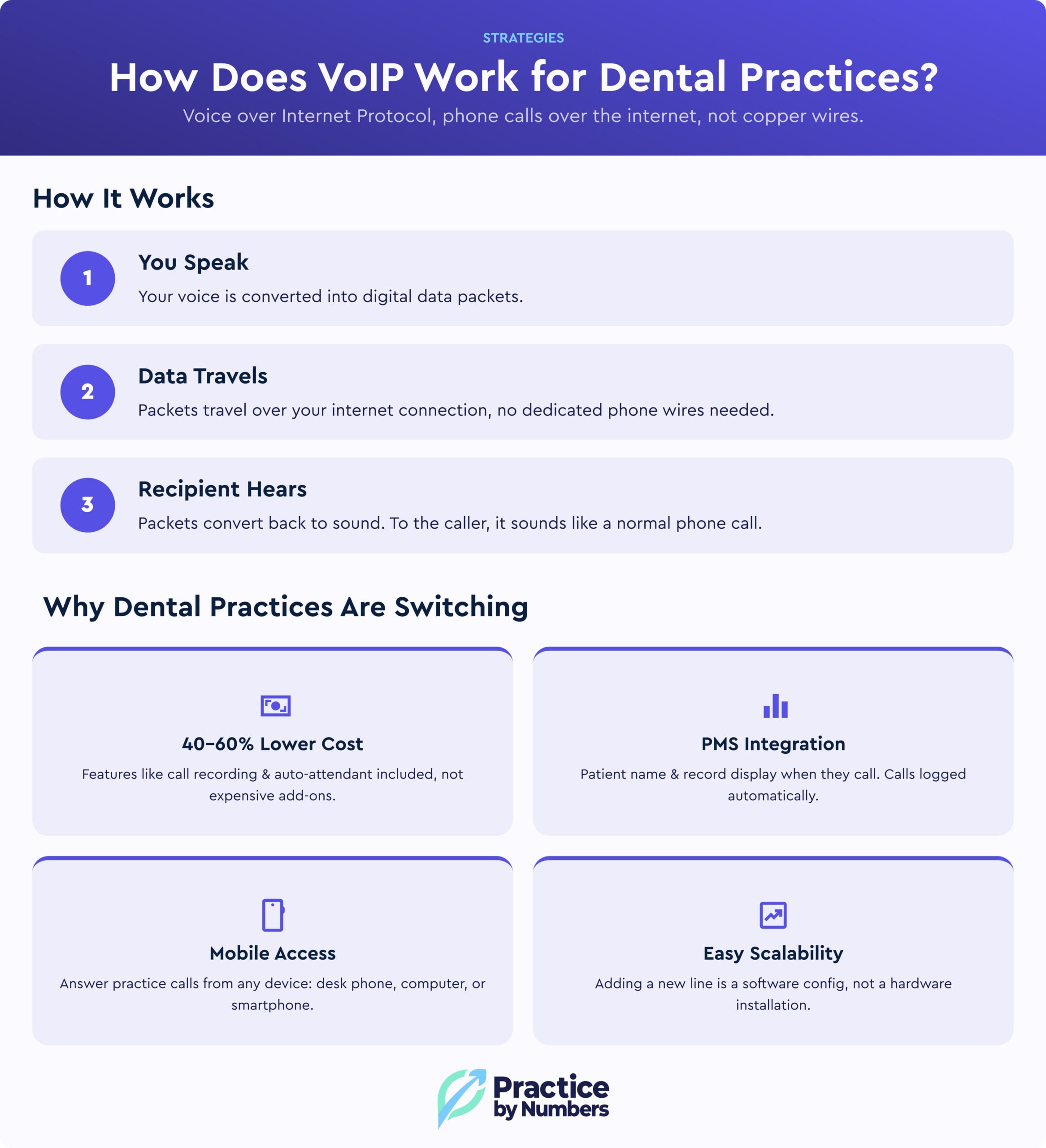
When you speak into a VoIP phone, your voice is turned into digital data. That data travels over the internet to the person you’re calling, where it’s turned back into sound. It happens instantly to both people; it sounds and feels like a normal call.
The big difference is the wiring. Old phone lines use dedicated copper wires maintained by a phone company. VoIP uses the internet connection you already have. So you don’t need separate phone wiring, just reliable internet and VoIP-ready devices like desk phones, computer headsets, or a mobile app.
Your team can answer calls using:
- VoIP desk phones
- Computer softphones with headsets
- Mobile apps on smartphones or tablets
Because the system is cloud-based, staff can stay connected whether they’re at the front desk, working remotely, or covering multiple practice locations.
👉 Learn How to Diagnose Front-Desk Conversion Loss Without Listening to a Single Recording
Why Dental Practices Are Switching to VoIP
For many practices, switching to VoIP isn’t just about replacing a phone system, it’s about improving how patient communication works from the first call onward.
1. Lower Operating Costs
Traditional business phone systems often charge separately for features like additional extensions, voicemail, call forwarding, conference calling, or recording. VoIP providers typically bundle these capabilities into one predictable monthly subscription, reducing both equipment costs and ongoing maintenance expenses.
2. Better Call Management
Dental offices handle appointment scheduling, emergencies, insurance questions, treatment follow-ups, and new patient inquiries every day. VoIP systems help organize those conversations with features such as:
- Auto-attendants that direct callers to the right department
- Intelligent call routing
- Call queues during busy hours
- Voicemail-to-email or voicemail-to-text
- Call recording for quality assurance and staff coaching
Instead of missed opportunities, practices can respond faster and create a more consistent patient experience.
3. Integration With Your Dental Software
This is where VoIP becomes especially valuable for dental practices. Rather than functioning as a standalone phone system, many modern VoIP platforms integrate with your practice management software or patient communication platform. That allows your team to:
- Instantly identify who’s calling
- View patient records before answering
- Automatically log phone activity
- Separate new patient calls from existing patient calls
- Reduce manual data entry
Staff spend less time searching for information and more time helping patients.
4. Easy to Scale As Your Practice Grows
Need another phone extension for a new treatment coordinator? Opening a second location? Hiring another front desk team member?
With traditional phone systems, those changes often require additional hardware and on-site installation. With VoIP, adding users, extensions, or locations is usually done through a simple software dashboard, making it much easier to scale as your practice grows.
What You Need to Get Started
One of the biggest misconceptions about VoIP is that it requires complicated infrastructure. In reality, most dental offices already have everything needed to make the switch.
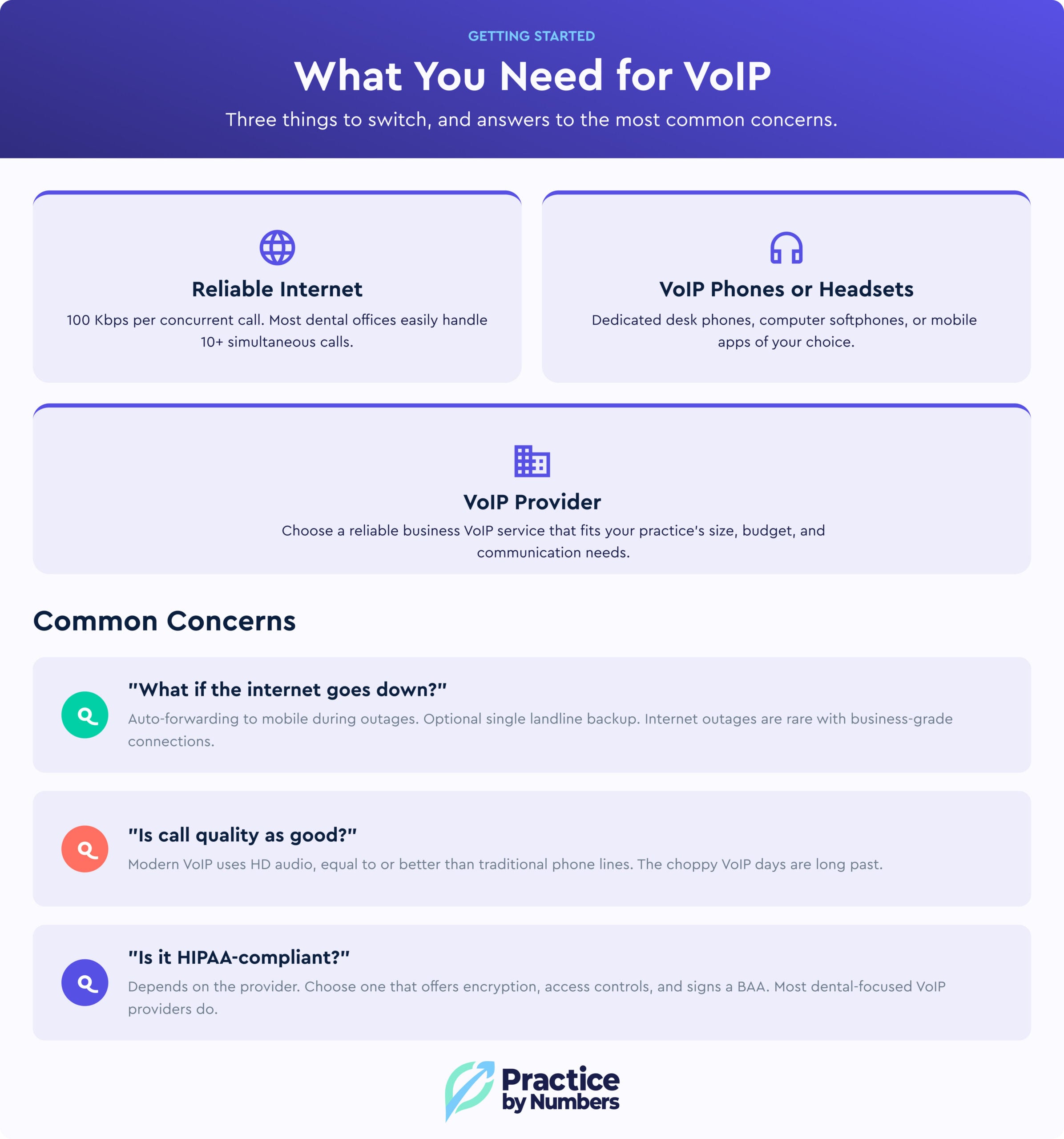
- Reliable internet connection: A stable business internet connection is the foundation of VoIP. Fortunately, voice calls use relatively little bandwidth, so even small and mid-sized dental practices can comfortably support multiple simultaneous calls without affecting daily operations.
- VoIP-compatible devices: You don’t necessarily need all new hardware. Many practices choose a mix of:
- Dedicated VoIP desk phones
- Wireless headsets for reception staff
- Computer softphones
- Mobile apps that let team members answer office calls securely from anywhere
This flexibility makes it easier for staff to stay available throughout the workday.
- A business VoIP provider: The final piece is choosing a provider that supports healthcare workflows. Many dental practices prefer solutions designed specifically for dentistry because they integrate with practice software, simplify patient communication, and reduce the need for multiple disconnected systems.
👉 Learn How to Streamline Dental Office Communication & Scheduling
Common Concerns Addressed
Even after learning how VoIP works, many dental practices have questions about reliability, call quality, and security. Here are the concerns we hear most often and what you should know before making the switch.
“What if the internet goes down?”
This is one of the most common questions practices ask. Modern VoIP providers include automatic failover options that instantly forward incoming calls to designated mobile phones or alternate numbers if your internet service becomes unavailable.
Many practices also use backup internet connections or battery backups for additional peace of mind.
“Will call quality be as good as a landline?”
Yes.
With a stable business internet connection, modern VoIP systems typically provide HD voice quality that’s as good as or often better than traditional landline service. The poor-quality internet calls people remember from years ago are largely a thing of the past.
“Is VoIP HIPAA-compliant?”
VoIP itself isn’t automatically HIPAA-compliant. Compliance depends on how the provider stores, transmits, and protects patient information.
When evaluating providers, look for features such as:
- Encrypted voice communications
- Secure user authentication
- Access controls
- Audit logs
- A signed Business Associate Agreement (BAA)
These capabilities help support HIPAA requirements when patient information is involved.
Go Beyond Basic Business VoIP with PbN Voice
A standard business VoIP system lets you make and receive calls over the internet. PbN Voice builds on that by connecting every call to your practice management workflow.
When a patient calls, your team can instantly see key information such as the patient’s name, upcoming and past appointments, balances, and notes without searching through your PMS. Calls, voicemails, and text conversations are also logged back to the patient’s record, giving your team a complete communication history in one place.
PbN Voice also includes features designed specifically for dental practices, including smart call routing, voicemail-to-text, call analytics, browser and mobile calling, and the ability to manage communications across multiple locations from a single system. Rather than operating as a standalone phone service, it becomes part of your everyday patient communication workflow.
For practices that want additional insights, PbN Call AI works alongside PbN Voice by automatically transcribing calls, generating AI summaries, and providing call scoring and analytics to help teams improve patient conversations and identify missed opportunities.
👉 Here’s How You Can Transform Your Dental Practice Communication With PbN Voice