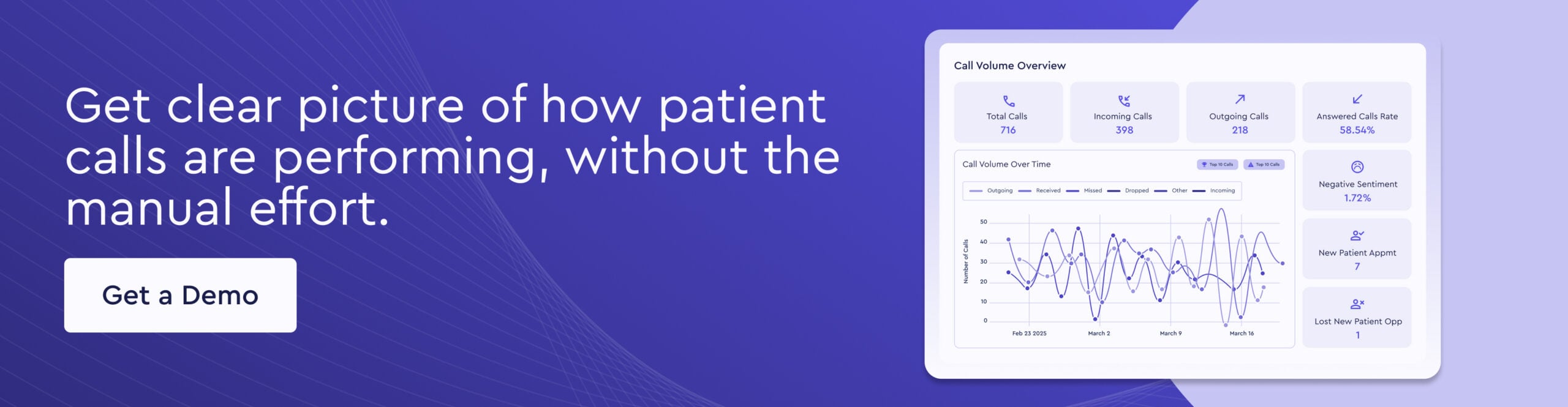
Your front desk lost 3 appointments today, and no one knows it happened. Here’s how to find exactly where calls are breaking down, and fix it, without sitting through hours of recordings.
A new patient calls. The front desk picks up. The call ends. No appointment booked, no one flags it, no one investigates it. Life goes on. Multiply that by five, ten, or twenty calls a week, and you’ve got a significant revenue problem existing entirely below the surface which is invisible to everyone, including you.
The traditional response is: “Let’s listen back to some calls.” Good instinct. Extensive method. Nobody has time to sit through hours of recordings hoping to spot patterns. There’s a better way, and it doesn’t require listening to a single call.
TL;DR
- Most dental practices track appointments booked, not opportunities lost.
- Front-desk conversion loss often hides in missed calls, inconsistent communication, and poor patient experiences.
- Manual call reviews are too time-consuming to scale effectively.
- AI-powered call transcription, summaries, sentiment analysis, and analytics help practices uncover hidden conversion leaks fast.
- Weekly review habits can improve booking rates, coaching, and patient experience.
- PbN Call AI helps practices turn phone conversations into actionable operational insights.
Why Does Front-Desk Conversion Loss Go Undetected?
Most practices measure outcomes, not communication quality. They track:
- Production
- Collections
- Scheduled appointments
- Hygiene retention
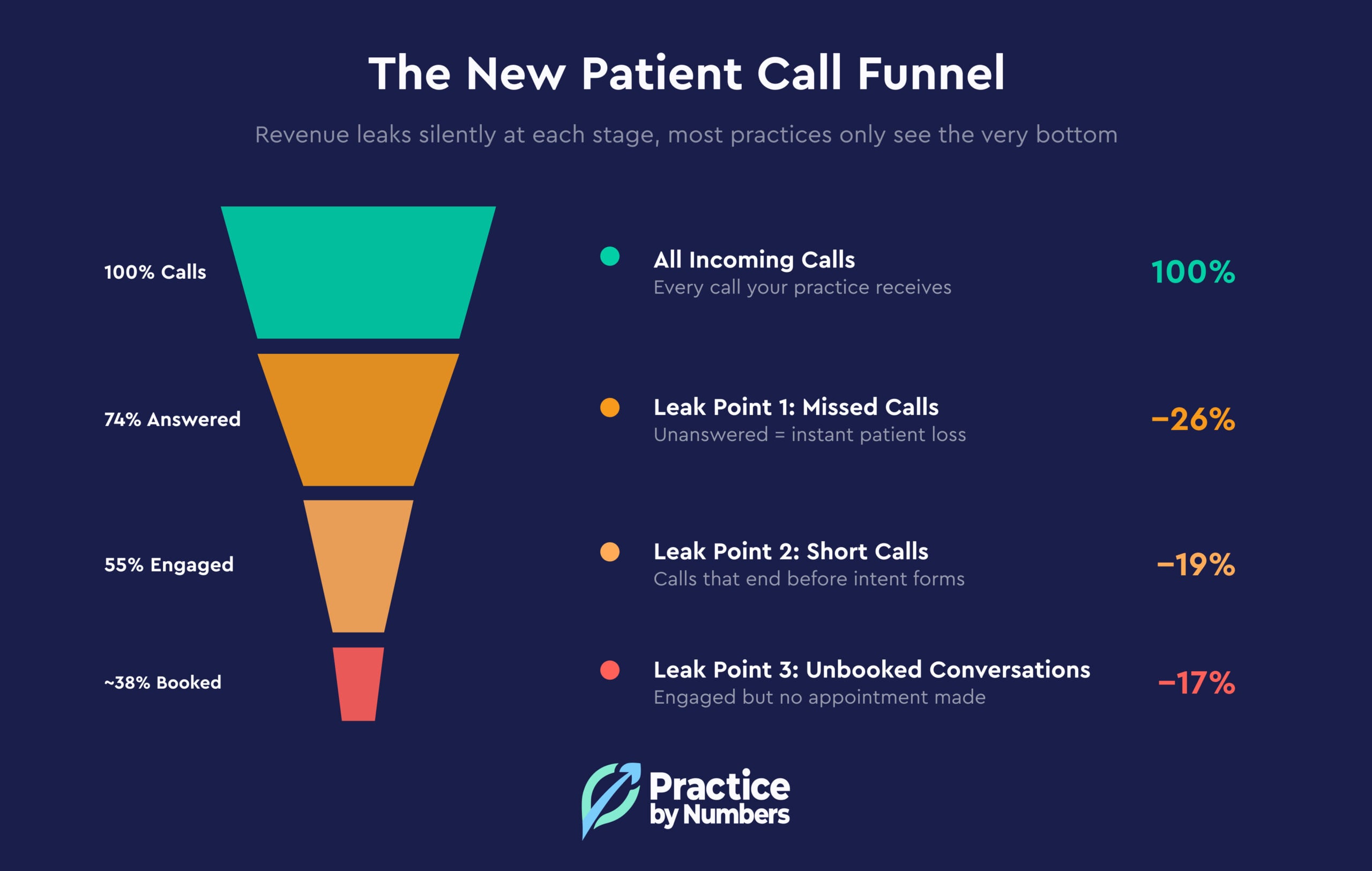
But very few track the gap between incoming calls and actual bookings. That gap is where conversion loss lives. Common issues include:
- Unanswered calls during busy hours
- Inconsistent scripting
- Rushed insurance conversations
- Weak handling of objections
- Failure to confidently ask for the appointment
These problems rarely appear in standard reports. Yet they directly affect revenue, patient experience, and practice growth. That gap is where the money goes. And it has specific, identifiable causes if you know where to look.
Why Manual Call Reviews Don’t Scale
Most dental teams know phone conversations matter. The challenge is time. Listening to recordings manually is:
- Slow
- Inconsistent
- Difficult to scale
- Emotionally subjective
Even practices that review calls usually sample only a small percentage of conversations. That makes it hard to identify recurring patterns or operational trends. By the time a problem becomes obvious, it has often been happening for months.
This is where AI changes the process. Instead of manually searching for issues, practices can automatically surface missed opportunities, negative interactions, and coaching trends across every call.
The result is faster visibility with far less effort.
How AI Call Analysis Helps Identify Conversion Problems
AI-powered call analysis turns patient conversations into measurable operational insights. Instead of listening to full recordings, managers can instantly review:
- Call summaries
- Booking outcomes
- Patient concerns
- Objections
- Sentiment trends
- Missed opportunities
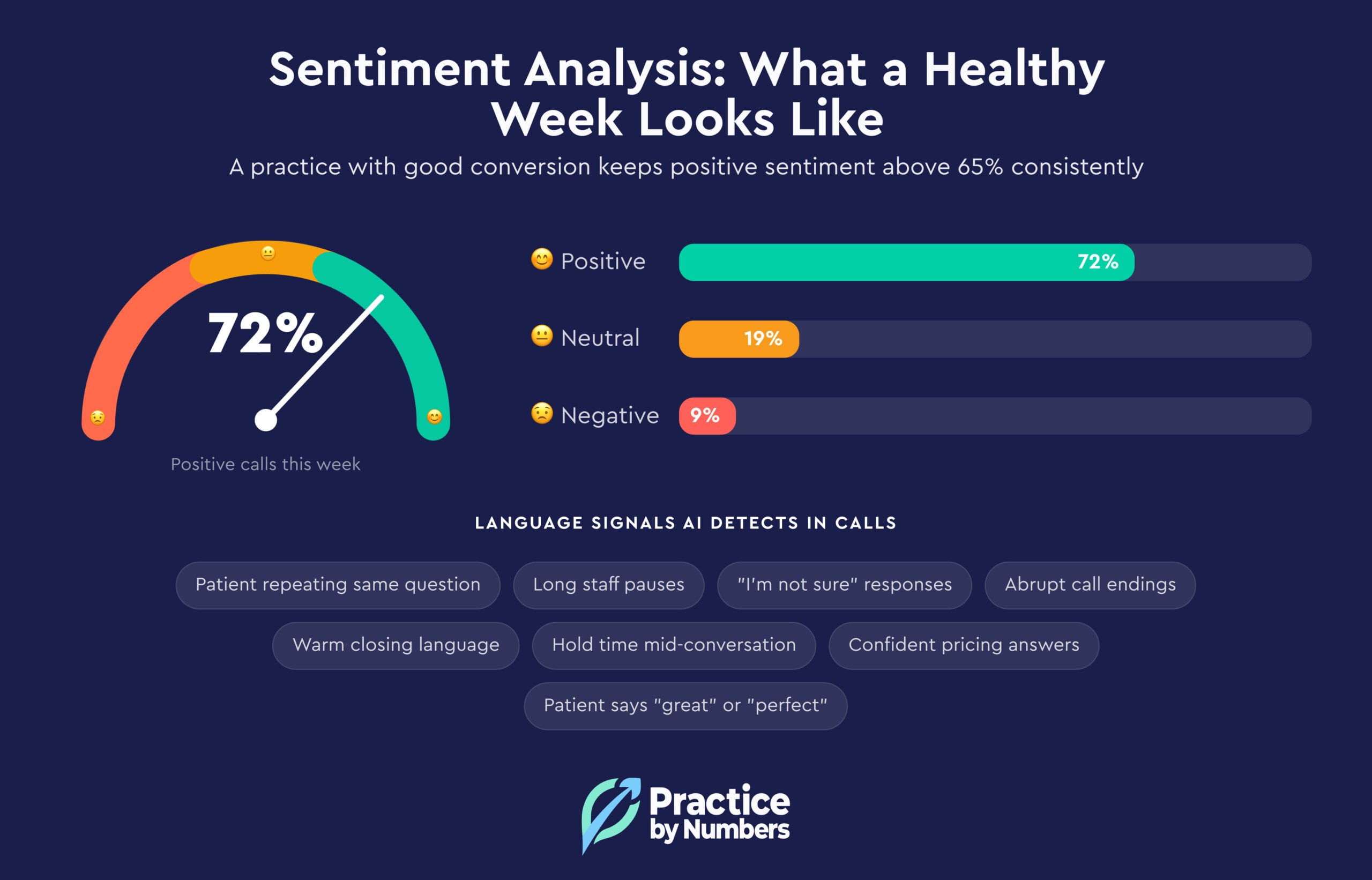
AI-generated summaries reduce hours of review into quick, actionable snapshots. Call transcription creates searchable archives, making it easy to verify conversations or revisit important details. Sentiment analysis helps identify emotionally negative interactions before they turn into lost patients or poor reviews.
Together, these insights help practices understand not just what happened on calls, but why patients failed to convert.
The Coaching Advantage Most Practices Miss
Front-desk coaching is often reactive and subjective. Managers typically step in only after:
- Complaints
- Scheduling issues
- Poor production
- Negative reviews
AI-powered call insights create a more objective coaching system. Instead of vague feedback like: “You need to improve phone skills,” managers can identify:
- Where conversations lose momentum
- Which objections reduce bookings
- Which scripts perform best
- Which team members convert most consistently
This creates:
- Clearer expectations
- Faster onboarding
- Measurable coaching
- Better accountability
The goal isn’t micromanagement. It’s helping teams improve using real conversational data instead of guesswork.
Building a Simple Weekly Conversion Review Routine
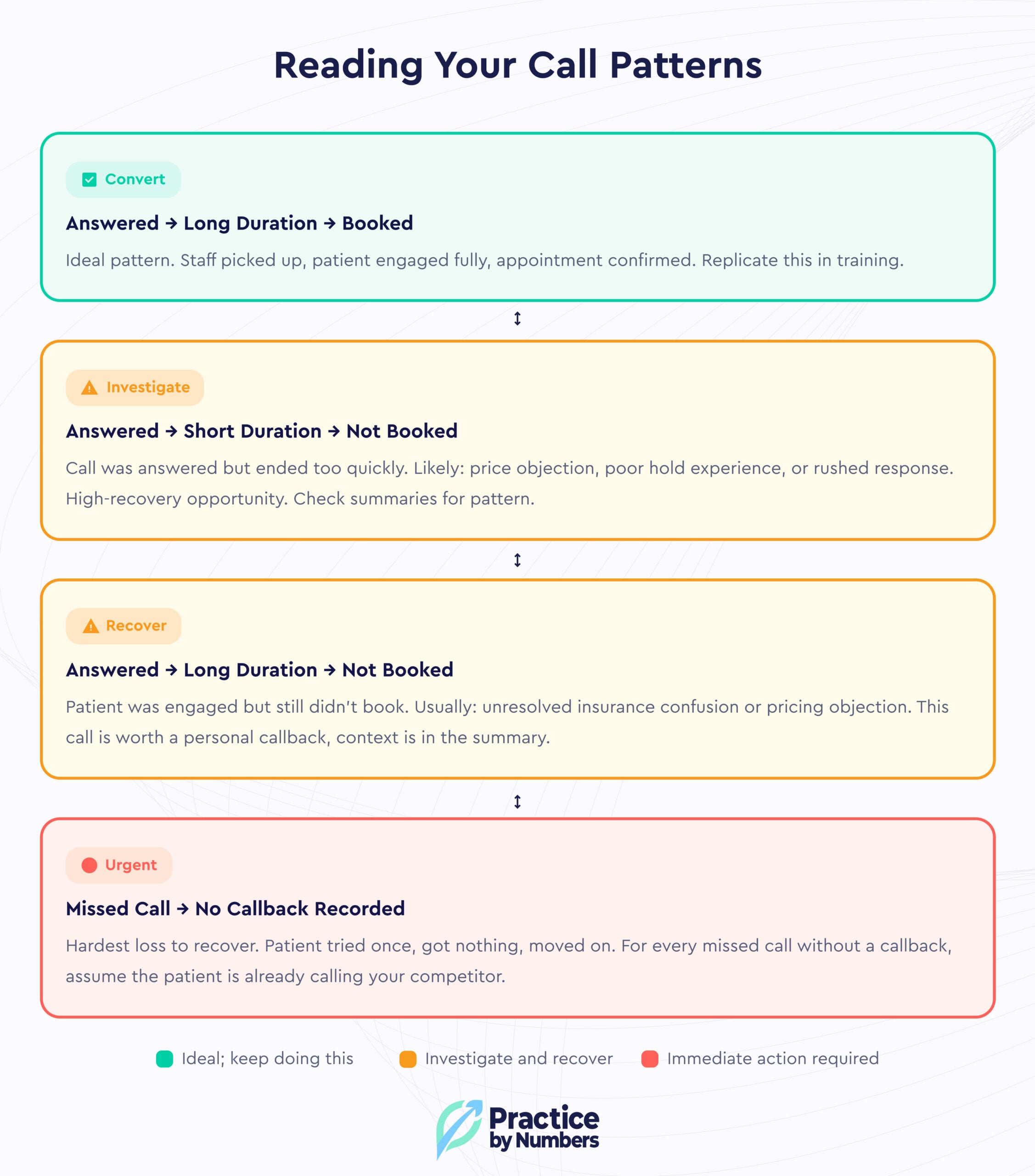
You don’t need hours of reporting to improve front-desk conversion. A simple weekly review process can uncover major opportunities. Focus on four questions:
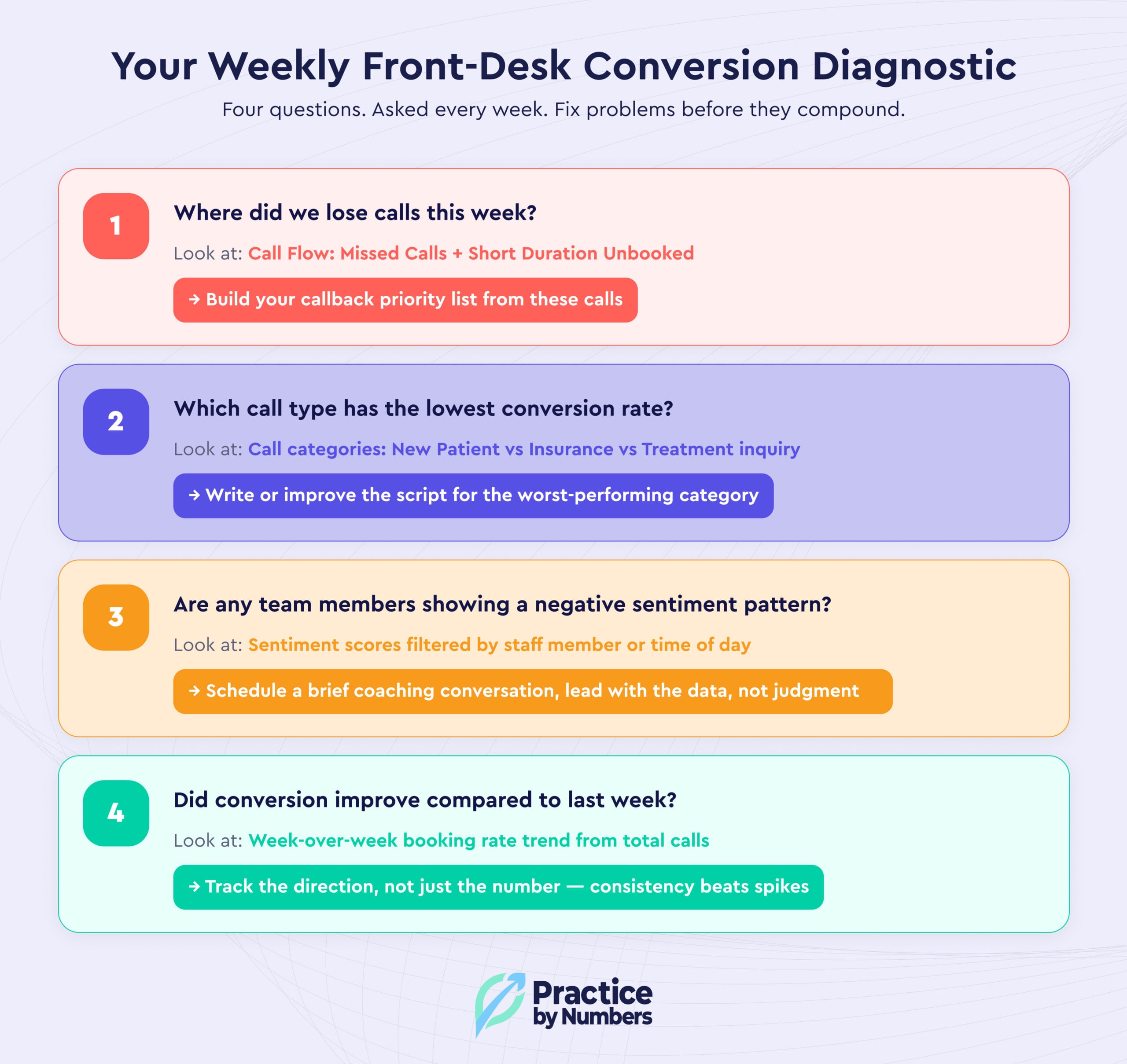
Over time, these small reviews create a proactive system for improving communication performance consistently.
Practice by Numbers Call AI: What It Actually Helps Practices Do
PbN Call AI is designed for practices that want better visibility into patient communication without manually reviewing hundreds of calls.
For practices with PbN Voice integration, high call volume, or multi-provider teams, Call AI helps managers understand what’s happening on the phones in real time.
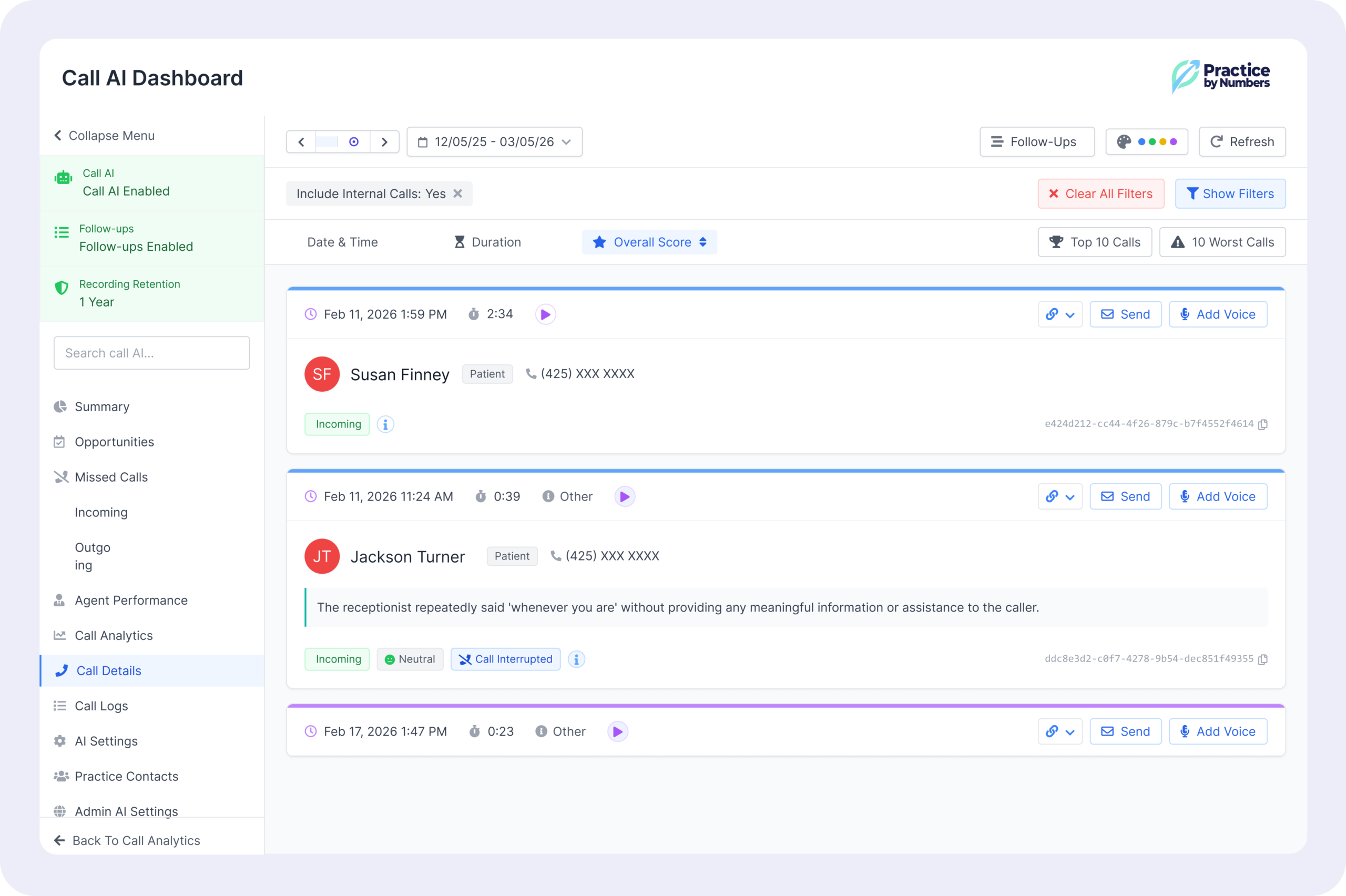
Key capabilities include:
- Automatic Call Transcription
Every patient conversation is transcribed and stored in a searchable archive, making it easy to verify details, revisit conversations, and identify trends without replaying recordings. - AI-Generated Call Summaries
Stakeholders get quick summaries covering patient concerns, booking outcomes, objections, and follow-up needs in seconds instead of reviewing full calls manually. - Sentiment Analysis & Alerts
AI detects negative sentiment, frustration, or escalation risks and alerts managers before poor experiences turn into lost patients or negative reviews. - Call Performance Analytics
Track call volume, missed calls, conversion patterns, peak-hour trends, and new-versus-returning patient behavior to uncover operational gaps and staffing issues.
Instead of relying on assumptions, practices gain measurable visibility into how phone conversations impact growth, patient experience, and revenue.
👉 See The Complete PbN AI Guide
The Shift That Makes the Biggest Difference
Most practices assume growth problems start with marketing. But often, the real issue is what happens after the phone rings. A practice can invest heavily in ads, referrals, SEO, and patient acquisition, yet still lose opportunities because conversations aren’t converting consistently.
The good news is that these problems are usually fixable once they become visible. When practices start reviewing communication trends regularly, they make smarter staffing decisions, coach teams more effectively, improve patient experience, and recover revenue that was quietly slipping away every week.
The goal isn’t to monitor every call obsessively. It’s to create enough visibility to spot patterns early and improve continuously. Because the practices that scale successfully aren’t always the ones getting the most calls. They’re the ones converting the calls they already have.