Every interaction with a patient generates important information, from health histories and clinical notes to treatment plans, consent forms, and follow-up conversations. Keeping this information organized and accurate is a fundamental part of running a successful dental practice.
Good dental record keeping isn’t just an administrative task. It supports better patient care, smoother day-to-day operations, and helps practices meet legal and regulatory requirements.
Fortunately, maintaining compliant records isn’t about writing more. It’s about documenting consistently, protecting patient information, and following clear processes across your practice.
Here’s what every dental practice should know.
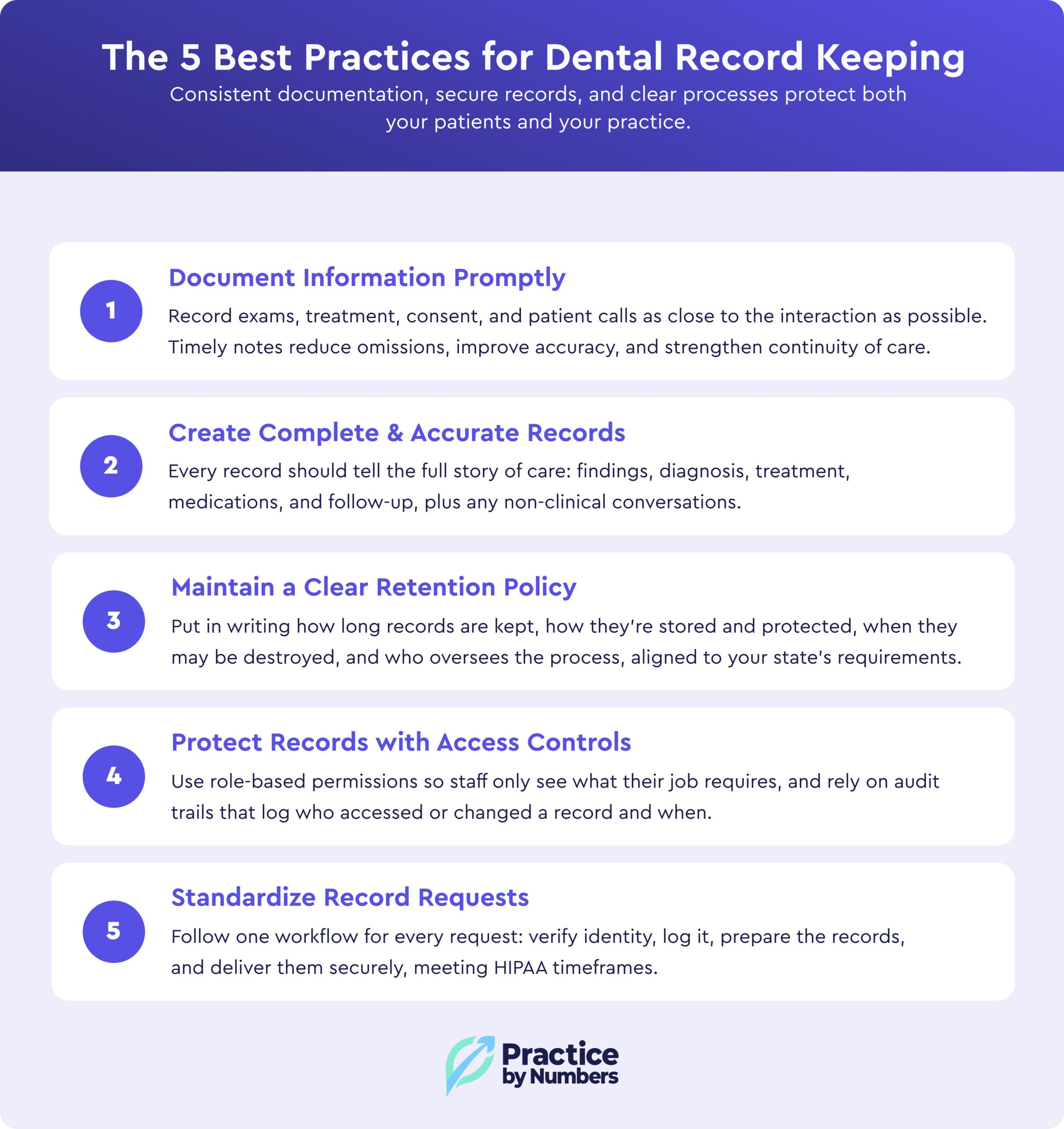
- Document patient information as close to the time of care as possible to improve accuracy and maintain a complete clinical record.
- Every record should clearly document the patient’s condition, treatment provided, clinical decisions, and follow-up instructions.
- Create a written record retention policy that aligns with your state’s requirements and applies consistently across the practice.
- Protect patient information with role-based access controls, audit logs, and secure record management.
- Establish a standardized process for responding to patient and authorized third-party record requests while meeting applicable HIPAA requirements.
What Is Dental Record Keeping?
Dental record keeping is the process of documenting, storing, protecting, and maintaining information related to a patient’s care throughout their relationship with your practice.
A complete dental record typically includes clinical documentation, medical and dental histories, treatment plans, diagnostic images, consent forms, prescriptions, billing information, and records of patient communications. Together, these records create a comprehensive history that supports informed clinical decisions and coordinated care over time.
Whether your practice uses electronic health records (EHRs), paper charts, or a combination of both, the goal remains the same: maintain accurate, complete, and accessible patient records throughout their lifecycle.
👉 See How a Fragmented Tech Stack Holds Dental Practices Back
Why Dental Record Keeping Matters
Accurate record keeping benefits every part of your practice.
- For clinicians: Detailed records provide the context needed to make informed treatment decisions and ensure continuity of care, even when multiple providers are involved.
- For administrative teams: Complete documentation supports accurate billing, insurance claims, and patient communication while reducing the likelihood of errors or missing information.
Well-maintained records also help practices demonstrate that appropriate care was provided if questions arise from patients, insurers, or regulatory agencies. At the same time, secure record management and appropriate access controls support compliance with HIPAA and other applicable regulations designed to protect patient information.
Simply put, good records protect both your patients and your practice.

The 5 Best Practices for Dental Record Keeping
Maintaining compliant dental records doesn’t require complicated processes, it requires consistent ones.
By following a few core best practices, your team can create records that are accurate, secure, easy to access, and ready when they’re needed for patient care, billing, or compliance. The sections below cover the five essential practices every dental office should follow.
1. Document Information Promptly
The most accurate dental records are created while details are still fresh.
Whether you’re documenting an examination, treatment, informed consent, or a phone conversation with a patient, recording information as close to the time of the interaction as possible reduces omissions and improves accuracy.
Timely documentation also strengthens continuity of care. If another provider sees the patient later that day or months later, they should be able to understand exactly what happened, why clinical decisions were made, and what follow-up is needed.
If providers regularly finish notes hours or days after appointments, it may indicate a workflow issue that’s worth addressing rather than simply reminding clinicians to document faster.
2. Create Complete and Accurate Patient Records
Every patient record should clearly tell the story of the care provided. Complete documentation helps other providers understand previous treatment, supports insurance claims, and creates a reliable record for future visits.
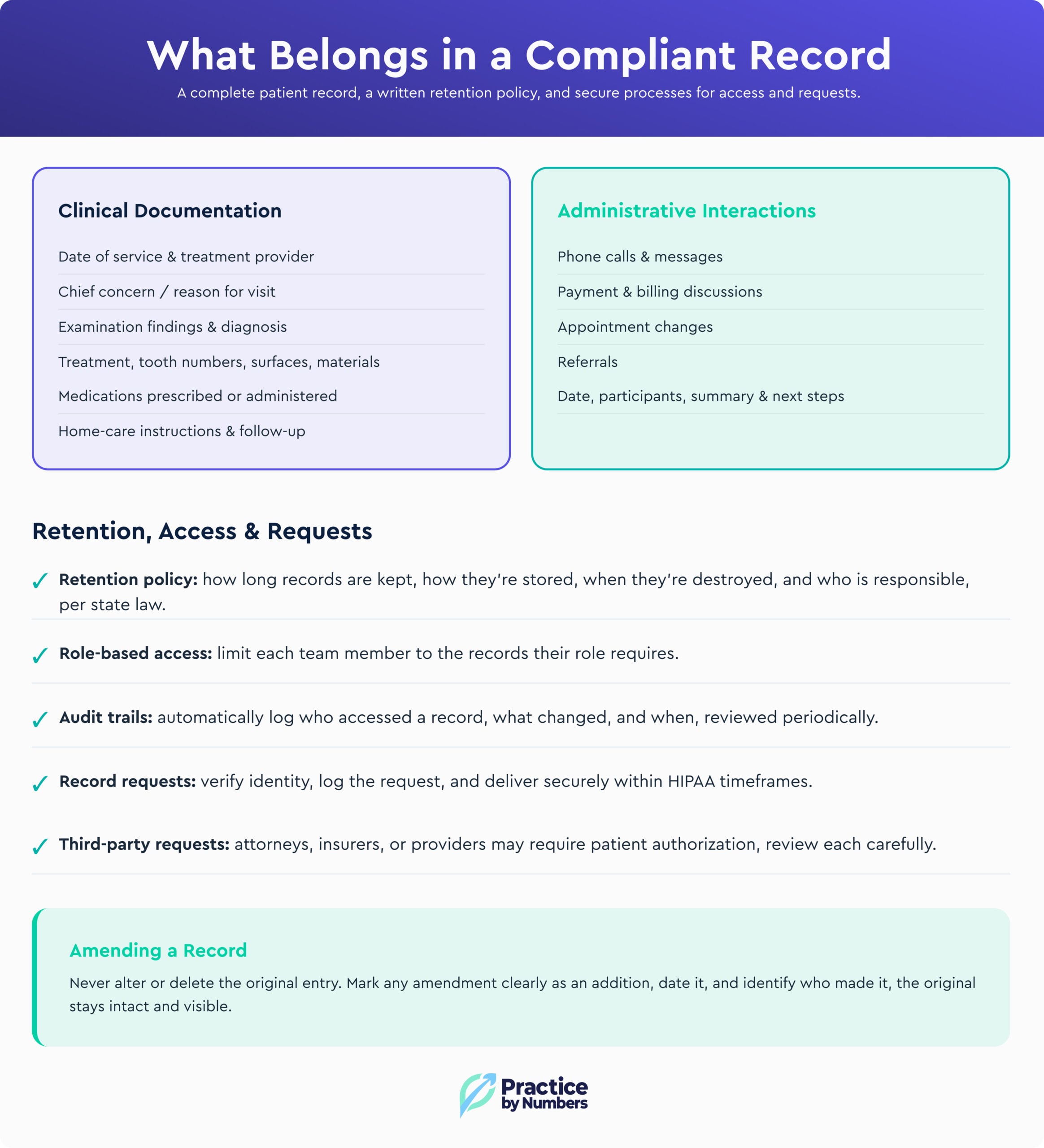
Clinical documentation should generally include:
- Date of service
- Treating or supervising provider
- Patient’s chief concern or reason for the visit
- Examination findings
- Diagnosis or clinical assessment
- Treatment performed, including relevant tooth numbers, surfaces, and materials when applicable
- Medications prescribed or administered
- Post-operative or home-care instructions
- Recommended follow-up or next appointment
Administrative interactions are equally important.
Phone calls, payment discussions, appointment changes, referrals, and other non-clinical communications should also be documented with the date, participants, summary of the conversation, and any agreed next steps. These records often provide valuable context for future patient interactions.
3. Maintain a Clear Record Retention Policy
Creating complete records is only part of compliance. Practices also need a consistent plan for retaining and disposing of those records.
A written record retention policy should explain:
- How long are patient records retained
- How records are stored and protected
- When records may be securely destroyed
- Who is responsible for overseeing the process
Retention requirements vary by state and may differ for adult and minor patient records, so practices should ensure their policy reflects applicable laws and regulations.
Having a documented policy also helps create consistency across the practice and demonstrates that record management follows an established process rather than individual discretion.
👉 Learn How Top Practices Turn More Calls Into Appointments
4. Protect Patient Records with Access Controls
Protecting patient records is just as important as documenting them.
Not every team member needs access to every part of a patient’s record. Role-based permissions help limit access based on job responsibilities while reducing the risk of unauthorized viewing or changes.
Audit trails provide another important safeguard by automatically recording who accessed a record, what changes were made, and when those actions occurred. Reviewing these logs periodically helps practices identify unusual activity and strengthens overall data security.
Together, access controls and audit trails support both operational accountability and HIPAA compliance.
5. Establish a Standard Process for Record Requests
Every practice should have a clear process for responding to requests for patient records.
Patients generally have the right to access or obtain copies of their health information under HIPAA, and practices are expected to respond within the required timeframes established by the Privacy Rule.
A consistent workflow helps reduce delays and errors. That typically includes verifying the requester’s identity, documenting the request, preparing the appropriate records, and delivering them securely.
Requests from attorneys, insurance companies, or other healthcare providers may require patient authorization or fall under specific legal exceptions, so practices should review each request carefully before releasing records.
👉 See How Patient Relationship Management Boosts Practice Revenue
How Practice by Numbers Simplifies Dental Record Keeping
Maintaining compliant records becomes much easier when documentation is built into your daily workflows instead of relying on manual processes.
Practice by Numbers helps practices centralize patient information, digitize documentation, and maintain secure records that are easy to access when needed.
Through Smart Forms, patients can complete intake forms, medical histories, consent forms, and other documentation digitally before or during their visit. Once submitted, the information syncs directly with your PMS, reducing duplicate data entry and helping keep patient records complete and up to date.
As a cloud-based platform, Practice by Numbers also supports secure record management through role-based access controls, audit logs, and centralized patient information. By connecting documentation across your practice, it helps teams spend less time managing paperwork and more time focusing on patient care.