A prospective patient calls your practice ready to book. They ask about availability, insurance, treatment options, or pricing. The call seems routine, but within a few minutes, the opportunity is either secured on your schedule or lost to another practice.
The challenge is that most dental practices don’t know why those opportunities are won or lost.
Calls happen all day long, but very few practices have a consistent way to evaluate how those conversations are handled. Managers may review a handful of recordings each month. Team members receive feedback only when a problem is obvious. And when appointment numbers dip, practices are left guessing whether the issue is marketing, scheduling, staffing, or phone performance.
That’s the visibility gap.
In this playbook, we’ll break down the call handling habits that lead to higher conversion rates, the common mistakes that cost practices new patients, and how PbN call scoring helps teams turn more conversations into booked appointments.
TL;DR
- Every inbound call is a potential appointment, but most practices lack visibility into why calls convert or why they don’t.
- Top-performing practices measure key moments in every conversation, including patient discovery, objection handling, booking attempts, and follow-up capture.
- Manual call reviews are time-consuming, inconsistent, and impossible to scale across hundreds of monthly calls.
- Practice by Numbers Call AI automatically transcribes, summarizes, and analyzes patient conversations to uncover missed opportunities and patient concerns.
- PbN Call Scoring evaluates calls against consistent performance standards, helping practices identify coaching opportunities and replicate top-performing behaviors.
- Together, Call AI and Call Scoring turn phone conversations into actionable insights, helping practices improve team performance and convert more patient inquiries into booked appointments.
What Is Call Scoring?
Call scoring means reviewing phone calls against the same set of criteria every time, then writing down how each call did.
Instead of “that sounded fine,” you get a real answer: Did the team member ask for the appointment? Did they handle the insurance question? Did they get the caller’s name and number?
Good scoring answers three questions you can’t answer from gut feel:
- How are calls actually going across the whole team, not just the few you overheard?
- Which exact moments are costing you booked appointments?
- Is your coaching working, week over week?
The goal is not to grade staff for fun. It’s to find the few fixable habits that turn more callers into patients, and to coach them with proof in hand.
👉See How to Streamline Dental Office Communication & Scheduling
What Should You Score On Every Call?
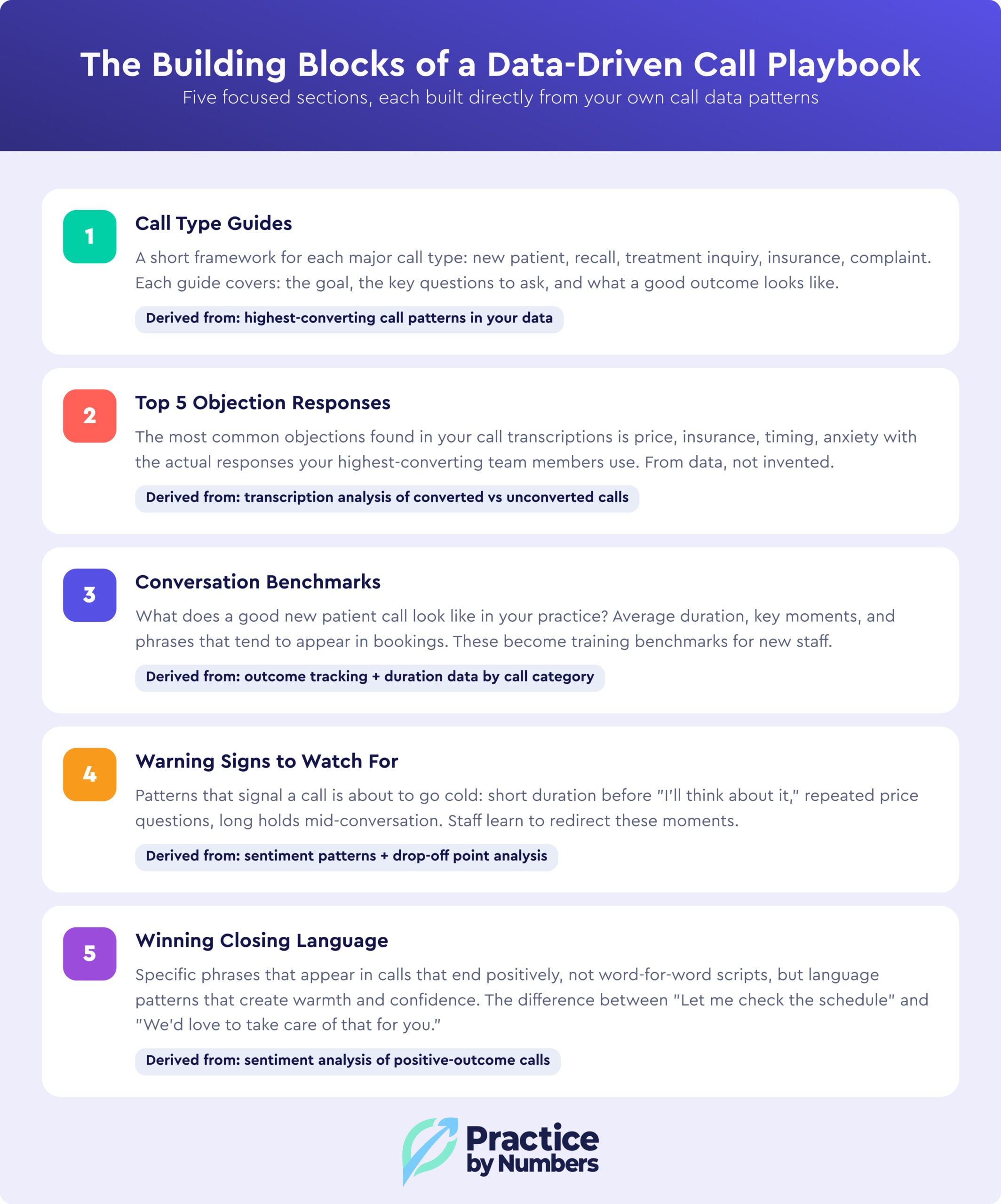
You don’t need 40 things to check. Five high-impact moments are easy to coach and easy for your team to remember.
- The greeting: Was the call answered fast and in a friendly, professional way? A rushed hello sets a bad tone for everything after.
- The discovery: Did the team member find out why the patient really called? Someone asking “how much is a cleaning” often has a bigger need behind it.
- The real question: Insurance, cost, and availability are the big three. This is where new patients drop off. Did they get a clear answer, or a vague “it depends”?
- The ask: Did the team actually ask for the appointment? This step gets skipped the most. A patient can get every answer and still hang up because nobody offered a time.
- The capture: If the caller didn’t book, did the team get a name and number for follow-up? An unbooked call with no contact info is a patient you can’t win back.
Score these five, and patterns jump out. Maybe greetings are great, but nobody asks for the appointment. Maybe one person nails insurance and another freezes. That’s the gap between guessing and knowing.
👉 See How Virtual Receptionists Improve Call Coverage in Dental Practices
The Most Common Reasons Patient Calls Fail To Convert
After analyzing thousands of patient interactions, several patterns emerge repeatedly.
1. Calls Are Answered Too Slowly: Patients calling multiple practices often choose the first office that responds professionally and promptly. Even a great patient experience can’t happen if the conversation never starts.
2. Team Members Focus on Transactions Instead of Conversations: Patients don’t always call with a straightforward scheduling request. They may have concerns about treatment costs, anxiety, insurance coverage, or timing. When staff members rush to scheduling without understanding the patient’s needs, opportunities can be missed.
3. No Clear Booking Attempt: One of the most common conversion killers is ending a call without presenting appointment options. The patient leaves the conversation interested but unscheduled.
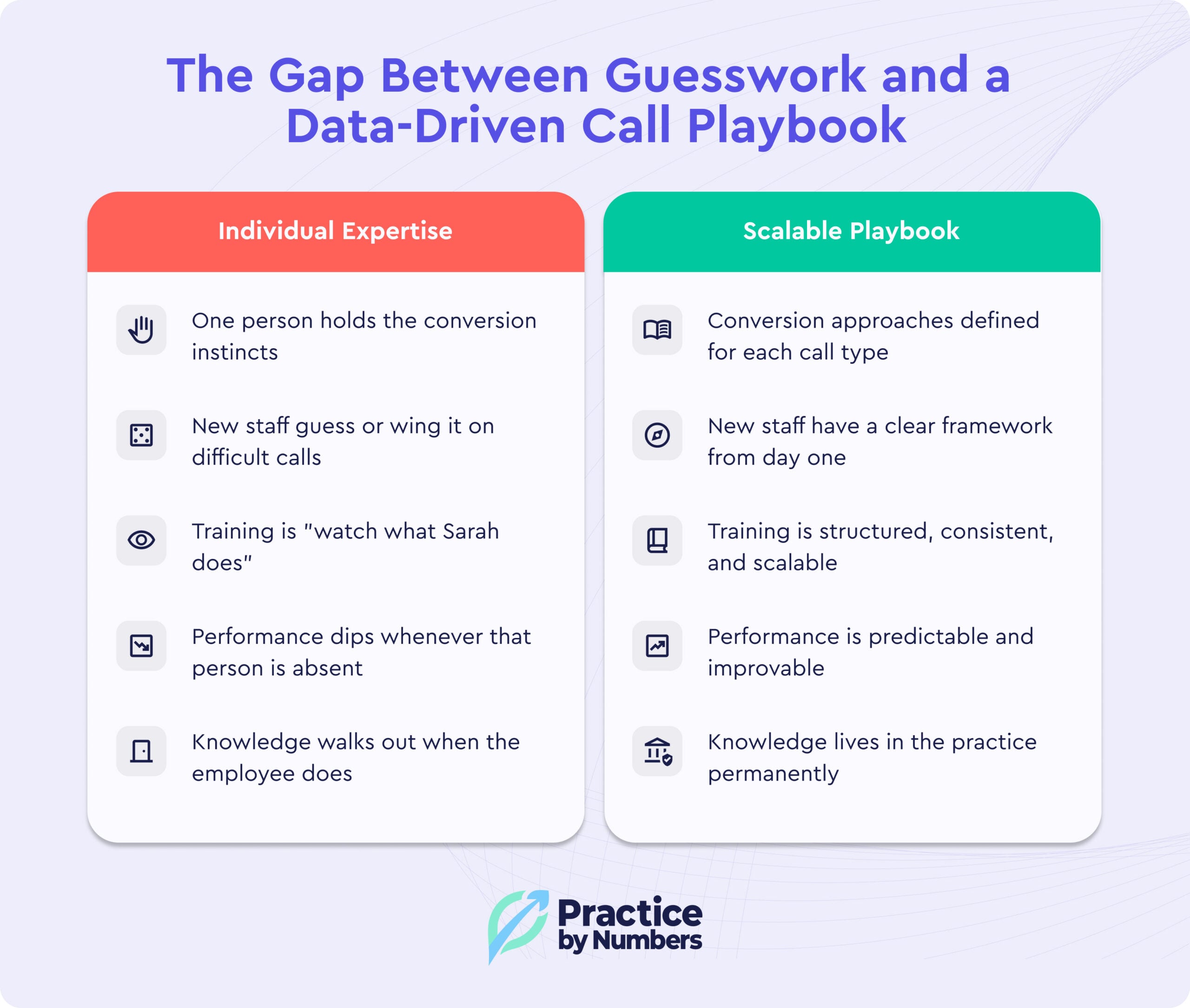
4. Inconsistent Processes: One team member follows best practices. Another handles calls differently. Without a standard framework, conversion rates vary dramatically depending on who answers the phone.
5. Lack of Coaching Visibility: If leaders don’t know which calls were successful and why, they can’t replicate winning behaviors across the team. Call scoring fixes the root problem. It gives every coaching talk a shared set of facts.
Why Manual Call Reviews Aren’t Enough
Many practices attempt to improve phone performance by listening to recordings periodically.
While helpful, manual reviews create several challenges:
- Only a small percentage of calls get reviewed
- Coaching is inconsistent
- Trends are difficult to identify
- Managers spend significant time evaluating conversations
- Performance issues are often discovered weeks later
As practices grow, these challenges become even more difficult to manage.
What starts as a handful of calls quickly becomes hundreds of conversations across multiple team members and locations.
At that scale, manual review simply isn’t sustainable.
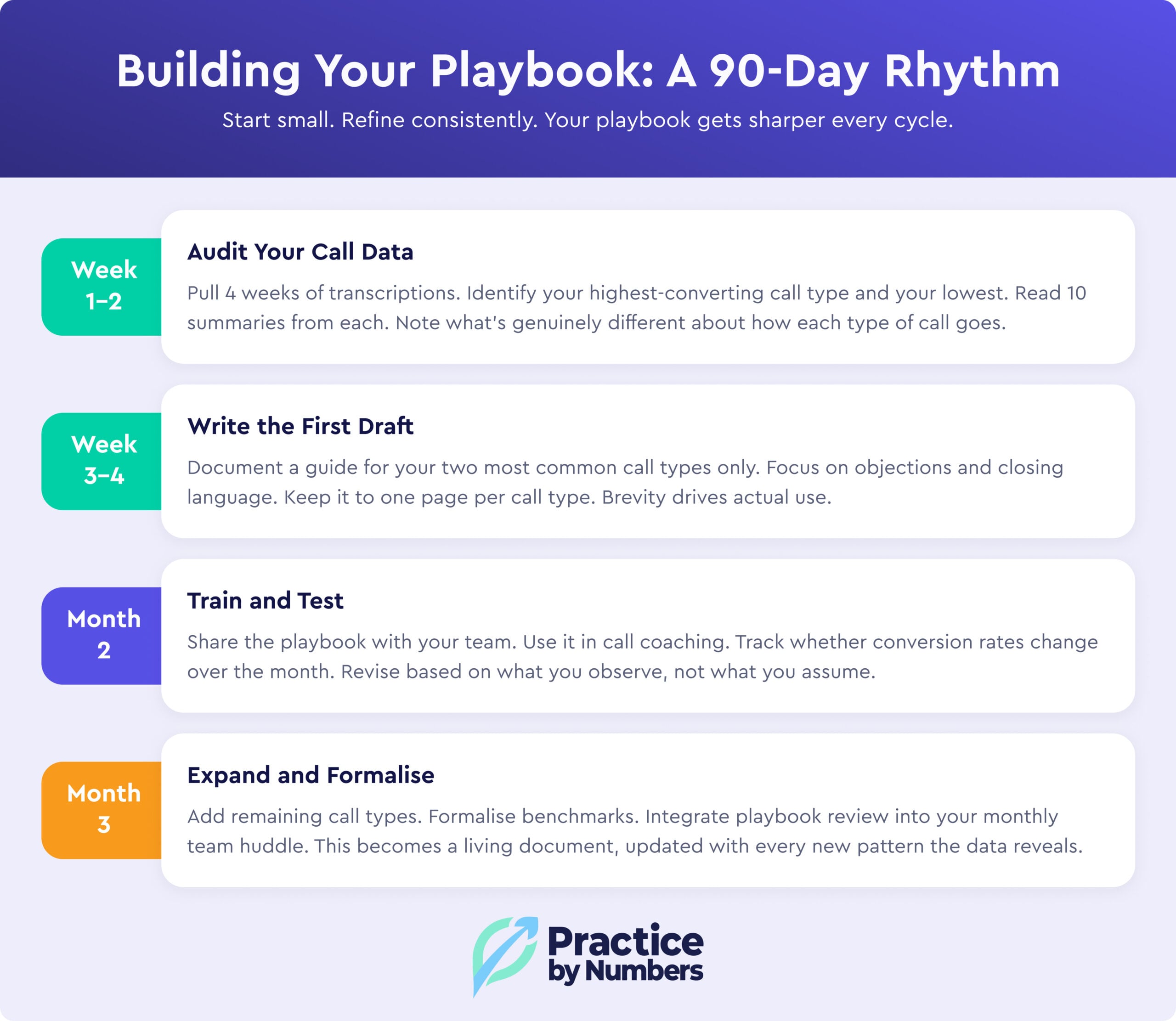
How Call AI And Call Scoring Create Visibility At Scale
Improving phone conversion starts with understanding what happens on every patient call and measuring how well those conversations support your practice goals.
Call AI and Call Scoring by Practice by Numbers provide the visibility needed to do both.
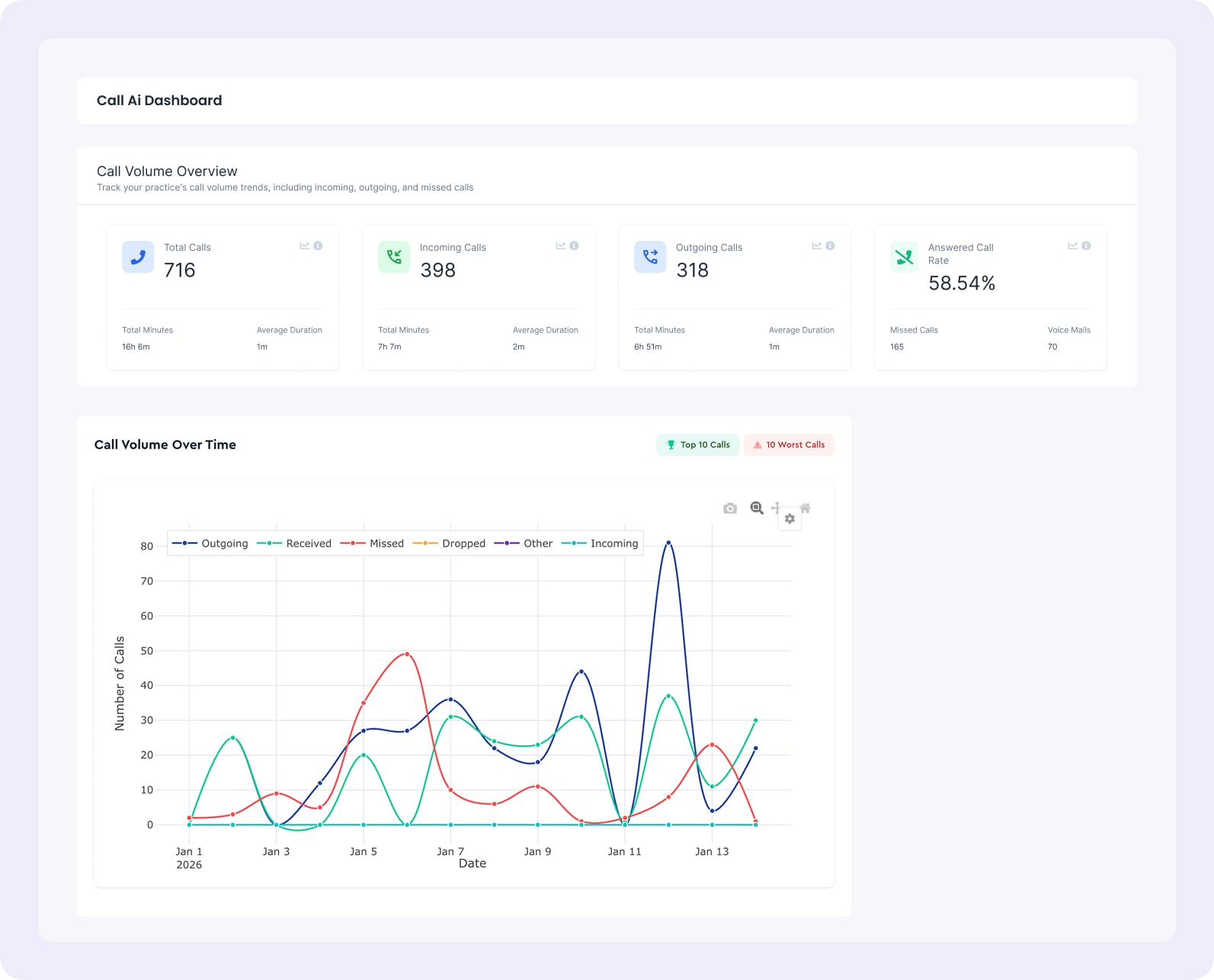
- Call AI automatically transcribes and summarizes patient conversations, making it easy to review interactions, identify patient concerns, and uncover missed opportunities without listening to hours of recordings.
- Call AI’s sentiment analysis helps flag negative experiences so managers can intervene quickly and protect patient relationships.
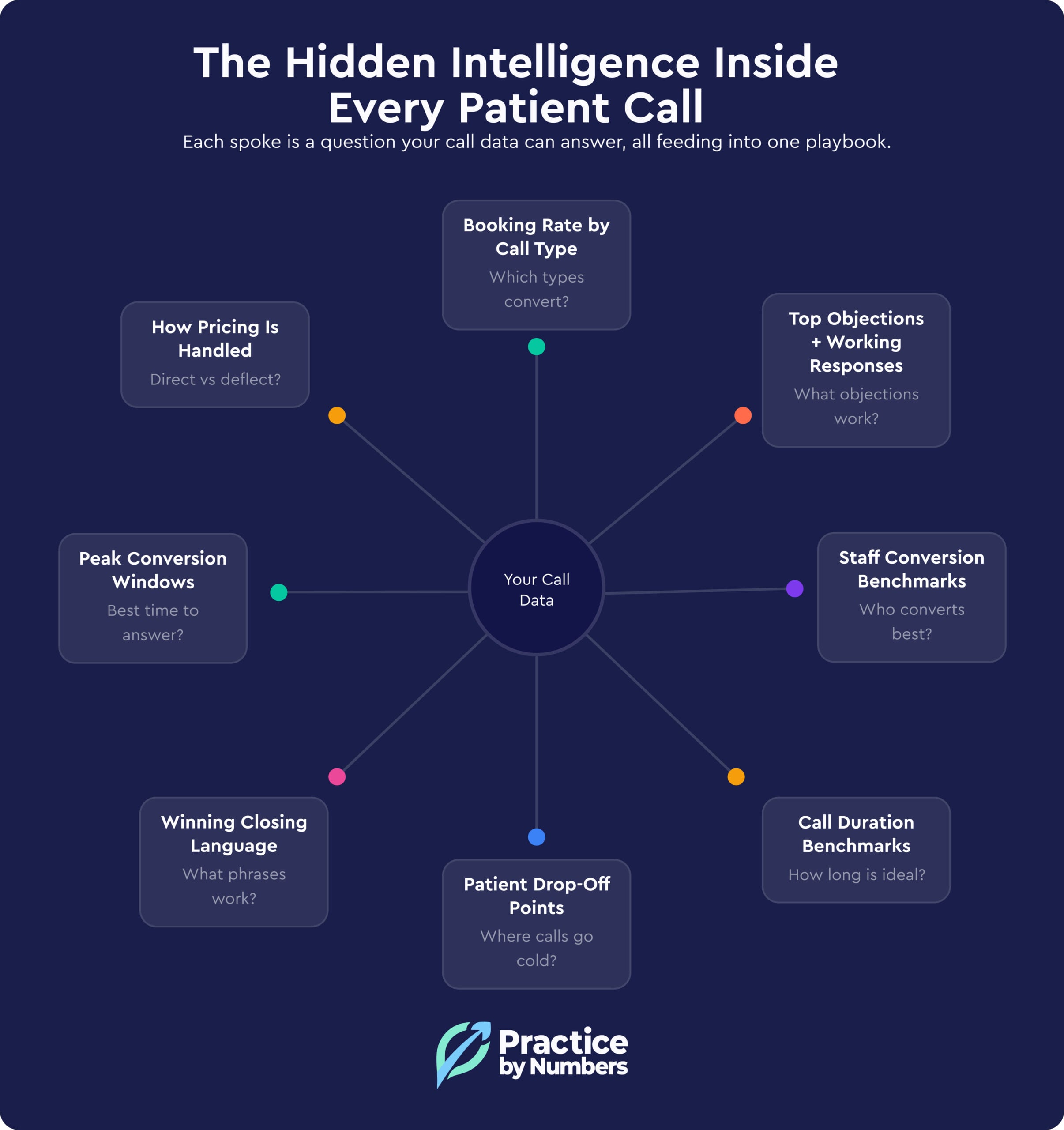
- Call Performance Analytics reveals call trends, patient inquiry patterns, and conversion metrics that impact scheduling outcomes.
- Call Scoring evaluates conversations against defined performance standards, helping practices understand what top-performing team members do differently and where coaching is needed.
By combining conversation intelligence with objective performance measurement, practices can move beyond assumptions, coach more effectively, and turn more patient inquiries into booked appointments.
👉 Here’s The Complete Guide to PbN AI
FAQs
Q. How often should dental practices review patient calls?
Practices should review call performance regularly, but manually reviewing every call is difficult and time-consuming. Many practices use AI-powered call analysis to monitor conversations at scale and identify coaching opportunities automatically.
Q. How does AI help improve dental call conversions?
AI helps practices analyze large volumes of patient calls, identify missed appointment opportunities, detect negative patient experiences, uncover performance trends, and provide managers with actionable coaching insights.
Q. Can AI automatically score dental phone calls?
Yes. AI-powered call scoring solutions can evaluate calls against predefined criteria, helping practices measure team performance, identify conversion gaps, and improve coaching consistency without manually reviewing every conversation.