Managing appointments and patient records is only one part of running a successful dental practice. Behind every productive day is a long list of operational responsibilities, from staffing and compliance to financial oversight, reporting, and business planning.
As practices grow, these responsibilities become increasingly difficult to manage with spreadsheets, disconnected systems, or the basic administrative features included in a practice management system (PMS).
That’s where dental administration software comes in. It helps practice owners and office managers streamline business operations, centralize practice data, and make informed decisions that improve efficiency, profitability, and long-term growth.
While your practice management system (PMS) supports clinical and patient-facing workflows, administration software helps you manage the business itself, giving you greater visibility into your team, finances, and overall practice performance.
- Dental administration software helps practices manage the business side of dentistry, including staffing, finances, compliance, reporting, and operational performance.
- Unlike practice management software, it focuses on running the practice, not delivering patient care.
- Modern administration platforms bring together operational data from multiple systems, helping practices make faster, data-driven decisions.
- Growing, multi-provider, and multi-location practices often benefit the most from dedicated administration tools.
- Solutions like Practice by Numbers extend your PMS with business intelligence, analytics, and operational visibility across the entire practice.
What Is Dental Administration Software?
Dental administration software supports the day-to-day business operations that keep a practice running efficiently. Rather than focusing on clinical workflows, it helps owners and office managers oversee the people, processes, and performance behind patient care.
Depending on the solution, administration software may include tools for workforce management, financial reporting, compliance tracking, document management, operational analytics, and executive dashboards. Many modern platforms also integrate with existing practice management systems, allowing practices to work from a single source of truth instead of juggling disconnected spreadsheets and reports.
The goal isn’t simply to digitize administrative work, it’s to help practice leaders understand what’s happening across the business and make better operational decisions.
👉 See How a Fragmented Tech Stack Holds Dental Practices Back
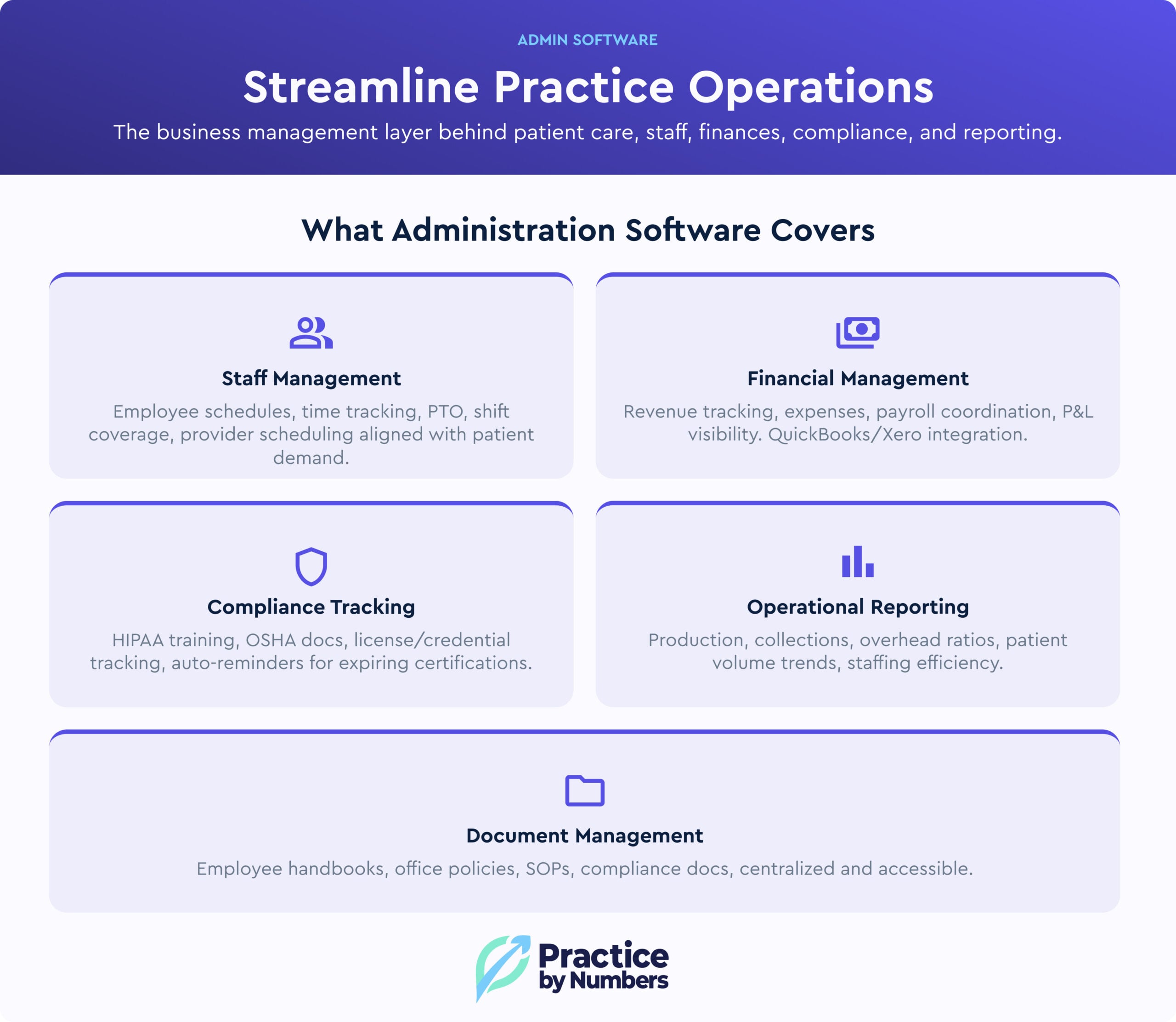
What Dental Administration Software Covers
Dental administration software supports the operational side of your practice by helping owners and office managers organize the people, processes, and business metrics behind patient care.
1. Staff management and scheduling
Managing a growing team involves much more than creating weekly schedules. Administration software can help coordinate employee schedules, track time off, monitor attendance, and ensure adequate staffing across providers and locations. For larger practices, it also helps align staffing levels with patient demand.
2. Financial management
Understanding how your practice is performing financially requires more than viewing daily production numbers. Administration software helps practices monitor revenue, expenses, profitability, payroll coordination, and other key business metrics. Some solutions also integrate with accounting platforms to provide a more complete financial picture.
3. Compliance tracking
Dental practices must stay on top of HIPAA training, OSHA requirements, professional licenses, certifications, and other regulatory obligations. Administration software centralizes these records and can send reminders before important credentials expire, reducing the risk of compliance gaps.
4. Operational reporting
One of the biggest advantages of administration software is visibility into how the practice is performing. Reports on production, collections, overhead, provider productivity, patient volume, and staffing efficiency help practice owners identify trends, make informed decisions, and improve overall performance.
5. Document and policy management
Many practices also use administration software to organize employee handbooks, HR documents, office policies, training materials, and standard operating procedures, making important information easier for staff to access and maintain.
👉 Discover How Top Practices Turn More Calls Into Appointments
How Administration Software Differs from Practice Software
Although the two are closely related, they serve different purposes.
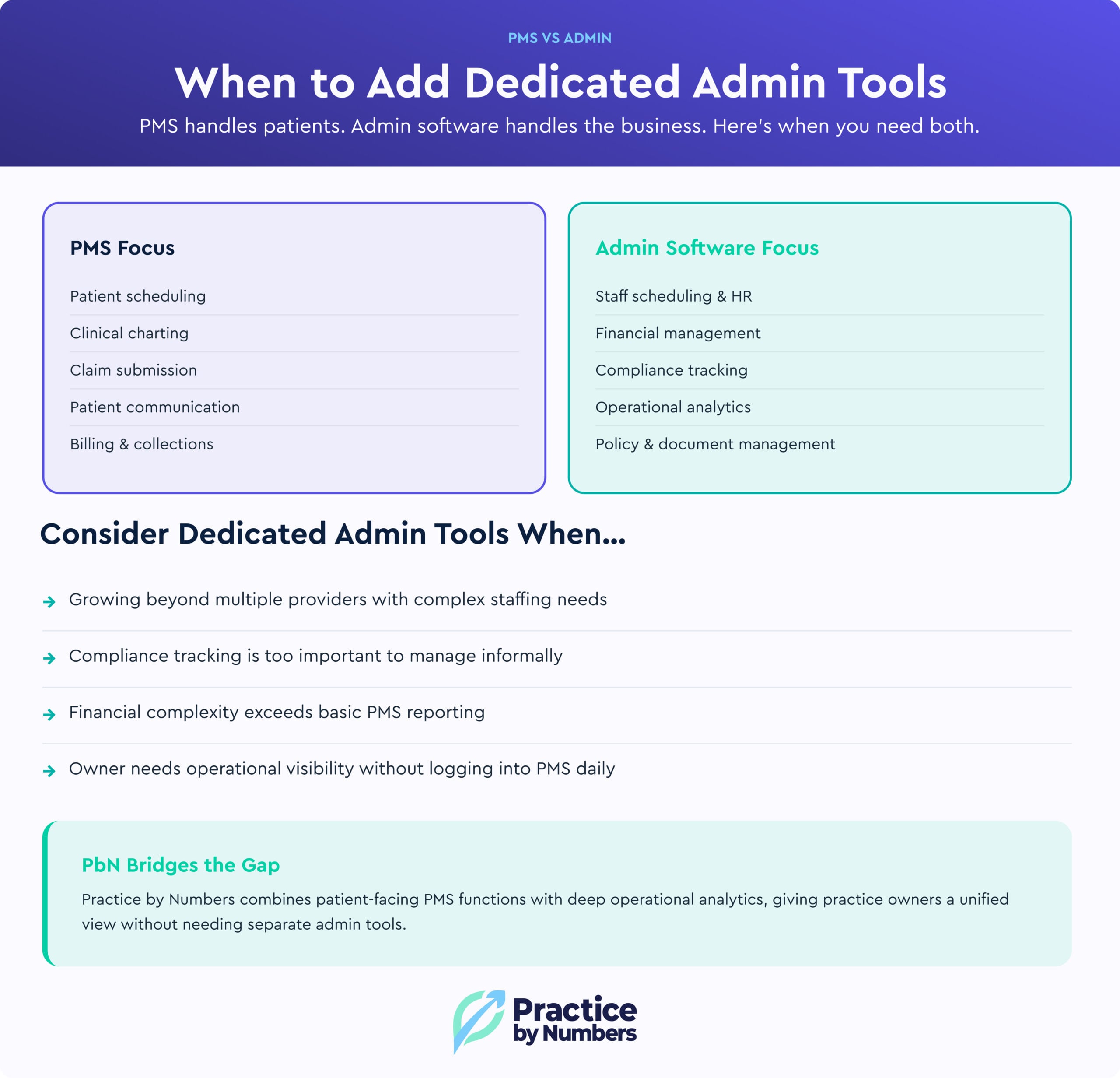
Practice management software supports the patient journey, from scheduling appointments and documenting treatment to billing and insurance claims.
Dental administration software focuses on the business behind those workflows. It helps practice leaders monitor financial performance, manage staff, track compliance, and measure operational efficiency.
Practice Management Software | Dental Administration Software |
|---|---|
What’s today’s schedule? | How efficiently is the practice operating? |
What’s the patient’s treatment plan? | How profitable is each provider? |
Has insurance been verified? | Are collections keeping pace with production? |
What procedures were completed? | Which locations or departments need attention? |
Many modern platforms blur the line between the two by combining practice management data with advanced operational reporting. Instead of relying on separate spreadsheets or disconnected tools, practices can gain deeper business insights from the same data they already generate every day.
Signs You’ve Outgrown Basic Administrative Tools
As your practice grows, administrative complexity grows with it. You may benefit from dedicated administration software if:
- Reporting requires multiple spreadsheets or manual work.
- Financial data is spread across different systems.
- You manage multiple providers or locations.
- Compliance records are difficult to keep organized.
- Practice performance is reviewed only at the end of the month.
- You have data but lack clear insights into what’s driving performance.
These challenges often indicate that the practice has outgrown basic reporting and could benefit from more centralized operational visibility.
Benefits of Dental Administration Software
The biggest value of administration software isn’t simply automating tasks, it’s helping practices operate more effectively.
With the right solution, dental practices can:
- Reduce time spent on manual administrative work.
- Gain real-time visibility into business performance.
- Make faster, data-driven operational decisions.
- Improve accountability across providers and locations.
- Simplify compliance and documentation.
- Support growth without adding unnecessary administrative complexity.
Ultimately, administration software gives practice leaders more confidence in the decisions they make every day.
👉 Learn How Dental Practice Analytics Improve Revenue, Retention, and Operational Control
Choosing the Right Approach
Not every practice needs dedicated administration software.
For many single-provider or smaller practices, the reporting and administrative features included in a practice management system may be enough to support day-to-day operations.
As a practice grows, however, operational complexity grows with it. Administration-focused tools become more valuable when:
- Multiple providers or locations make staffing more complex.
- Compliance requirements become difficult to manage manually.
- Financial reporting needs extend beyond basic production and collections.
- Practice owners want deeper operational insights to support business decisions.
The right approach depends on your practice’s size, goals, and the level of visibility you need to manage the business effectively.
How Practice by Numbers Adds Operational Intelligence to Your Practice
Modern practice administration isn’t about adding another standalone tool, it’s about connecting the systems your practice already relies on.
Practice by Numbers serves as a connected platform that integrates with your practice management system and brings together clinical, operational, financial, and patient communication data in one place. Instead of switching between multiple reports or applications, practice owners and office managers gain a unified view of how the business is performing.
From executive dashboards and operational analytics to patient communication, digital forms, payments, and voice solutions, the platform helps practices streamline administrative workflows while turning everyday practice data into actionable insights.
Whether you’re managing a single location or a growing organization, Practice by Numbers helps your team spend less time gathering information and more time improving performance through data-driven decision-making.