Let’s be honest. Most practice owners know they should be tracking the numbers. But when you sit down at the end of the month and stare at a huge list of figures, it’s easy to wonder: which numbers actually matter?
The truth is, you don’t need to track 50 things. You need to track the right 10. These are the dental practice KPIs that tell you whether your practice is healthy, growing, or quietly losing money.
Let’s walk through each one.
TL;DR
Tracking the right KPIs helps dental practices grow smarter, improve profitability, and catch problems early.
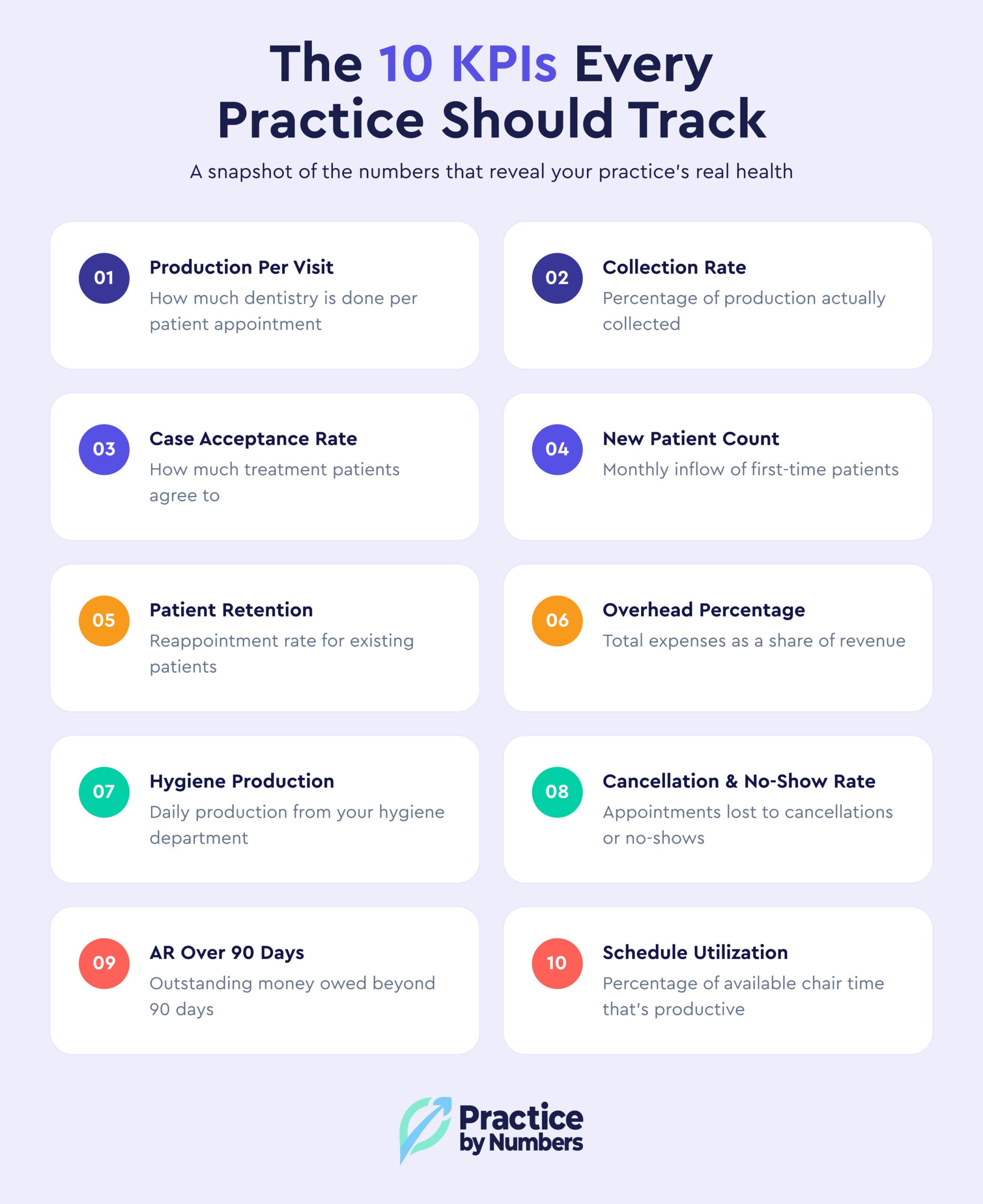
This guide covers 10 essential dental practice KPIs, including:
- Production per visit
- Collection rate
- Case acceptance
- New patient count
- Patient retention
- Overhead percentage
- Hygiene production
- No-show rate
- AR over 90 days
- Schedule utilization
You’ll learn:
- What each KPI measures
- Why it matters
- Healthy benchmark ranges
- Common warning signs
- Simple ways to improve performance
The goal isn’t to track everything. It’s to track the numbers that actually impact growth, efficiency, and revenue.
What Are KPIs and Why Should Your Practice Care?
KPI stands for Key Performance Indicator, the measurable numbers that show how your practice is actually performing. They help you understand what’s working, what’s slowing growth, and where attention is needed.
Think of KPIs as the operational health indicators of your practice. Just like vital signs help monitor a patient’s condition, KPIs help monitor the health of your business.
Without KPIs, decisions are often based on assumptions. With them, you can spot trends early, make informed changes, and grow more intentionally.
Which 10 KPIs Should Every Dental Practice Track?
1. Production Per Visit
Production per visit tracks the average revenue generated every time a patient comes into the practice. It helps you understand whether your schedule is being used efficiently — not just whether it’s full.
Why it matters
A packed schedule doesn’t always mean strong production. If providers are only completing low-value procedures or treatment opportunities are being missed, the practice can stay busy without meaningful growth.
Healthy benchmark
Benchmarks vary by specialty, but consistently increasing production per visit is usually a sign of stronger diagnosis, treatment planning, and scheduling efficiency.
Warning signs
Low production per visit may indicate underdiagnosis, incomplete treatment presentation, short appointments being overbooked, or too many low-production procedures filling prime schedule hours.
How to improve it
Review treatment planning habits, strengthen case presentation workflows, and ensure providers are diagnosing comprehensively. Many practices also improve this KPI by scheduling treatment more strategically instead of scattering procedures across multiple visits.
2. Collection Rate
Collection rate shows how much of your produced revenue is actually collected. In simple terms, it measures how efficiently your practice turns production into cash.
Why it matters
Production numbers can look impressive on paper, but if collections lag behind, profitability suffers. Strong collections are critical for healthy cash flow, payroll stability, and long-term growth.
Healthy benchmark
Most successful dental practices aim for a collection rate of 98% or higher.
Warning signs
A declining collection rate often points to delayed insurance follow-ups, billing errors, aging accounts receivable, unclear financial policies, or excessive write-offs.
How to improve it
Start by reviewing unpaid claims and overdue patient balances regularly. Clear financial communication before treatment, automated payment reminders, and stronger front-desk collection processes can significantly improve performance.
👉 Learn How to Streamline Collections and Cash Flow
3. Case Acceptance Rate
Case acceptance rate tracks how much of the treatment presented to patients is actually scheduled or approved.
Why it matters
This KPI directly impacts practice growth. Even excellent clinical diagnosis has limited impact if patients don’t move forward with treatment.
Healthy benchmark
Many healthy practices maintain a case acceptance rate between 60–70%, though this varies based on procedure type and patient demographics.
Warning signs
Low acceptance rates can signal unclear communication, financial hesitation, lack of patient trust, or overwhelming treatment presentations.
How to improve it
Focus on patient education and simplify how treatment options are explained. Breaking larger treatment plans into phases, offering financing options, and training teams on communication can improve acceptance significantly.
4. New Patient Count
This KPI tracks how many new patients enter your practice each month and where they come from.
Why it matters
New patients fuel long-term practice growth and help offset natural patient attrition over time.
Healthy benchmark
The ideal number depends on practice size and goals, but consistency matters more than occasional spikes.
Warning signs
A drop in new patients may point to weak marketing performance, declining referrals, poor online visibility, or scheduling bottlenecks.
How to improve it
Track referral sources carefully so you know which channels actually drive growth. Practices often improve this KPI by strengthening online reviews, improving recall systems, and optimizing patient experience from first contact onward.
5. Patient Retention (Reappointment Rate)
Patient retention measures how consistently patients return for hygiene visits and ongoing care.
Why it matters
Retaining existing patients is significantly more cost-effective than constantly acquiring new ones. Strong retention also improves production predictability and long-term patient value.
Healthy benchmark
Most healthy practices aim for reappointment rates above 85%.
Warning signs
High patient drop-off, inconsistent hygiene schedules, and low reappointment percentages often indicate communication gaps or weak follow-up systems.
How to improve it
Encourage patients to schedule their next visit before leaving the office. Automated reminders, stronger recall workflows, and a better patient experience can all improve retention over time.
6. Overhead Percentage
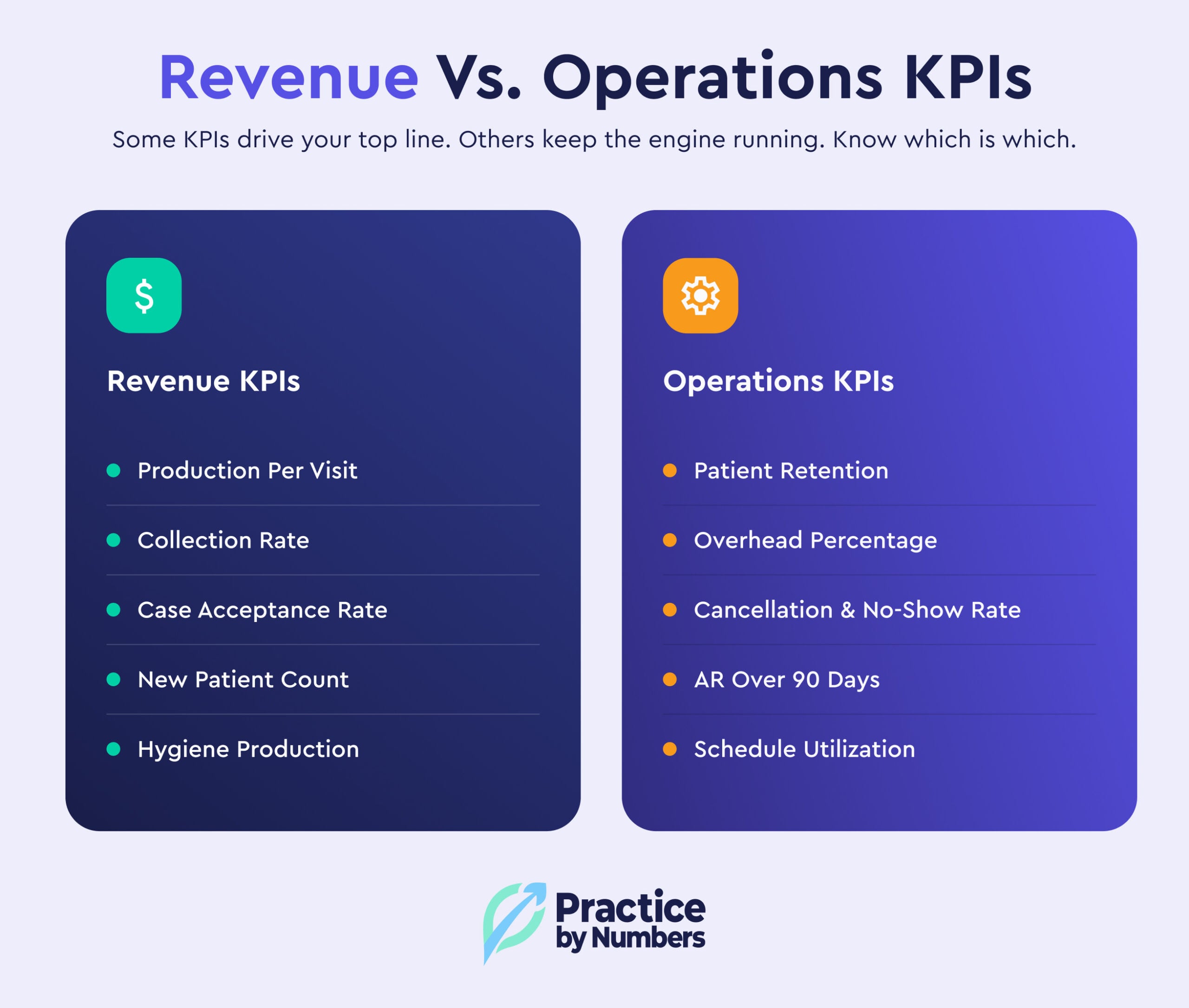
Overhead percentage tracks how much of your revenue goes toward running the practice, including payroll, supplies, rent, utilities, marketing, and software expenses.
Why it matters
Even high-producing practices can struggle financially if overhead grows too quickly. Monitoring this KPI helps protect profitability and keeps spending aligned with growth.
Healthy benchmark
Many successful dental practices operate within a 59–65% overhead range, though this varies by specialty and location.
Warning signs
Rising overhead without matching revenue growth often points to staffing inefficiencies, supply waste, unnecessary subscriptions, or underperforming operational systems.
How to improve it
Review expenses regularly and identify areas where costs have increased over time. Improving scheduling efficiency, reducing waste, and automating repetitive administrative work can help control overhead without sacrificing patient experience.
7. Hygiene Production
Hygiene production tracks the revenue generated by your hygiene department through preventive care, periodontal treatment, diagnostics, and related services.
Why it matters
A strong hygiene department supports both recurring revenue and long-term patient retention. It also plays a major role in identifying restorative treatment opportunities early.
Healthy benchmark
Healthy hygiene departments consistently contribute meaningful daily production while maintaining strong reappointment rates.
Warning signs
Low hygiene production may indicate underdiagnosis, inconsistent perio protocols, scheduling inefficiencies, or too many open hygiene hours.
How to improve it
Standardize periodontal protocols, improve patient education, and ensure hygienists have enough time for comprehensive evaluations. Monitoring unscheduled hygiene patients can also help improve consistency and retention.
8. Cancellation and No-Show Rate
This KPI tracks how often patients cancel appointments late or fail to show up entirely.
Why it matters
Every empty chair represents lost production, wasted staff time, and schedule disruption. High cancellation rates also make forecasting and staffing more difficult.
Healthy benchmark
Most practices aim to keep no-show and late cancellation rates below 10%.
Warning signs
Frequent schedule gaps, same-day cancellations, and inconsistent patient communication often signal weak reminder systems or low patient engagement.
How to improve it
Automated reminders, confirmation workflows, short-notice waitlists, and clear cancellation policies can significantly reduce schedule loss. Many practices also improve attendance by strengthening patient communication before appointments.
9. Accounts Receivable (AR) Over 90 Days
This KPI tracks the amount of money owed to your practice that has remained unpaid for more than 90 days.
Why it matters
The longer balances remain unpaid, the harder they become to collect. High aging AR can create cash flow problems and hide deeper billing or insurance process issues.
Healthy benchmark
Most healthy practices aim to keep AR over 90 days as low as possible, ideally below 15–20% of total receivables.
Warning signs
Large overdue balances often indicate inconsistent insurance follow-up, delayed patient billing, unclear financial policies, or poor collection processes.
How to improve it
Review aging reports consistently and prioritize older balances first. Faster claim submission, automated payment reminders, and stronger point-of-service collections can help reduce long-term AR buildup.
10. Schedule Utilization
Schedule utilization measures how effectively your available chair time is being filled with productive appointments.
Why it matters
A full-looking schedule doesn’t always mean the practice is operating efficiently. Gaps, underbooked providers, and poorly optimized appointment lengths can quietly reduce production.
Healthy benchmark
Strong schedule utilization means providers are consistently booked with productive procedures while maintaining manageable patient flow.
Warning signs
Frequent schedule gaps, excessive downtime, and overloaded peak hours often indicate poor scheduling strategy or inconsistent patient follow-through.
How to improve it
Review appointment templates regularly and identify where unused chair time occurs most often. Confirmation systems, short-call lists, and smarter scheduling blocks can help maximize productivity without overloading the team.
👉 See How to Build a Dental KPI Dashboard That Drives Action
How Often Should You Review Your Dental Practice KPIs?
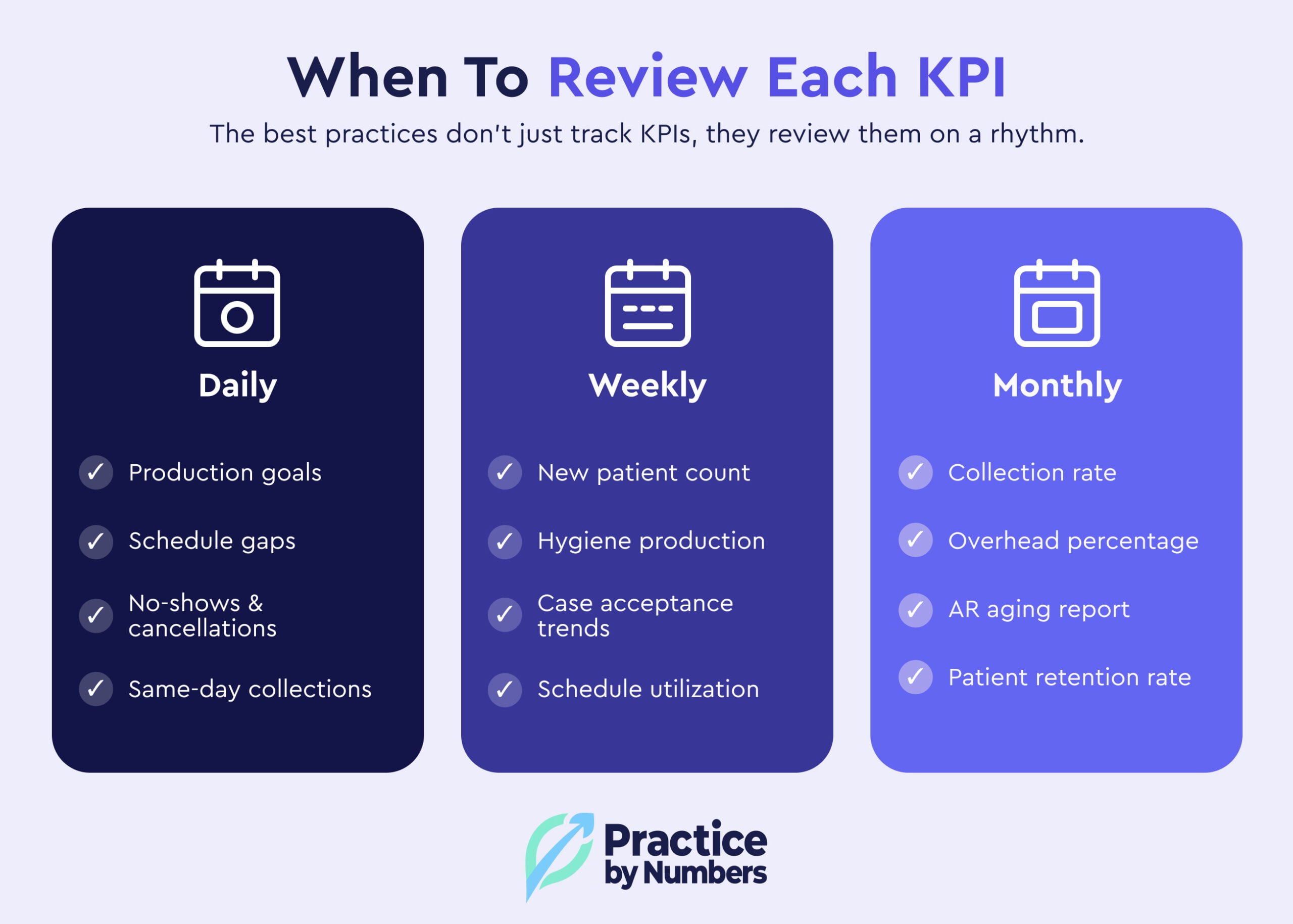
Here’s the thing: tracking KPIs once a quarter isn’t enough. The best practices review their numbers daily or weekly. At the very minimum, you should have a monthly KPI review meeting with your team.
Daily huddles are a great time to glance at same-day metrics like production goals and schedule gaps. Weekly reviews help catch trends before they become problems. And monthly deep-dives let you zoom out and see the bigger picture.
The key is making KPIs visible and part of your routine, not a once-in-a-while exercise.
What Happens When You Don’t Track KPIs?
Without tracking KPIs, small issues can go unnoticed until they become bigger problems. A drop in case acceptance, rising overhead, or more missed appointments may happen slowly over time, making them easy to miss in day-to-day operations.
Practices that track these numbers consistently tend to produce more, collect more, and keep more of what they earn. It’s not magic, it’s visibility.
How Can You Start Tracking KPIs Without Drowning in Data?
You don’t need a complicated setup. Start with these three steps:
- First, pick your top 5 KPIs from the list above, the ones most relevant to where your practice is today. If you’re focused on growth, prioritize new patients and case acceptance. If profitability is the concern, start with collections and overhead.
- Second, create a simple dashboard. Whether it’s a whiteboard in the break room, a shared spreadsheet, or a platform like Practice by Numbers that pulls your data automatically from your PMS, the format matters less than the consistency.
- Third, make it a team habit. Share the numbers. Celebrate the wins. Discuss the dips. When everyone on your team understands the practice’s KPIs, they start making better decisions, from the front desk to the operatory.
👉 See How to Improve Revenue, Retention, and Operational Control