A lot of dental practices do a morning huddle. Very few do one that actually changes how the day goes.
Either the huddle never happens, too rushed, someone’s running late, no one owns it, or it becomes a 20-minute read-through of the schedule where half the team is thinking about their first patient, and nobody retains anything.
Neither version helps. But a well-run dental morning huddle? It’s probably the highest-value 10 minutes your team can spend together before the day starts. It aligns people, catches problems early, and gives everyone a shared direction. Here’s how to do it right.
TL;DR
- A dental morning huddle is a short daily team meeting that helps the practice stay aligned before patients arrive.
- A good dental morning huddle should:
- Last 10 minutes or less
- Review production goals and schedule gaps
- Identify patients who need extra attention
- Surface pending follow-ups and unfinished tasks
- Give every team member a clear role for the day
- The most effective morning huddles are:
- Structured
- Data-driven
- Consistent
- Led by one accountable person
- Most huddles fail because:
- They run too long
- Nobody owns the process
- The team reviews schedules without discussing priorities
- The data isn’t prepared ahead of time
- When done correctly, a morning huddle improves:
- Schedule efficiency
- Team communication
- Same-day treatment opportunities
- Patient experience
- Daily production performance
Why Does a Morning Huddle Matter in a Dental Practice?
Think about a sports team before a game. They don’t just walk onto the field and figure it out. There’s a plan. Everyone knows their role, who the key matchups are, and what the strategy looks like. The pregame huddle makes sure no one walks out there cold.
Your practice day works the same way. Every morning is a new game. And without a huddle, your team is reactive from the first patient onward, answering problems as they come instead of getting ahead of them.
With a structured huddle, the front desk knows which patients haven’t confirmed. The hygienist knows who has open treatment worth mentioning. The doctor knows which appointments might run long. And everyone knows the production goal, so decisions during the day are made with that number in mind.
That kind of alignment doesn’t happen by accident. It takes 10 minutes every morning.
What Should You Cover in a Dental Morning Huddle?
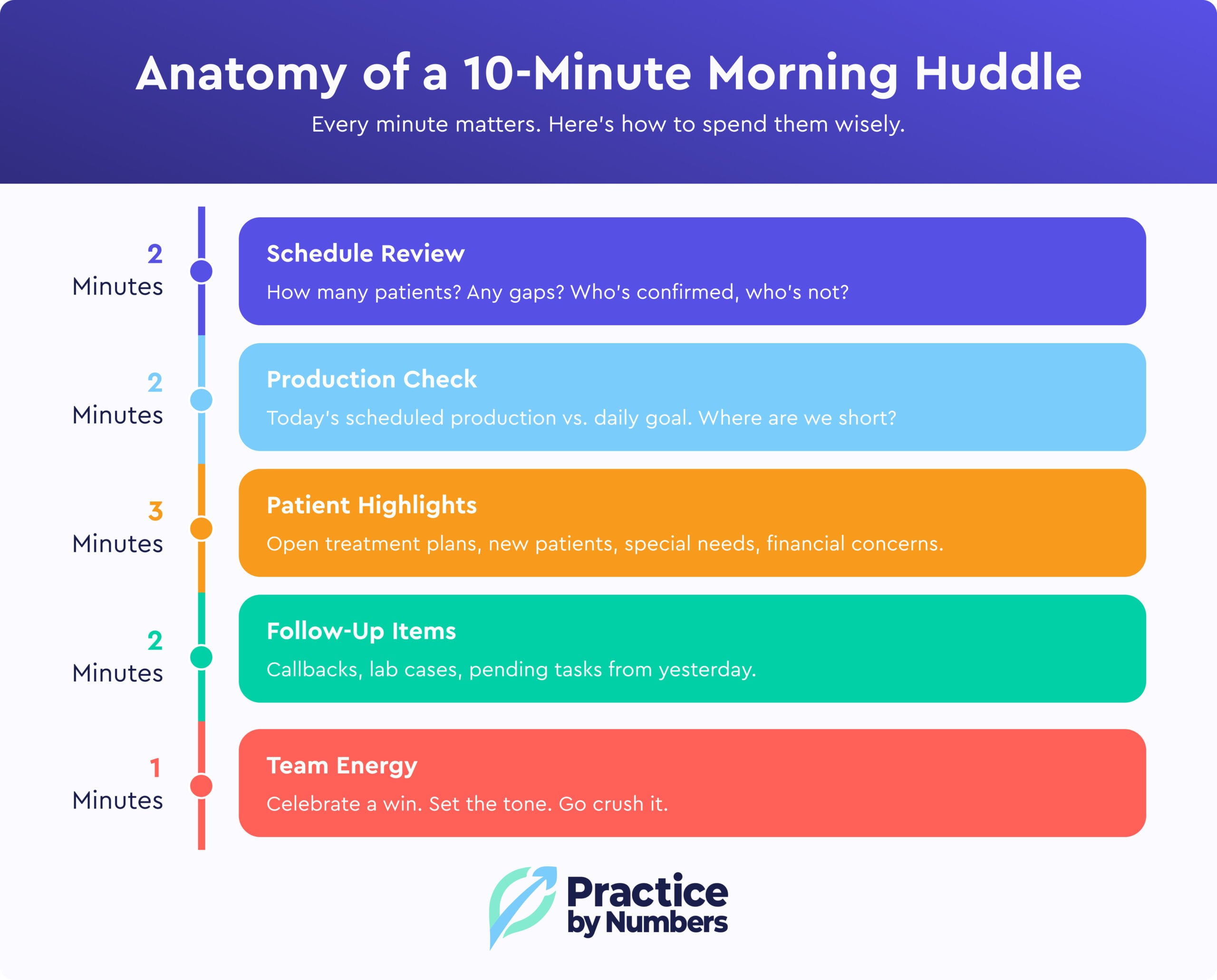
1. The Schedule Review (2 minutes)
Start with a quick look at today’s schedule. How many patients are booked? Are there any gaps? Who has confirmed and who hasn’t? This gives the front desk a clear picture of where they need to focus their outreach before the first appointment.
2. The Production Check (2 minutes)
What’s the total scheduled production for today compared to your daily goal? If you’re short, is there an opportunity to fill a gap, move a pending procedure forward, or present same-day treatment to someone already on the schedule? This keeps the whole team focused on a real, measurable target, not just getting through the day.
3. Patient Highlights (3 minutes)
This is the most valuable part. Go through the day’s patients and flag anyone who needs attention: patients with open treatment plans who might be ready to say yes today, new patients who need a great first impression, patients with financial concerns, or anyone with a complex history the clinical team should know about. The goal is simple, no surprises.
4. Follow-Up Items (2 minutes)
Did someone from yesterday need a callback? Is there a lab case to check on? Are there any tasks sitting open that need an owner? A quick sweep of pending items means nothing important falls through the cracks between days.
5. Team Energy Check (1 minute)
End on something positive. A shoutout for yesterday’s win, a quick word of appreciation, or just a “let’s have a great day.” It sounds small. But how a team starts a day usually predicts how the rest of it goes.
👉 See Where the Revenue is Hiding In Your Dental Practice
What Makes a Morning Huddle Fail?
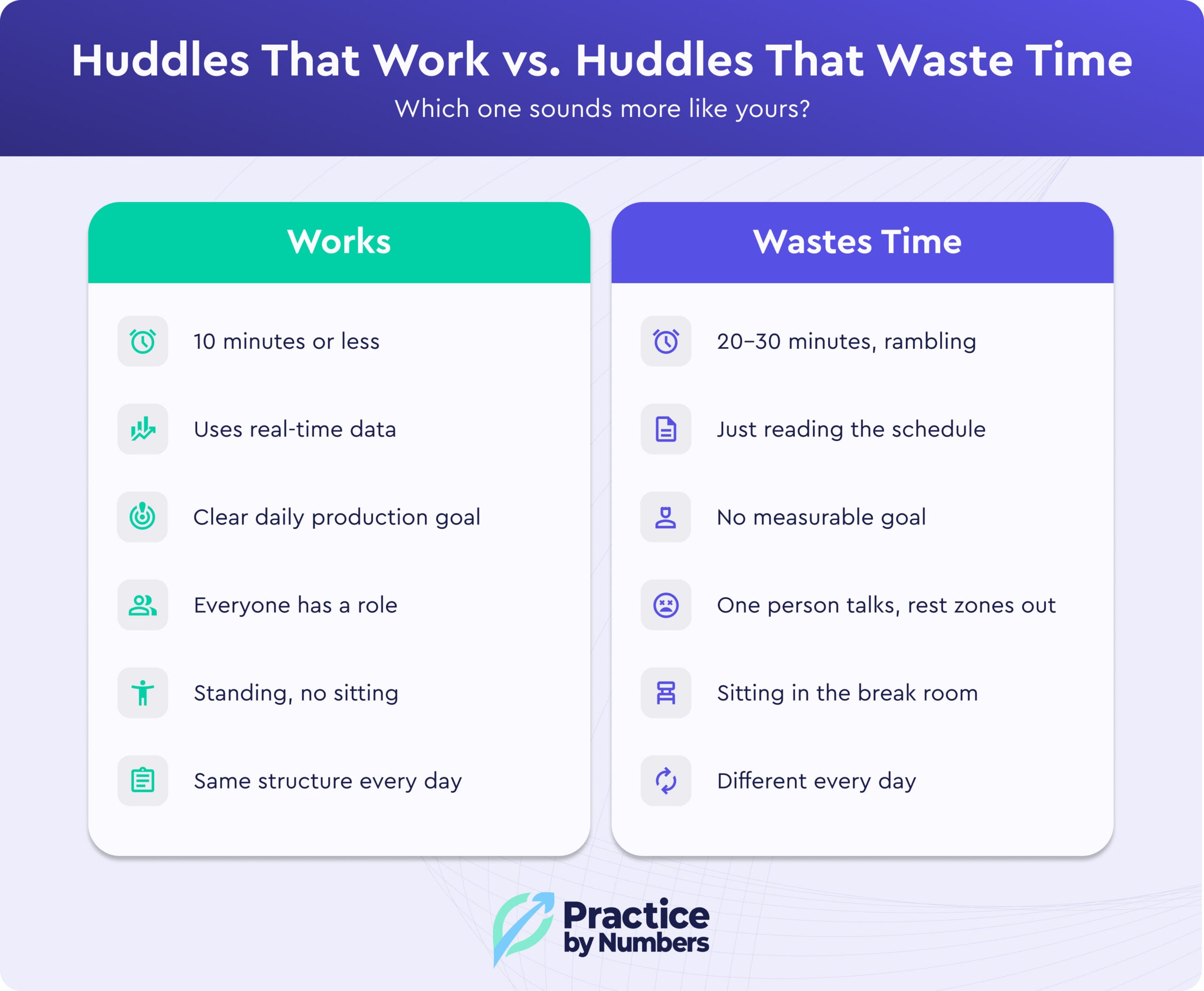
The number one killer is length. If your huddle regularly goes 20–30 minutes, people stop being present. They’re mentally treating patients while someone’s still talking. Keep it to 10 minutes or less. Standing up naturally keeps things moving.
The second problem is no structure. If every huddle is different, sometimes you cover the schedule, sometimes you don’t, sometimes the doctor runs it, sometimes nobody does. Your team never knows what to prepare. They show up empty-handed, and the huddle becomes free-form rambling.
The third issue is no data. Reading the appointment list out loud isn’t a huddle. Saying “we have 14 patients today, good luck out there” doesn’t help anyone make better decisions. The huddle needs real numbers like production goal vs. scheduled production, unconfirmed patients, open treatment, or it’s just a meeting for the sake of meeting.
How Do You Get Everyone to Actually Engage?
Give people a role. When your team members have something specific to report, not just something to listen to, they show up prepared.
Front desk covers confirmations and schedule gaps. Treatment coordinator flags patients with open treatment. Hygienist shares who’s coming in for recare today. Assistant flags any setup or supply issues. Doctor takes 30 seconds on anything clinical the team should know.
When everyone has a voice, nobody zones out. And when the huddle directly helps each person do their job better that day, they’ll fight to protect it on the calendar.
Why Is Data Preparation the Biggest Bottleneck?
Most practices know the huddle should be data-driven. The problem is that pulling the numbers takes too long. By the time someone has run three reports, sorted through them, and tried to pull out what’s relevant, it’s already time to see the first patient.
So they skip the data. And without data, the huddle loses its whole purpose.
The fix is having the numbers ready before anyone walks in. Whether that’s a whiteboard someone fills in the night before, a shared morning report, or a dashboard that pulls everything automatically from your PMS. The less time spent finding data, the more time spent acting on it.
👉 See How Dental Practice Analytics Improve Revenue, Retention, and Operational Control
How PbN’s Daily Huddle Feature Makes This Easier
The Daily Huddle by Practice by Numbers automatically pulls the numbers your team needs before the day starts, no report-building required.
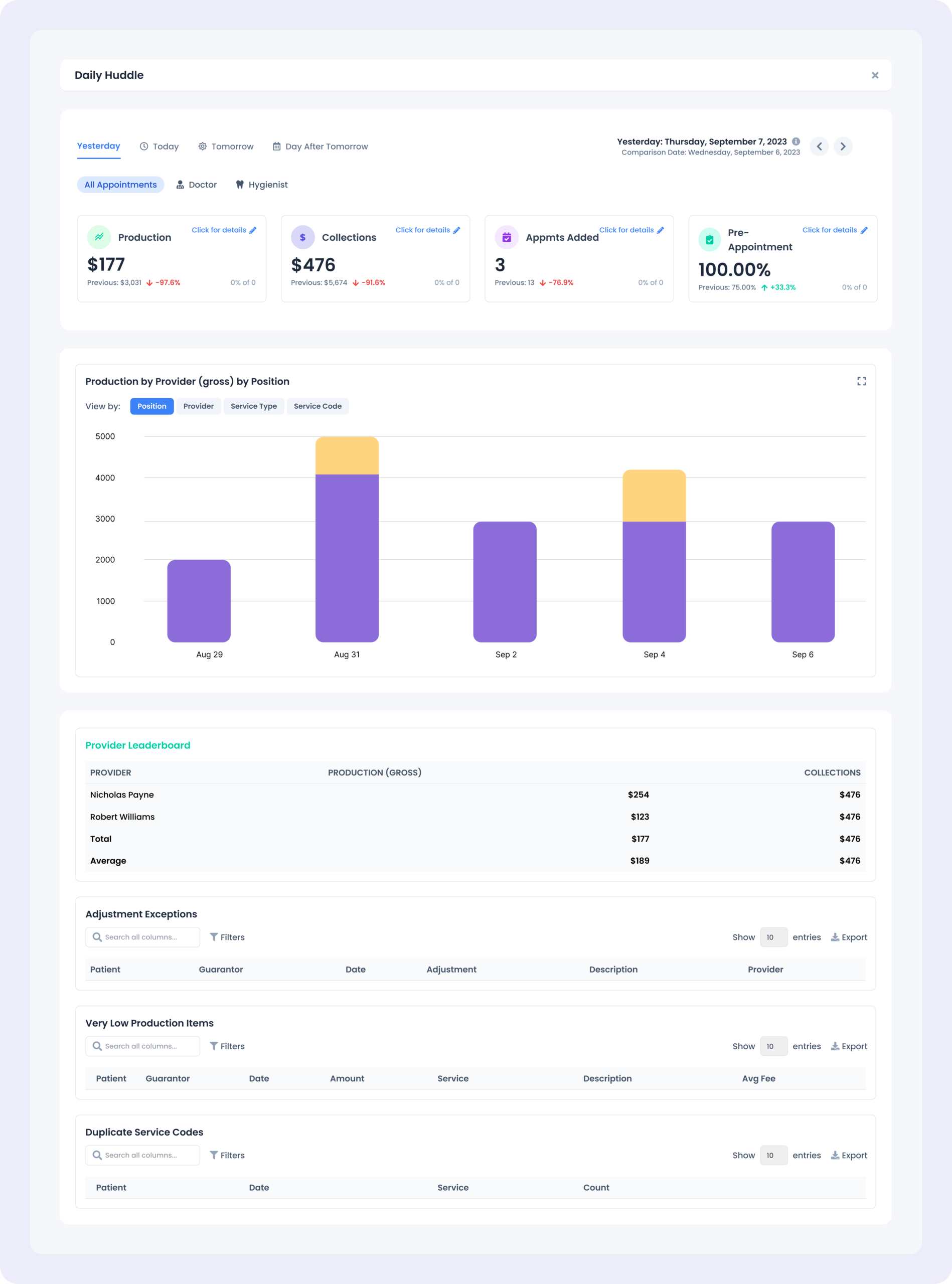
Every morning, your team walks in to:
- Today’s scheduled production vs. daily goal
- Unconfirmed patients and open schedule gaps
- Patients with open treatment plans on today’s schedule
- Pending tasks and follow-ups from the previous day
- Provider-level production breakdown
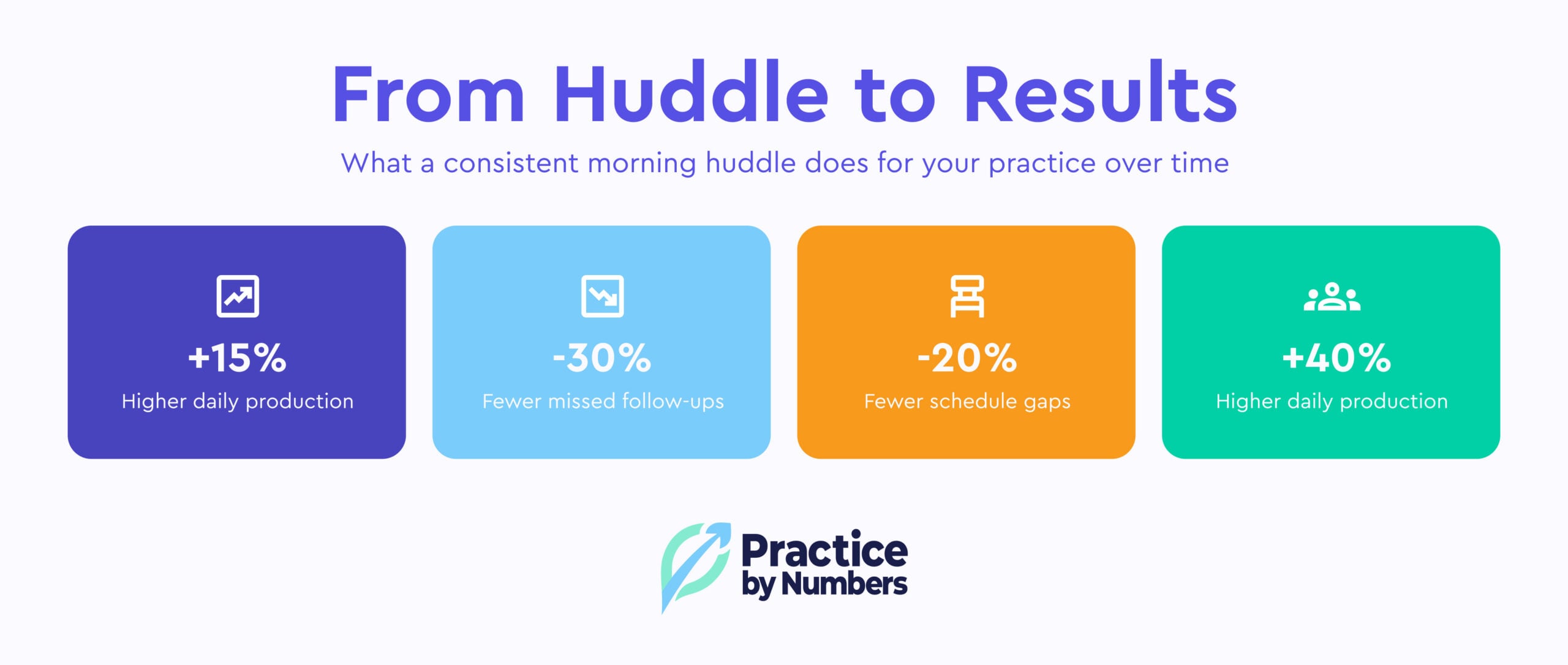
Because the data is already organized and visible, the huddle becomes faster, more focused, and easier to sustain consistently.
Instead of spending 10 minutes figuring out what’s happening today, your team spends those 10 minutes making decisions:
- Filling schedule gaps earlier
- Recovering missed production opportunities
- Preparing for high-value patient conversations
- Catching operational issues before they become disruptions
- Starting the day aligned around the same priorities
It syncs directly with your PMS, so the numbers are always current and the team can focus on execution instead of data gathering.
FAQs
Q. How long should a dental morning huddle be?
Ten minutes or less. If your huddle regularly goes longer than that, it’s usually because there’s no clear structure or because it’s turning into a problem-solving session. Problem-solving should happen after the huddle, not during it. The huddle is for sharing information and aligning, not debating.
Q. Who should lead the morning huddle in a dental practice?
It doesn’t have to be the doctor. In fact, office managers and treatment coordinators often run tighter, more efficient huddles because they’re closer to the operational side of the practice. What matters most is that one person owns it consistently, the same person, same structure, every day.
Q. What should be covered in a dental morning huddle?
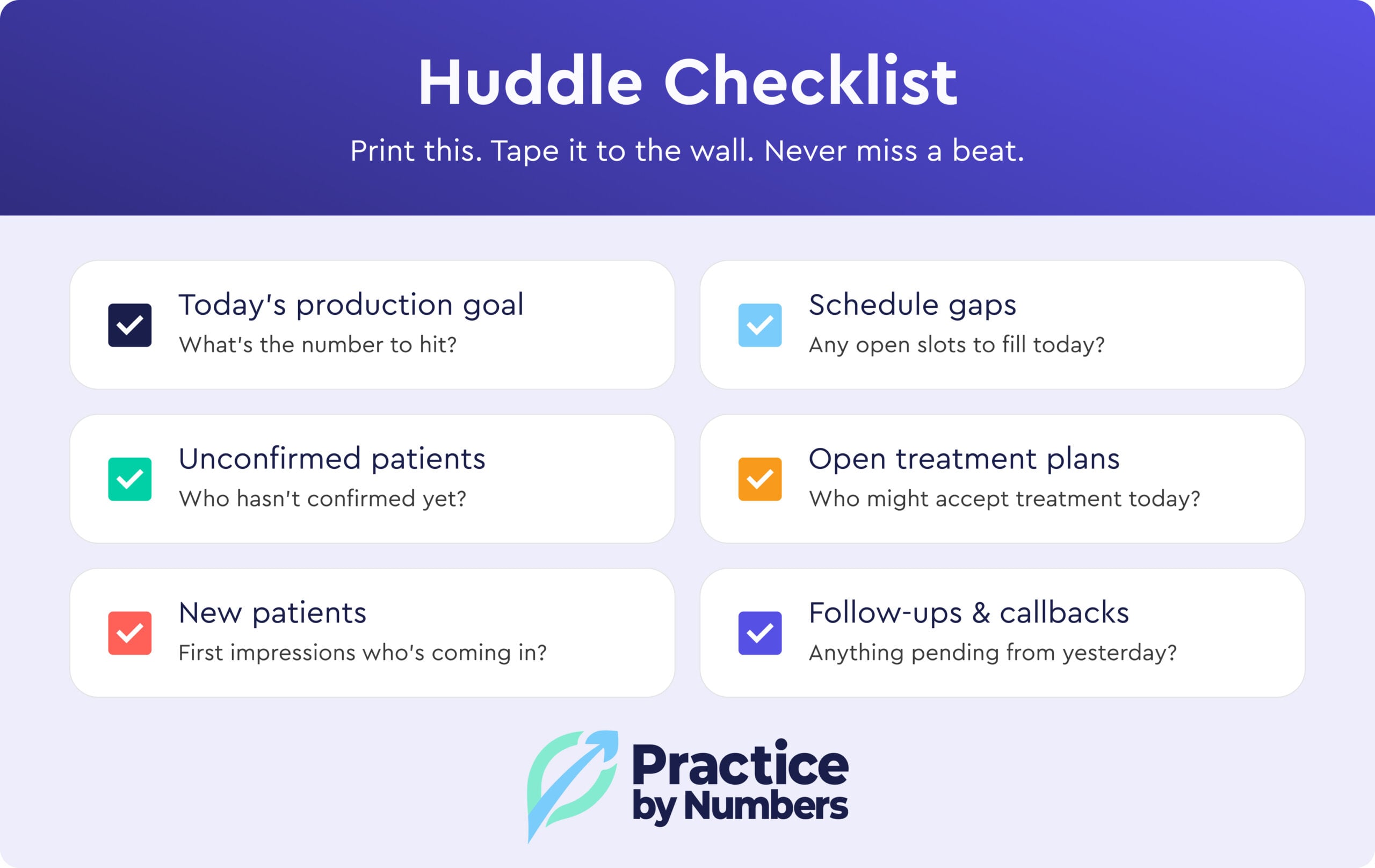
The five essentials are: today’s production goal and schedule status, any gaps that need to be filled, patient highlights for the day (especially open treatment plans and new patients), pending follow-up items from the previous day, and a quick team energy check. Everything else is optional.
Q. What if the team is too busy for a daily huddle?
That’s usually a sign the practice needs a huddle more than ever. When teams are too busy to communicate, they make more mistakes, miss more opportunities, and feel more disconnected. Even 5 minutes of aligned communication before the day starts pays back more than it costs. Start with just production goal and schedule gaps, and add the rest once it becomes habit.
Q. How do morning huddles affect dental practice revenue?
Consistently. Practices that run structured daily huddles tend to produce more because gaps get filled faster, open treatment gets surfaced more often, and the team has a shared goal to work toward. Even recovering one or two additional appointments per week directly from huddle conversations can add tens of thousands of dollars in annual production.
Q. What data should be ready before the morning huddle?
At minimum: today’s scheduled production vs. daily goal, unconfirmed patients, any schedule gaps, and patients with open treatment plans on the schedule. If you can also have yesterday’s unfinished follow-up tasks visible, even better. The easier this information is to access, the more likely the huddle actually stays on track.