Every dental practice deals with no-shows. Some patients forget their appointments. Others cancel at the last minute. Some simply never schedule their next visit. Individually, these situations feel like everyday operational challenges. But over time, they create a much bigger problem: unused chair time, disrupted schedules, and patients who quietly disengage from your practice.
Most dentists recognize the frustration of a no-show. Far fewer measure its long-term financial impact, or consider what happens when those patients never return.
Understanding that impact is the first step toward improving schedule utilization and patient retention.
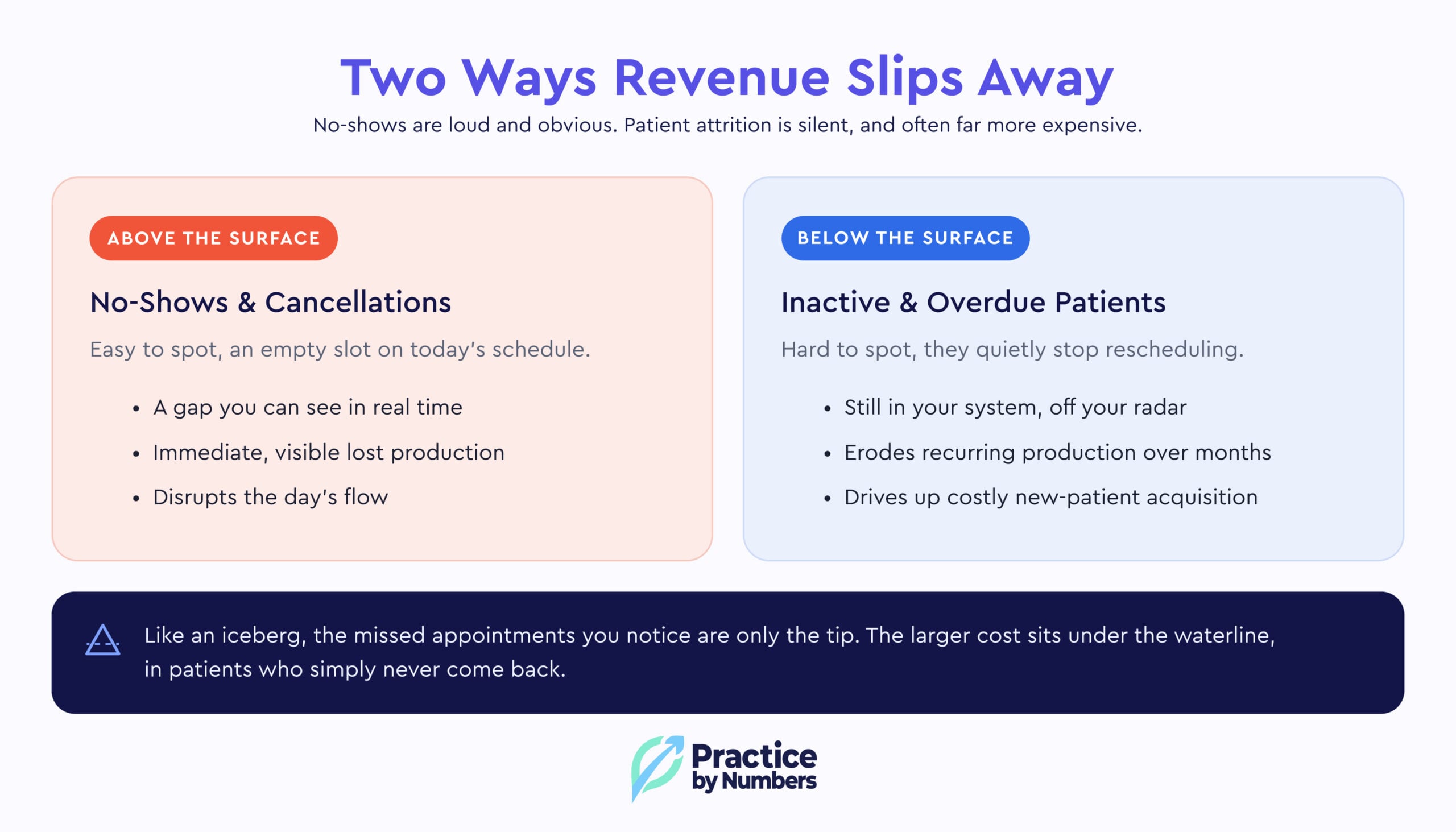
- No-shows and overdue patients reduce production in different ways, but both contribute to lost revenue and underutilized chair time.
- The true financial impact depends on your appointment volume, no-show rate, average appointment value, and the number of inactive patients.
- Measuring these metrics helps you understand how much revenue may be recoverable through optimized scheduling and patient retention.
- Before investing in new processes or tools, calculate your practice’s revenue opportunity using your own data, not just industry averages.
- Consistent patient communication and reactivation efforts can help patients return for recommended care while reducing missed appointments and creating a more predictable schedule for your practice.
How Much Do No-Shows Really Cost a Dental Practice?
Occasional cancellations are inevitable in any dental practice. Patients get sick, schedules change, and unexpected situations come up. The challenge arises when cancellations and no-shows become a consistent pattern. Those open time slots can leave providers with unused chair time and make it harder to reach production goals.
Consider a practice that schedules 400 appointments per month with a 12% no-show and cancellation rate. That’s 48 appointments left unfilled every month. If the average appointment produces $280, that’s approximately $13,440 in lost monthly production, or more than $160,000 over the course of a year.
Every practice is different, of course. Appointment values, patient volume, and cancellation rates vary, which is why understanding your own numbers is more valuable than relying on industry averages.
👉 See Where the Hidden Revenue Lies In Every Dental Practice
Why Patient Reactivation Matters
No-shows are easy to spot. Patients who gradually stop coming in often aren’t.
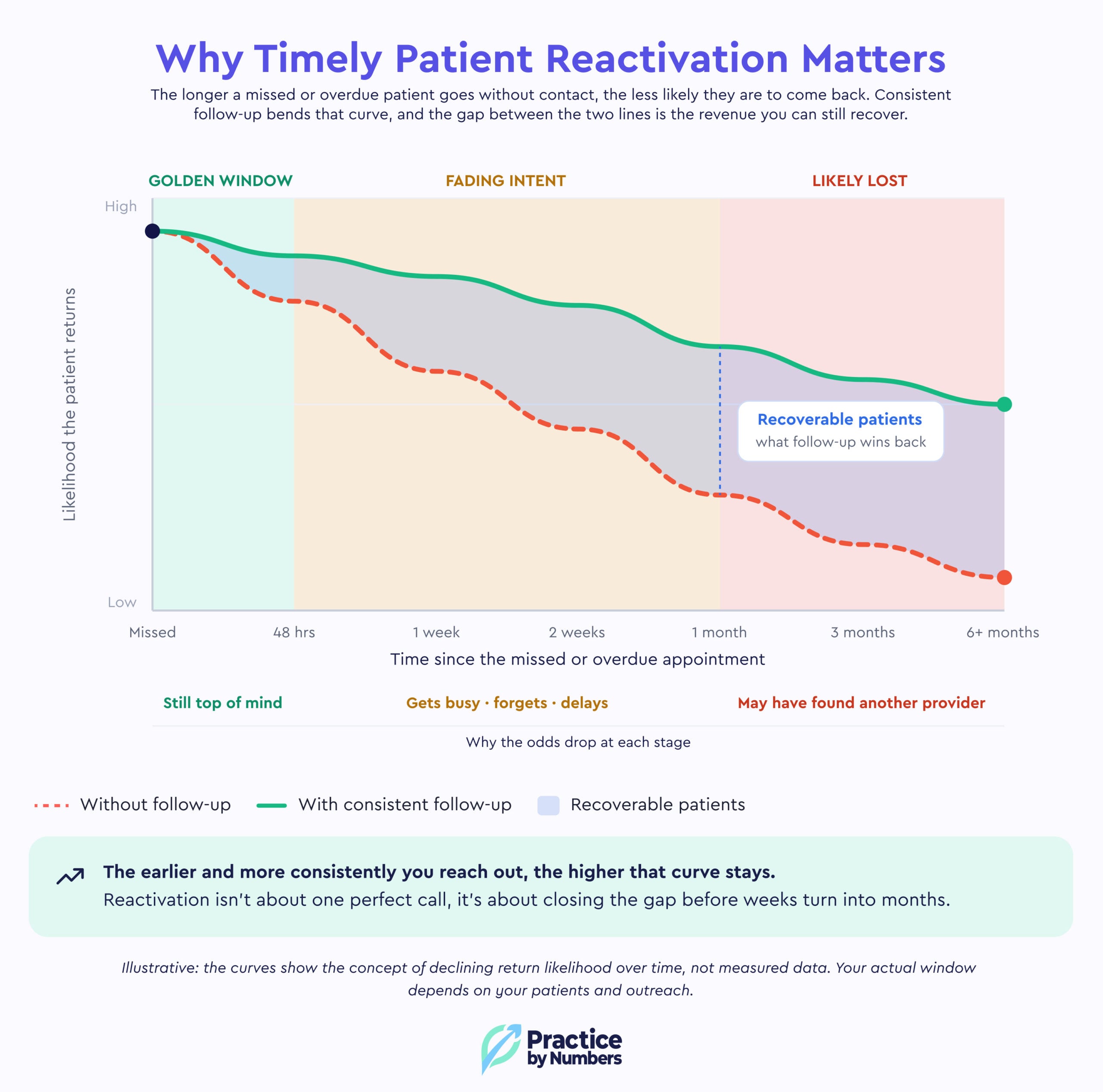
Some patients miss one appointment and never reschedule. Others gradually fall behind on preventive care until months, or even years, have passed without another visit.
These inactive patients often remain in your practice management system, but because they aren’t on today’s schedule, they rarely receive the same level of attention as active patients.
For many practices, bringing existing patients back is significantly more efficient than finding entirely new ones.
A consistent patient reactivation strategy doesn’t just help fill tomorrow’s schedule, it strengthens long-term patient relationships and supports more predictable practice growth.
👉 How Do You Reactivate Lapsed Dental Patients? A Step-by-Step Playbook
Why Most Practices Struggle to Recover These Patients
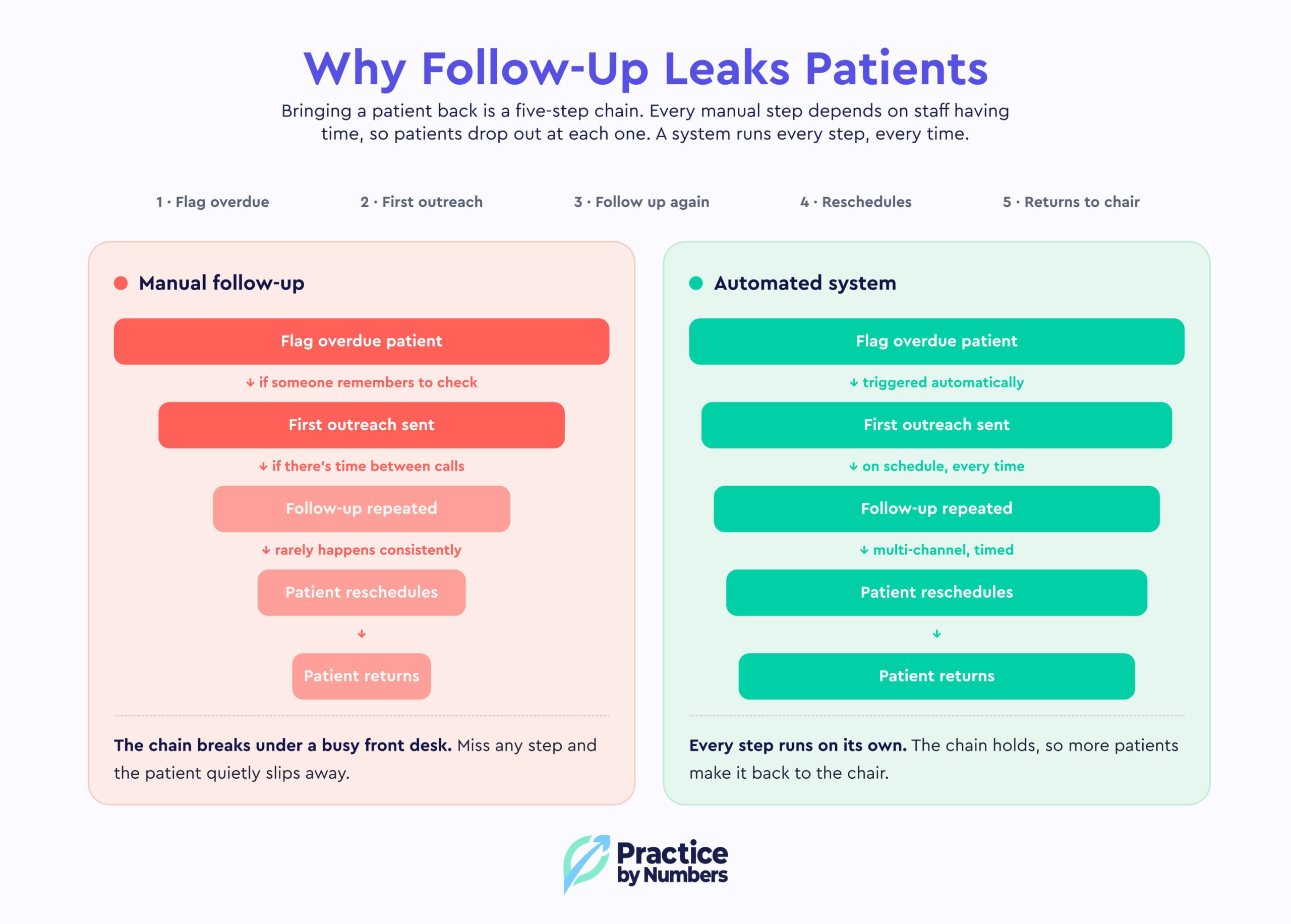
The challenge usually isn’t awareness. Most teams know they have overdue appointments, missed visits, and inactive patients. The challenge is consistency. Manual follow-up depends on someone remembering to make calls, sending reminders at the right time, tracking responses, and repeating the process every week.
Front desk teams are already balancing phones, check-ins, scheduling, insurance questions, and patient care. Following up with patients who missed an appointment or are overdue for routine care often becomes a task that’s delayed until there’s more time.
Meanwhile, patients may intend to reschedule but get busy, forget, or simply put it off. Without a reliable follow-up process, weeks can turn into months before anyone reconnects.
A consistent patient outreach system helps ensure those patients receive timely reminders to continue their care, making it easier for them to return while helping practices maintain healthier patient relationships and a more predictable schedule.
👉 Here Are 10 Dental Practice Management Tips Every Office Should Try
Measure the Opportunity Before You Try to Fix It
Before changing your reminder strategy or launching a reactivation campaign, it helps to understand the size of the opportunity.
Our FREE ROI Calculator estimates:
- Your monthly revenue affected by no-shows and cancellations
- Revenue you could recover through patient reactivation
- Your combined annual revenue opportunity
Simply enter a few details about your practice, including appointment volume, no-show rate, average appointment value, and inactive patients, to receive a personalized estimate based on your practice’s numbers in just 60 seconds.

What Successful Dental Practices Do Differently
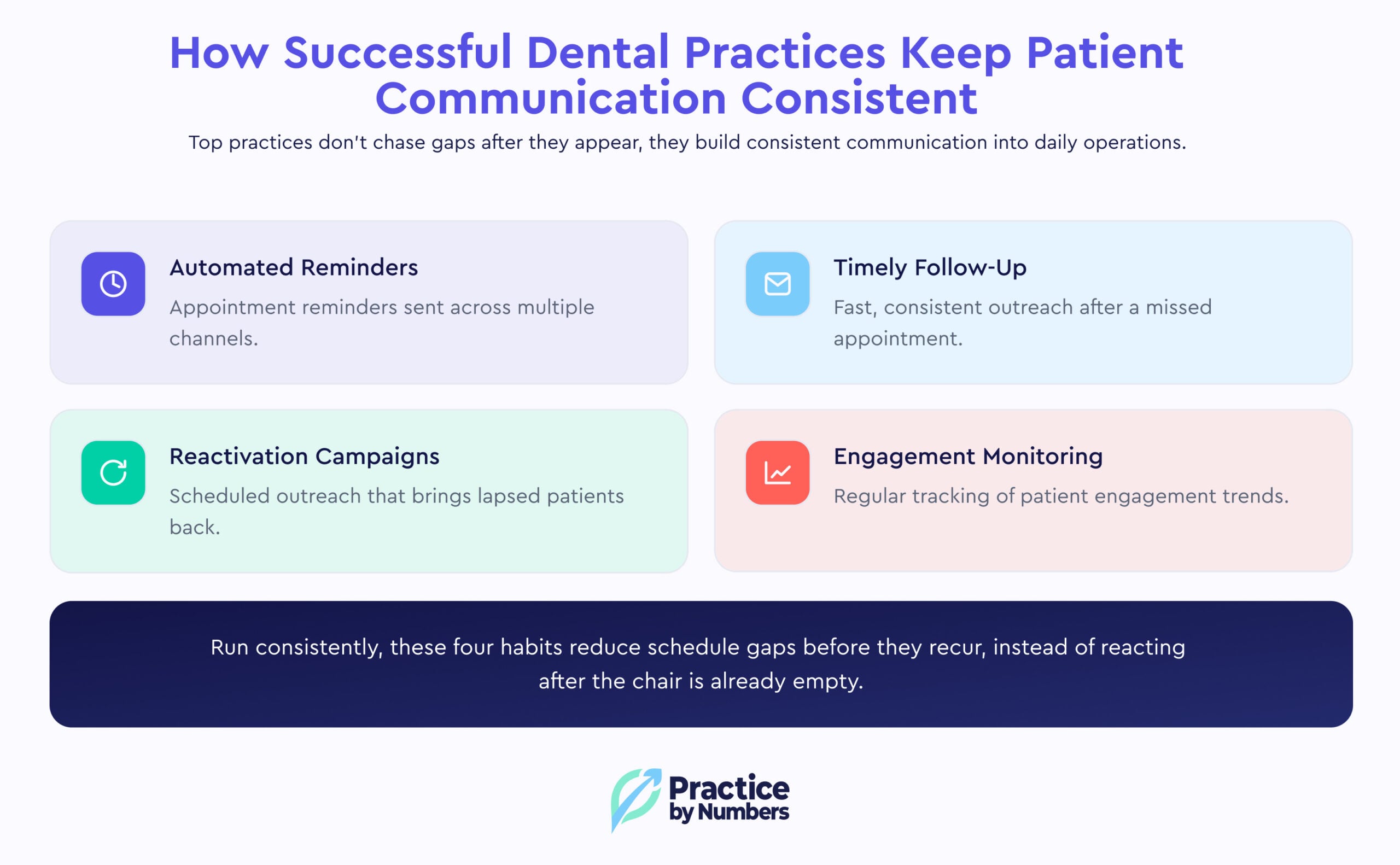
High-performing practices don’t rely on occasional reminder calls. They build consistent patient communication into their daily operations.
That includes:
- Automated appointment reminders across multiple channels
- Timely follow-up after missed appointments
- Scheduled patient reactivation campaigns
- Regular monitoring of patient engagement trends
Rather than responding after schedule gaps appear, they proactively reduce them before they become recurring problems.
Create a More Consistent Patient Follow-Up Process
Patients are more likely to stay on track with their care when follow-up is timely and consistent. But relying on manual reminders alone can make that difficult, especially as your practice grows. A structured follow-up process helps ensure patients receive the right communication at the right time, whether it’s a reminder, a recall notice, or a prompt to reschedule a missed appointment.
Practice by Numbers’ Patient Relationship Management (PRM) suite helps automate appointment reminders, patient reactivation campaigns, and personalized follow-up communication. Combined with real-time reporting, it gives practices better visibility into patient engagement while helping maintain healthier schedules and stronger long-term patient relationships.