A full, productive schedule is the foundation of a healthy dental practice, and Dentrix gives you the lists you need to protect it. The trick is knowing which lists to work and building a weekly habit around them. Do that, and you’ll bring back patients who have quietly dropped off, without spending a dollar on new marketing.
Here are the three Dentrix lists that keep a schedule full, and how to work them.
- A full schedule and strong collections are the two pillars of a healthy practice.
- The Unscheduled List holds patients who already committed and just need rescheduling.
- The Continuing Care list keeps recare going, which is the lifeblood of the practice.
- The Treatment Manager report surfaces accepted treatment that was never booked.
- Automation helps, but someone still needs to work these lists every week.
- Practice by Numbers connects to Dentrix to track how full and productive your schedule really is.
A Full, Productive Schedule Is the Foundation
Two things keep a dental practice healthy: a full, productive schedule and collecting what you produce. Almost everything else follows from those two pillars.
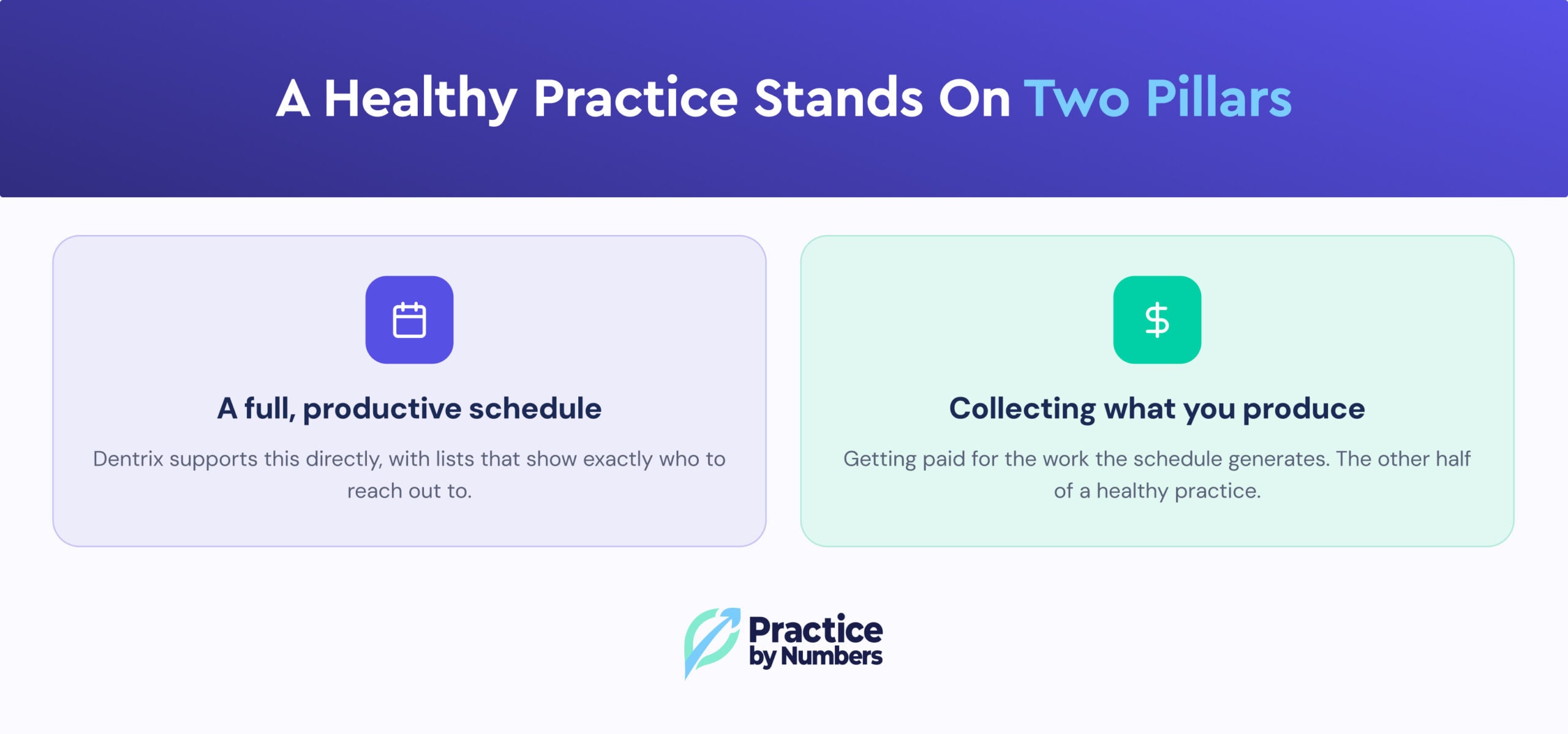
Dentrix supports the first one directly, with lists that show exactly who to reach out to. The practices that stay busy aren’t lucky; they work these lists consistently.
👉 Here’s a Simple Guide to Adding Practice by Numbers to Dentrix Ascend
1. The Unscheduled List: Patients Who Already Committed
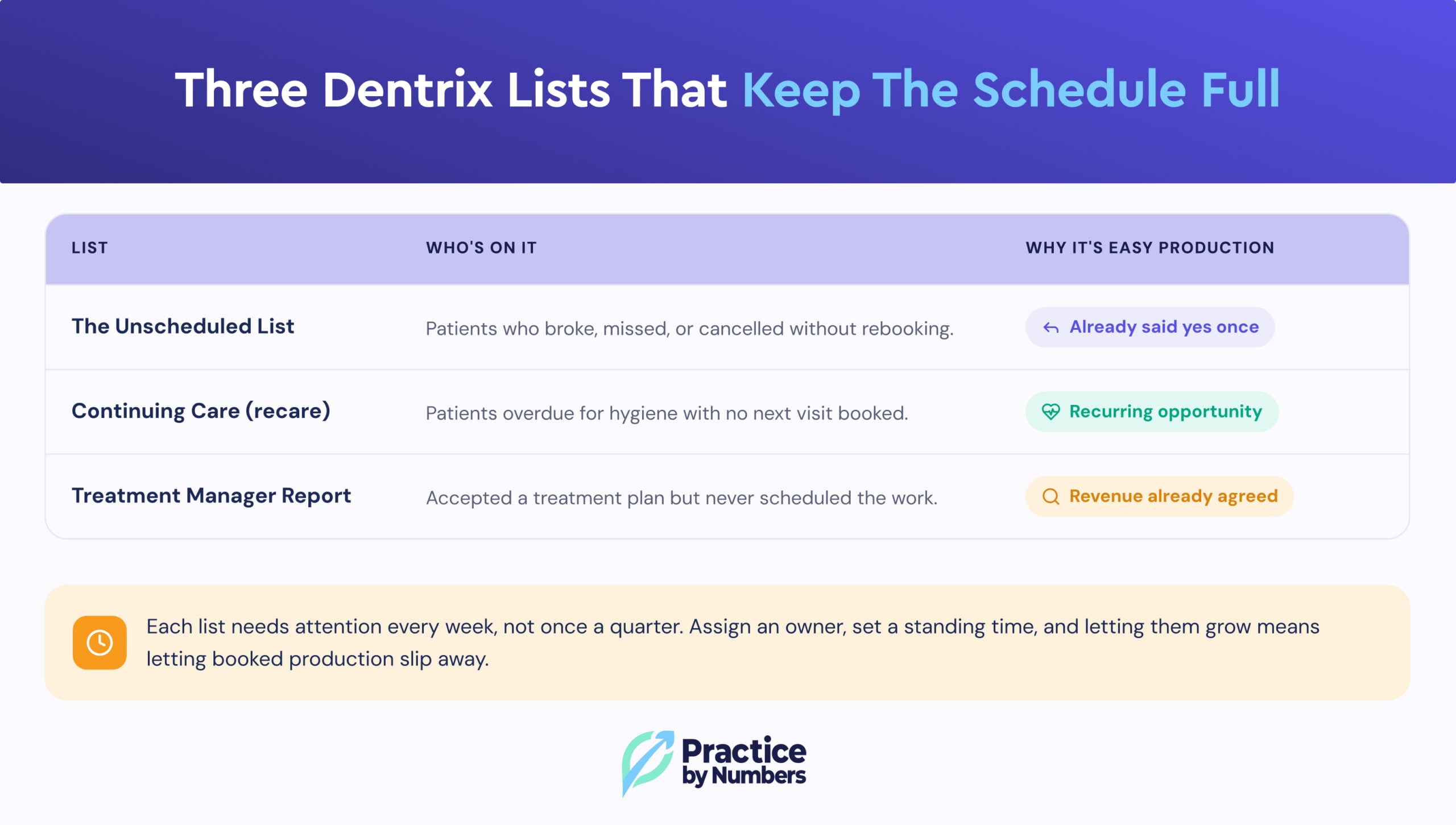
The Unscheduled List shows patients who were on the schedule and then broke, missed, or cancelled an appointment without rebooking. These patients already said yes once, so getting them back is a reminder, not a sale.
Work this list every week. Because these patients were already committed, they’re some of the easiest production to recover, and letting the list grow means letting booked production slip away.
2. Continuing Care: The Lifeblood of the Practice
Continuing care, or recare, is the lifeblood of a dental practice. The Continuing Care list shows patients who are overdue for hygiene and haven’t scheduled their next visit.
Automated texts and emails help here, and you should use them. But some patients ignore automated reminders, so a team member still needs to run the continuing care list and reach out personally to the ones who slip through. Keeping recare strong protects both hygiene production and the restorative treatment that gets diagnosed during those visits.
3. The Treatment Manager Report: Mining for Gold
The Treatment Manager report shows patients who have accepted treatment plans but walked out without scheduling the work. It’s one of the most valuable lists in Dentrix, and it’s easy to think of it as mining for gold, because the revenue is already there waiting to be booked.
Sort by treatment value, assign someone to work the top of the list each day, and you’ll recover production that was otherwise sitting idle. These patients already agreed to treatment; they just need a nudge to get on the schedule.
Pair Automation With a Human Touch
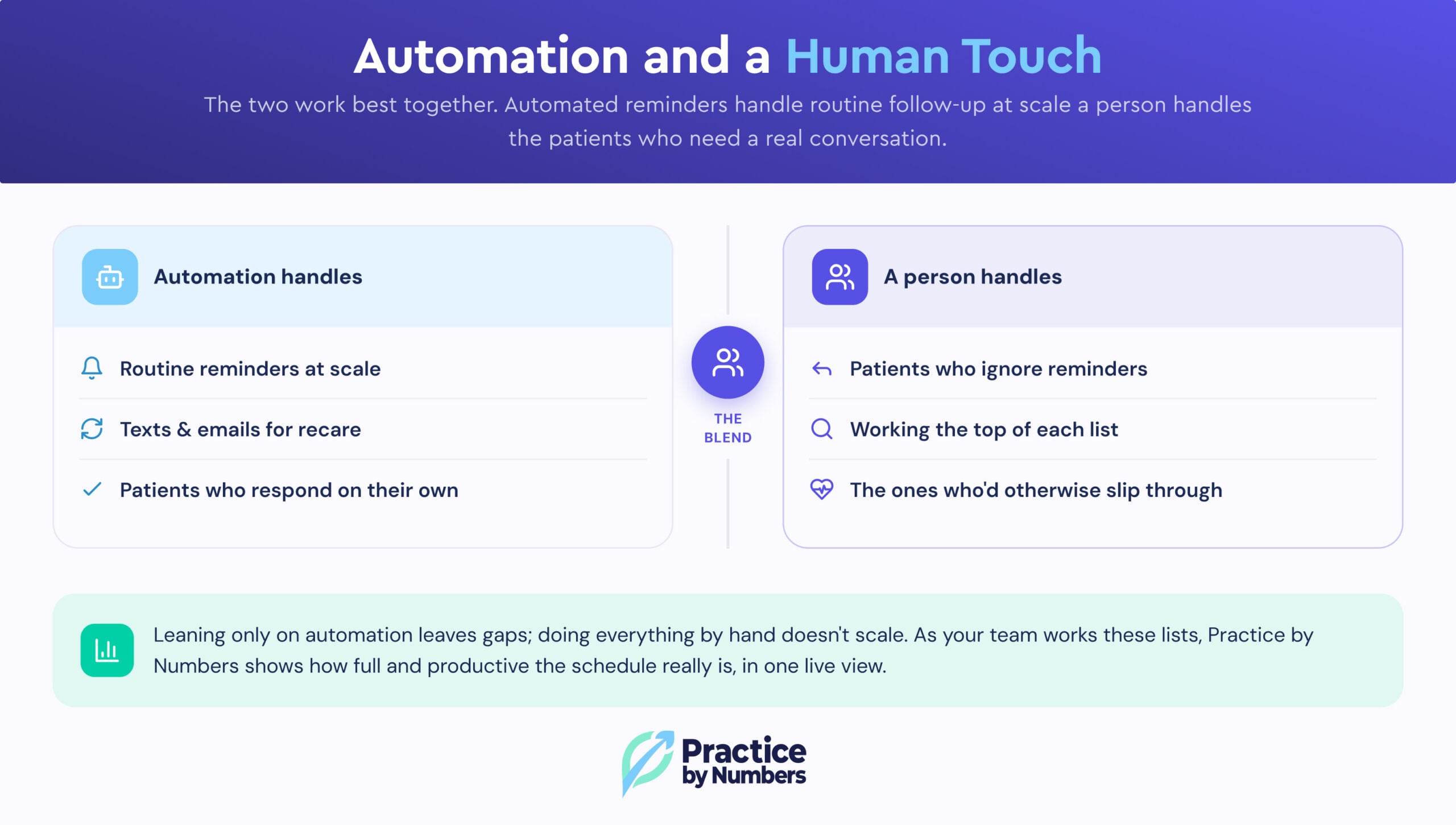
Automation and personal outreach work best together. Automated reminders handle the routine follow-up at scale, while a person handles the patients who need a real conversation. Leaning only on automation leaves gaps, and doing everything by hand doesn’t scale. The blend keeps the schedule full without burning out the front desk.
Work the Lists Every Week
The common thread across all three lists is consistency.
A practice can have excellent Dentrix scheduling tools and still have an underproductive schedule if those tools aren’t part of the team’s routine. Reviewing the lists once a quarter won’t have the same impact as making them part of the weekly workflow.
Assign an owner to each list and establish a standing time to review and work them. Depending on the size of the practice, that might mean:
- Unscheduled List: Review weekly and prioritize recent appointment breaks.
- Continuing Care: Review weekly and follow up with overdue patients.
- Treatment Manager: Review weekly or more frequently to prevent accepted treatment from going cold.
Track what happens after outreach, too. How many patients were contacted? How many scheduled? Which list produced the most appointments? Where are patients consistently falling out of the process?
Over time, this turns Dentrix scheduling from a set of reports into an active system for protecting production.
How Practice by Numbers Fits Alongside Dentrix
Dentrix provides the scheduling and patient data your team needs to manage the practice. Practice by Numbers adds another layer of visibility, helping practices understand what is happening across the schedule and where opportunities may exist.
When Practice by Numbers connects with Dentrix, your team can view key practice performance information around schedule utilization, recall, and unscheduled treatment in one place. Instead of relying only on individual reports or manually piecing together information, leaders can get a broader view of practice performance and identify areas that need attention.
That visibility can make it easier to answer questions such as:
- How full is the schedule?
- Where are the biggest gaps?
- Are patients staying on track with continuing care?
- How much treatment remains unscheduled?
- Are scheduling opportunities being addressed consistently?
Dentrix remains the foundation for managing patient and appointment information. Practice by Numbers can help turn that information into a clearer view of performance and opportunity.
👉 See How Dentrix + Practice by Numbers Integration Works