Dental practices today face an increasingly complex mix of demands such as higher patient expectations, heavy administrative workload, insurance complexities, and fierce competition. Many practices struggle with missed calls, inefficient intake processes, lost revenue, and poor visibility into what actually drives performance.
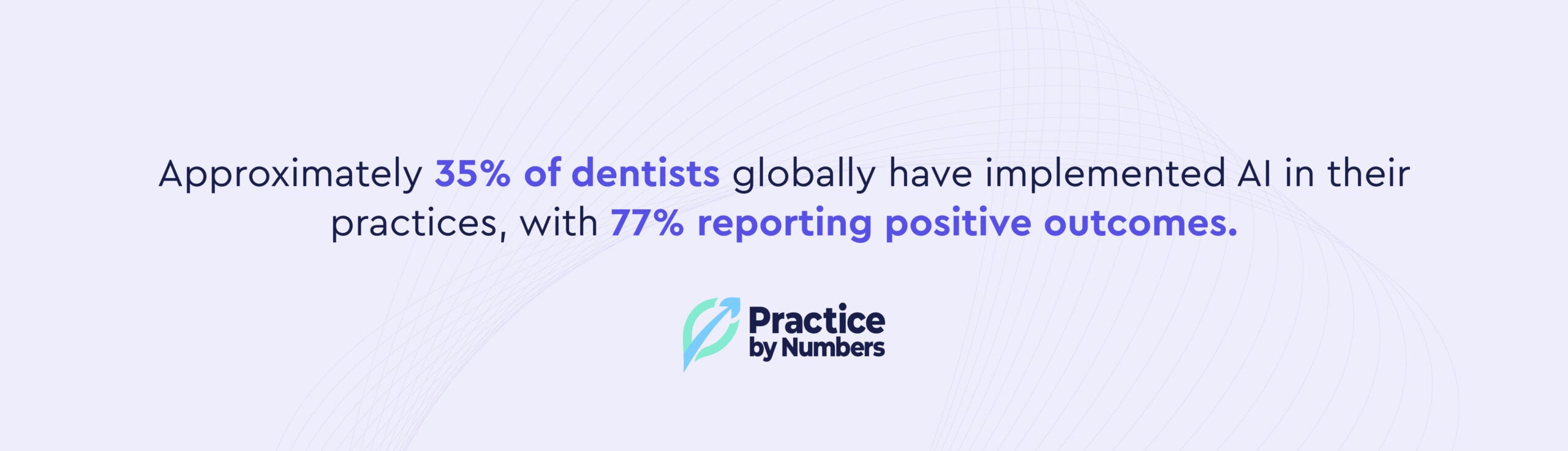
Despite this growing adoption, many practice owners remain uncertain about which AI tools deliver measurable ROI and how to implement them effectively. Artificial Intelligence (AI) for dentistry is no longer a futuristic perk. It is a practical, powerful tool that transforms operations, enhances patient experience, reduces errors, and unlocks hidden revenue.
If you want to evaluate or adopt AI, this is your go-to resource. By the end, you’ll have clarity on what works, how it works, and what to expect. This guide will help you understand exactly how purpose-built AI solves the biggest operational problems in dental practices, what specific AI capabilities deliver the highest returns, and how to select and implement the right solution for your practice size and goals.
Whether you are a solo practitioner struggling with administrative overwhelm, a multi-doctor group seeking performance visibility, or a DSO leader focused on systematic revenue optimization, this guide provides the framework and product knowledge you need to make an informed AI investment decision.
The Modern Dental Practice Problem Landscape
Dental practices, especially the growing ones, often share a set of recurring operational challenges. These problems create friction, inefficiency, and ultimately revenue loss or stagnation. We have made a list of the most common pain points in the dental industry:
- Front-desk overload and staff burnout: Calls keep coming, forms pile up, patients expect instant replies, but staff resources are limited.
- Missed new patient calls and poor follow-up: Without a system to track and analyze calls, many potential new patients slip through the cracks.
- Manual insurance verification and billing bottlenecks: Insurance documents, verbal confirmations on calls, and paperwork slow down scheduling and can cause billing errors.
- Slow, inconsistent clinical intake and prep: Reviewing long medical history forms, scanning for allergies or risks manually. Time-consuming and error-prone.
- No visibility into revenue leaks or performance gaps: Without data, you don’t know how many potential patients never book, or why.
- Disconnected workflows and unmeasurable staff performance: Multiple tools, manual handoffs, and inconsistent communication. Hard to know which staff follow-up, which calls converted, or who needs coaching.
For many practices, these daily friction points don’t just slow things down, they quietly drain revenue, reduce patient satisfaction, and block growth. That’s why forward-looking practices are increasingly looking toward AI in dental practices. Not as a fancy tool, but as a necessity for scaling efficiently and profitably.
Where AI Actually Fits in Dental Practices?
AI applications in healthcare vary significantly across specialties. Dentistry presents unique characteristics that make it particularly well-suited for AI implementation:
High-Volume Patient Interactions: Unlike medical specialists who see patients episodically, dental practices maintain continuous communication through recall systems, appointment confirmations, treatment planning discussions, and emergency inquiries. This high interaction frequency creates abundant data for AI analysis and optimization.
Standardized Workflows: Dental appointment types (cleaning, restoration, emergency, consultation) follow relatively predictable patterns. This consistency allows AI systems to learn optimal communication strategies and identify anomalies requiring attention.
Practice Ownership Structure: Most dental practices operate as independently owned businesses, which gives them a major advantage when adopting new technology. Unlike large hospital systems that require multiple layers of approval, private practices can move quickly on decisions that impact efficiency, revenue, and patient experience. This flexibility allows dentists to test, implement, and optimize AI-driven solutions without long delays.
Routine Diagnostic Imaging: Dental practices perform imaging at nearly every patient visit, creating consistent data streams for AI analysis. This differs from medical practices where imaging occurs only when clinically indicated.
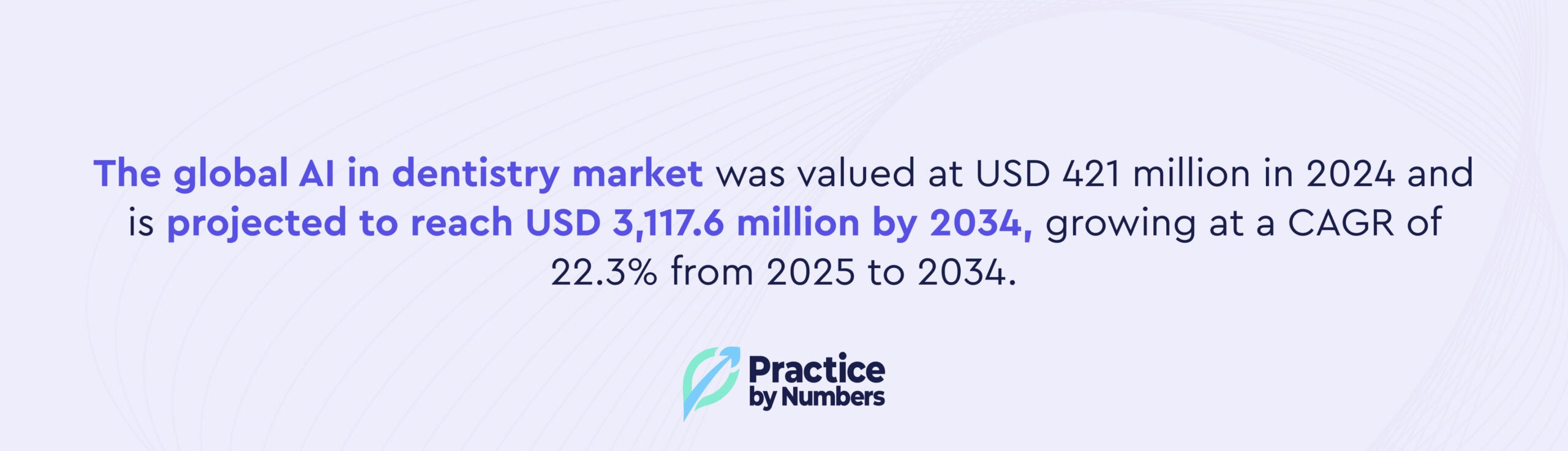
Effective AI for Dentistry Addresses 6 Core Operational Domains:
Administrative Automation
Automates forms, documentation, and routine patient messaging to reduce front desk workload, eliminate manual errors, and accelerate daily operations without adding staff.
Call Intelligence and Analytics
Transcribes, summarizes, and analyzes patient calls to uncover booking gaps, sentiment trends, and communication breakdowns that directly impact revenue.
Clinical Data Summarization
Condenses complex medical histories and insurance information into quick, actionable summaries so providers enter every appointment fully informed.
Revenue Intelligence
Identifies missed booking opportunities, tracks call-to-appointment conversion, and highlights where production is leaking before it hits your bottom line.
Performance Coaching
Uses objective call scoring and voice attribution to measure staff effectiveness, surface coaching opportunities, and improve consistency across the front desk.
Patient Experience Optimization
Ensures fast follow-ups, professional messaging, and consistent communication to build trust, reduce frustration, and increase long-term patient retention.
Why PbN AI Stands Apart
The dental AI market includes various point solutions addressing individual problems: call tracking systems, review response tools, appointment reminder services, and form processors. Practice by Numbers takes a fundamentally different approach by creating an integrated ecosystem where each component amplifies the others.
Integrated Data Intelligence Rather than isolated tools that generate separate data silos, PbN AI creates a unified intelligence layer across all patient touchpoints. A single patient interaction might trigger call transcription, sentiment analysis, form summarization, performance scoring, and opportunity identification simultaneously.
Tiered Implementation Path Recognizing that practices have different operational maturity levels and technology readiness, PbN offers three distinct entry points. You can start with foundational capabilities and scale upward as your practice grows, rather than facing an all-or-nothing implementation decision.
Practice Management Integration Deep integration with leading practice management systems ensures AI insights flow directly into existing workflows rather than requiring parallel processes or duplicate data entry.
The Complete PbN AI Product Breakdown
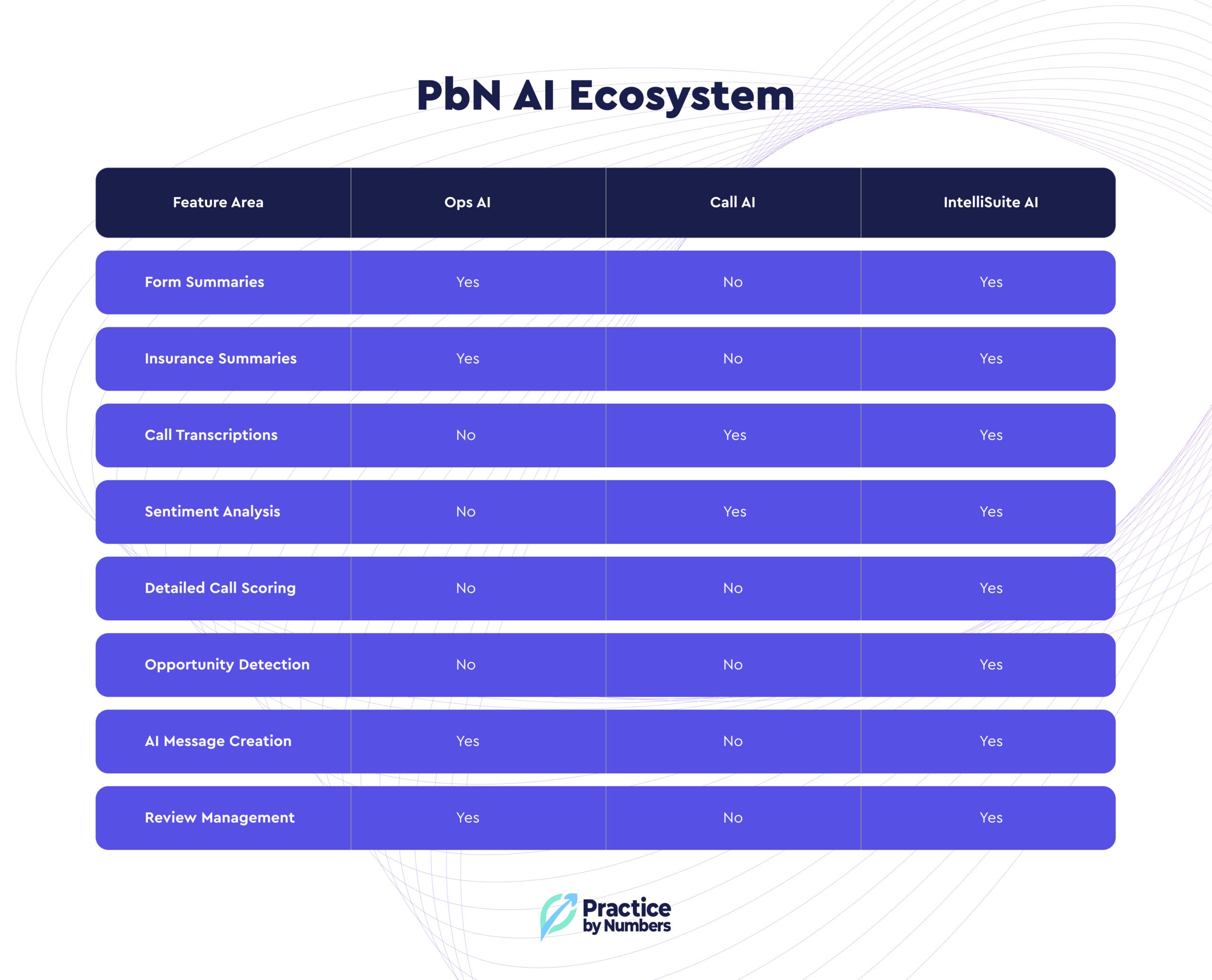
Package 1: Ops AI (Foundation-Level Intelligence)
Who This Is For:
- Solo practitioners or small practices (1-2 doctors)
- Practices without PbN Voice integration
- Teams prioritizing administrative efficiency over call analytics
- Startups establishing operational foundations
- Practices with limited technology budgets seeking a high-impact entry point
Core Problem Solved: Administrative burden prevents clinical teams from focusing on patient care. Staff spend excessive time on repetitive tasks like form review, message drafting, insurance interpretation, and review management.
Key Features and Business Impact:
– PiQ Assistant (Practice Intelligence Automation)
PiQ Assistant automatically pulls key performance data, analyzes trends, and creates real-time reports inside Practice IQ. It eliminates hours of manual data work for managers and enables faster, smarter decisions by instantly highlighting issues and opportunities as they happen.
– RiQ Assistant (Revenue Intelligence Automation)
RiQ Assistant provides real-time revenue insights, detects financial trends, and generates actionable patient lists. By proactively identifying outstanding balances, collection gaps, and production anomalies, it helps practices recover revenue quickly, turning months of delayed collections into days and potentially recovering thousands annually.
– Form Summary
The Form Summary feature automatically analyzes patient-submitted forms, condensing medical histories, consent documents, and intake paperwork into clear bullet points highlighting medications, allergies, systemic conditions, and treatment concerns. This saves providers 5–10 minutes per patient, reduces clinical risk, speeds chart review, and for Open Dental users, populates the Medical Summary field automatically.
– Message Creation
AI crafts professional, personalized patient communications like SMS, emails, and reminders, ensuring clarity, empathy, and brand consistency. It helps staff maintain high-quality messaging, even under pressure or with new hires, reducing training time and protecting the practice’s reputation.
– Review Response
This feature automatically monitors and responds to patient reviews across platforms with timely, tone-matched replies. It eliminates the daily burden of manual tracking and crafting responses, prevents reviews from going unanswered for days, and ensures every patient feels acknowledged, strengthening your online reputation while saving staff time.
– Insurance Summary
It simplifies complex insurance benefits into clear, easy-to-read coverage summaries, eliminating the need for staff to dig through dense portals and documents. This reduces miscommunication, speeds up financial conversations, cuts billing errors, and allows treatment coordinators to confidently present costs without delays.
Package 2: Call AI (Conversation Intelligence)
Who This Is For:
- Practices with PbN Voice integration
- Multi-doctor practices seeking communication visibility
- Offices receiving 200+ monthly calls
- Teams struggling with inconsistent phone performance
- Managers lacking objective coaching data
Core Problem Solved: Patient phone interactions represent valuable intelligence that practices cannot capture or act upon. Managers lack visibility into communication quality, miss revenue opportunities hidden in calls, and struggle to provide evidence-based coaching.
Key Features and Business Impact:
– Call Transcription with Searchable Archives
This feature automatically transcribes and stores every patient call in a searchable database, eliminating the need to sift through hours of recordings. It solves disputes by creating a reliable record of what was discussed, promised, or explained during calls. Managers can instantly verify patient conversations, review team performance, and maintain a clear, auditable history of every interaction.
– AI-Generated Call Summaries
AI-generated call summaries turn long patient conversations into quick, clear insights for managers. Instead of spending 20+ hours a week reviewing full call recordings, they receive 30-second summaries covering the reason for the call, patient concerns, booking outcomes, follow-ups, and objections. This makes quality monitoring easy at scale and enables consistent, performance-based coaching using real interactions.
– Sentiment Analysis with Alert Triggers
AI-powered sentiment analysis monitors patient calls in real time by analyzing tone and language to detect positive, neutral, or negative interactions and instantly alert managers when issues arise. This helps practices address patient dissatisfaction before it turns into no-shows or negative reviews. With the majority of missed-call interactions coming from new patients, this rapid response plays a critical role in protecting future revenue and patient trust.
– Call Performance Analytics
Comprehensive dashboards track call volume patterns, peak-hour statistics, new versus returning patient ratios, and conversion metrics. It provides a clear, real-time view of call trends, peak hours, patient mix, and conversions, solving the problem of limited visibility into what drives quality leads and lost opportunities. With measurable marketing ROI and actionable insights, practices can focus spending on campaigns that book real appointments and adjust staffing to reduce missed calls during busy periods.
Package 3: IntelliSuite AI (Complete Command Center)
Who This Is For:
- Growth-focused multi-doctor practices
- DSOs requiring standardized performance tracking
- Practices committed to data-driven decision making
- Organizations with sophisticated technology infrastructure
- Teams ready to implement systematic revenue recovery
Core Problem Solved: Practices lack the comprehensive intelligence infrastructure needed to systematically identify and capture every revenue opportunity while maintaining consistent communication quality across all patient touchpoints.
IntelliSuite AI combines all capabilities from Ops AI and Call AI with advanced features that transform your practice into a precision revenue optimization machine.
Complete Feature Set:
Everything in Ops AI:
- PiQ Assistant for practice intelligence
- RiQ Assistant for revenue insights
- Form summaries accelerating clinical prep
- Message creation ensuring communication quality
- Review response automation protecting reputation
- Insurance documentation summaries
Everything in Call AI:
- Complete call transcription and archiving
- AI-generated call summaries
- Sentiment analysis with proactive alerting
- Performance analytics and conversion tracking
Plus, Advanced Capabilities:
– Content Writer
The Content Writer instantly creates polished, on-brand emails, texts, and review responses tailored to each situation. It removes the time and skill burden of crafting personalized messages by replacing generic templates with smart, context-aware communication. The result is faster message creation, more consistent brand voice, and better patient relationships through timely, personalized interactions.
– AI Insights Engine
IntelliSuite transforms raw call data into clear performance metrics you can use to run a better practice.
- Detailed Call Scoring: Evaluate call quality, staff performance, and appointment outcomes.
- Performance Dashboards: See what’s working and where coaching is needed.
- Opportunity Detection: Uncover missed appointment chances and revenue gaps.
- Negative Call Alerts: Get notified instantly when a patient experience needs attention.
- Advanced Optimization: AI highlights inefficiencies and suggests improvements.
– Outcome Tracking
Outcome Tracking provides complete visibility into every call by accurately logging results, whether it leads to a confirmed booking, cancellation, reschedule, or no response. It solves the common problem of assuming follow-ups are done without knowing the real outcome. By closing this loop, practices can instantly spot missed opportunities, ensure no inquiry falls through the cracks, and drive stronger follow-through and revenue.
– Voice Fingerprinting
Securely identifies team members using unique vocal characteristics, enabling automatic attribution of calls to specific staff members even when they don’t introduce themselves. This solves the common problem of tracking who handled which call in busy, multi-location practices with shared phone systems. The result is accurate performance visibility and accountability without relying on manual logs or self-reporting.
The Strategic Advantage of AI Adoption
The integration of artificial intelligence in dental practice management has moved from innovation to necessity. Practices implementing AI-powered tools experience measurable improvements in operational efficiency, staff productivity, and patient satisfaction. As patient expectations for seamless, professional communication continue rising, practices without intelligent automation face increasing competitive disadvantage.
PbN AI represents a strategic investment in practice infrastructure that compounds in value over time. The insights gained from conversation intelligence create a virtuous cycle: better data enables better coaching, which improves performance, which generates better outcomes, which creates more valuable data for continued refinement.
Future-Proof Your Practice
The dental industry continues to experience rapid evolution toward data-driven decision making and automated workflows. Practices that establish AI capabilities now position themselves to:
- Adapt quickly to emerging technologies and patient expectations
- Build institutional knowledge through systematically captured insights
- Attract and retain top talent seeking modern, efficient work environments
- Scale operations without proportional increases in administrative burden
Selecting Your Strategic Entry Point
The decision about which PbN AI package to implement should not be driven primarily by budget or feature checklists. Instead, it requires an honest assessment of your practice’s operational sophistication, technological readiness, and strategic priorities.
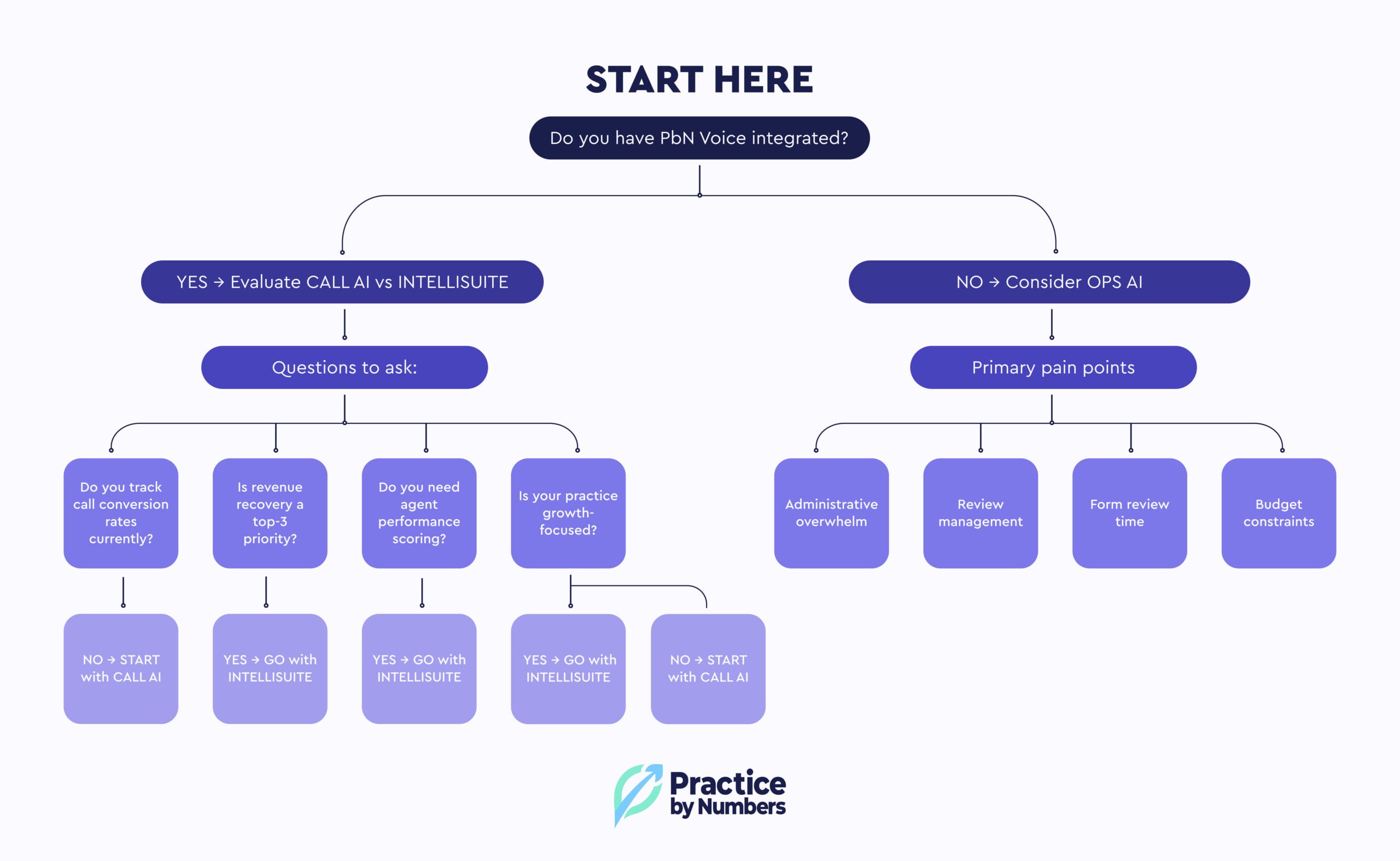
Ops AI fits teams still struggling with inconsistent processes and time-heavy admin work. Call AI suits practices that run smoothly but lack visibility into performance and communication impact, and IntelliSuite is built for data-driven practices focused on systematic revenue growth and optimization. Rather than starting at the most basic level by default, the right choice depends on your current operational requirement. Select the solution that removes your biggest growth bottleneck, not the one that feels safest to begin with.
AI adoption in dental practices has reached the inflection point where early adopters transition to mainstream implementation. Dental practices implementing AI today capture market share, attract top talent, and build operational advantages that competitors cannot easily replicate. The practices that delay adoption face widening performance gaps as AI-powered competitors operate with fundamentally lower costs and higher conversion rates.
Your Path to Intelligent Practice Management
The question facing dental practices today is not whether to adopt AI, but how quickly to implement it. Every day without intelligent automation represents lost revenue opportunities, preventable patient dissatisfaction, and competitive ground ceded to more technologically sophisticated practices.
PbN AI turns your existing operations into a continuous learning and optimization system, where every patient interaction generates insights that improve future performance. This is the future of dental practice management: intelligent, automated, and relentlessly focused on the outcomes that matter most to your success.
Unlike traditional tools, this intelligence compounds over time, strengthening decision-making and competitive advantage. As adoption accelerates across the industry, early movers will define the next standard of excellence. The question is no longer if AI works. It is how quickly your practice chooses to lead with it.