A dental patient management system is the technology that helps a practice organize, manage, and strengthen every patient relationship, from the first phone call and online appointment request to years of ongoing preventive care.
While many people associate patient management with scheduling or digital charts, modern systems do much more. They combine patient records, communication, treatment tracking, billing, recall, and reporting into a single workflow so every department works from the same information.
The goal isn’t simply to store patient data, it’s to help practices deliver a better patient experience, reduce administrative work, improve treatment follow-through, and make smarter business decisions.
As dental practices continue adopting automation and AI-powered workflows, patient management systems have evolved from administrative tools into growth platforms that directly influence production, patient retention, and operational efficiency.
👉 See How Patient Relationship Management Boosts Practice Revenue
- A dental patient management system centralizes patient records, scheduling, billing, communication, and digital intake into one connected workflow.
- The best platforms eliminate disconnected data by keeping every patient interaction tied to a single record.
- Advanced capabilities such as patient segmentation, treatment tracking, analytics, and reputation management help practices improve retention and uncover additional revenue opportunities.
- When evaluating software, prioritize integration, automation, ease of use, reporting, and compatibility with your existing practice management system.
- A patient management system delivers the most value when it helps your team take action, not simply store information.
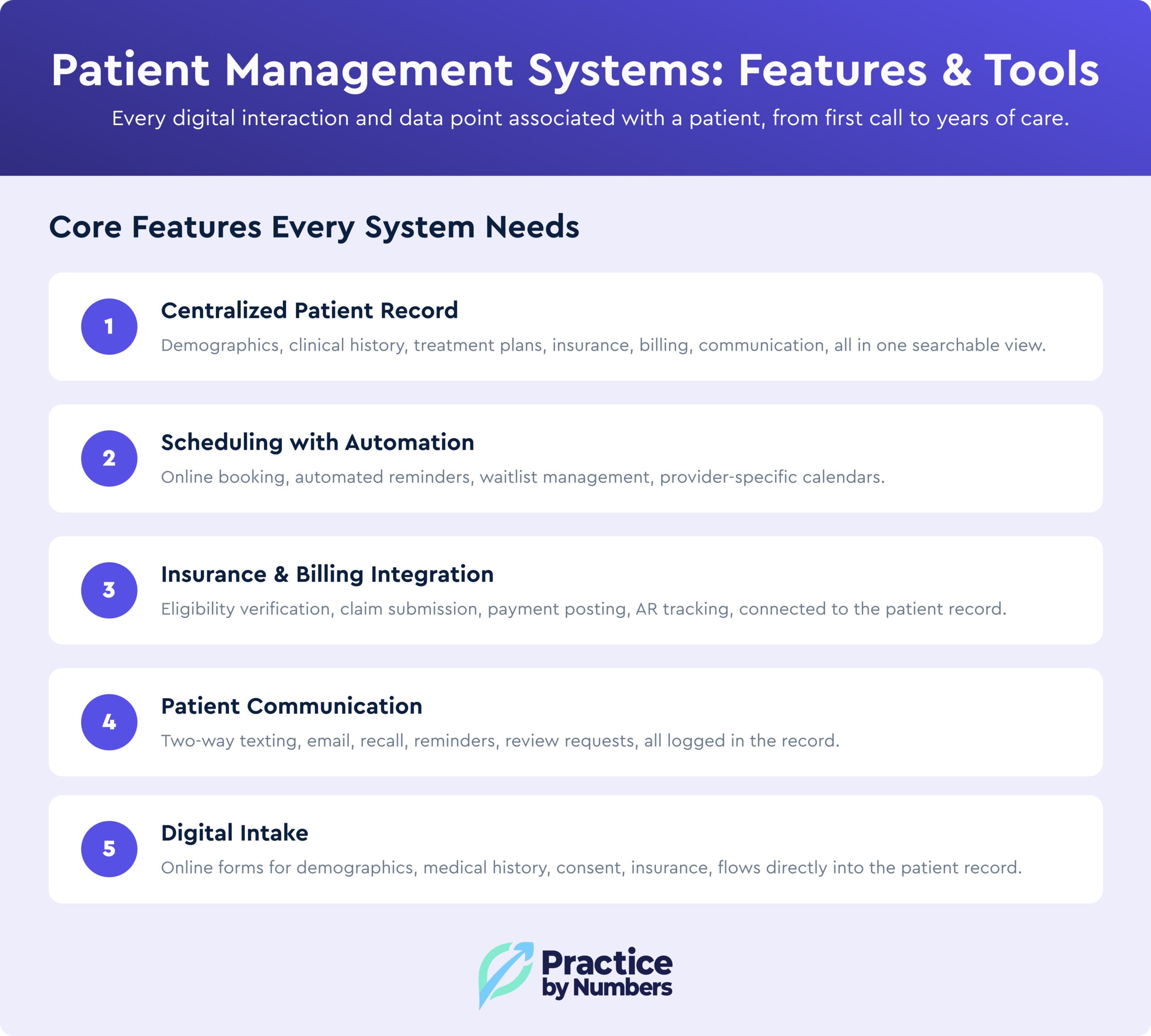
Core Features Every System Needs
Every dental patient management system should simplify day-to-day operations while giving your team immediate access to the information they need. The following features form the foundation of an effective system, regardless of practice size.
1. Centralized patient record
Every patient interaction should live in one complete, searchable profile. Beyond demographics and clinical history, this includes:
- Treatment plans
- Insurance details
- Financial information
- Appointment history
- Signed forms
- Notes
and every communication exchanged with the practice.
A centralized record gives front-office staff, hygienists, dentists, and treatment coordinators immediate access to the same information, reducing duplicate work, preventing communication gaps, and improving continuity of care.
2. Scheduling with automation
Scheduling should do more than fill appointment slots. It should actively help maximize provider utilization and minimize downtime.
Modern scheduling tools include:
- Online booking
- Automated confirmations & reminders
- Cancellation management
- Digital waitlists
- Recurring appointments
- Provider-specific calendars
Many systems can automatically fill last-minute openings by notifying patients who have requested earlier appointments.
Automation reduces the administrative burden on front-office teams while helping practices decrease no-shows, improve chair utilization, and create a smoother experience for patients.
3. Insurance and billing integration
Financial workflows should be tightly connected to the patient record rather than managed through separate systems.
An effective patient management platform supports insurance eligibility verification, claim submission, payment posting, outstanding balance tracking, treatment estimates, and payment history, all without requiring duplicate data entry.
When billing and patient management work together, practices spend less time reconciling information, reduce claim errors, and improve overall revenue cycle efficiency.

4. Patient communication
Consistent communication plays a major role in patient satisfaction and long-term retention.
A modern patient management system should support two-way texting, email, appointment reminders, recall campaigns, treatment follow-ups, review requests, and patient notifications from one platform. Every conversation should automatically become part of the patient’s record so anyone on the team can see the complete communication history.
This creates a more personalized patient experience while reducing missed appointments and improving follow-up consistency.
👉 Learn How to Streamline Dental Office Communication & Scheduling
5. Digital intake
Paper forms slow down check-in, increase manual work, and create opportunities for data entry errors.
Digital intake allows patients to complete demographic information, medical history, insurance details, consent forms, and health questionnaires before arriving at the practice. Once submitted, the information flows directly into the patient record.
Besides improving operational efficiency, digital intake shortens wait times, reduces paperwork, and gives providers accurate information before the appointment begins.
Features That Drive Growth
Once the fundamentals are in place, advanced capabilities help practices move beyond administration and focus on growth. These features improve patient retention, increase treatment acceptance, and provide the insights needed to make smarter business decisions.
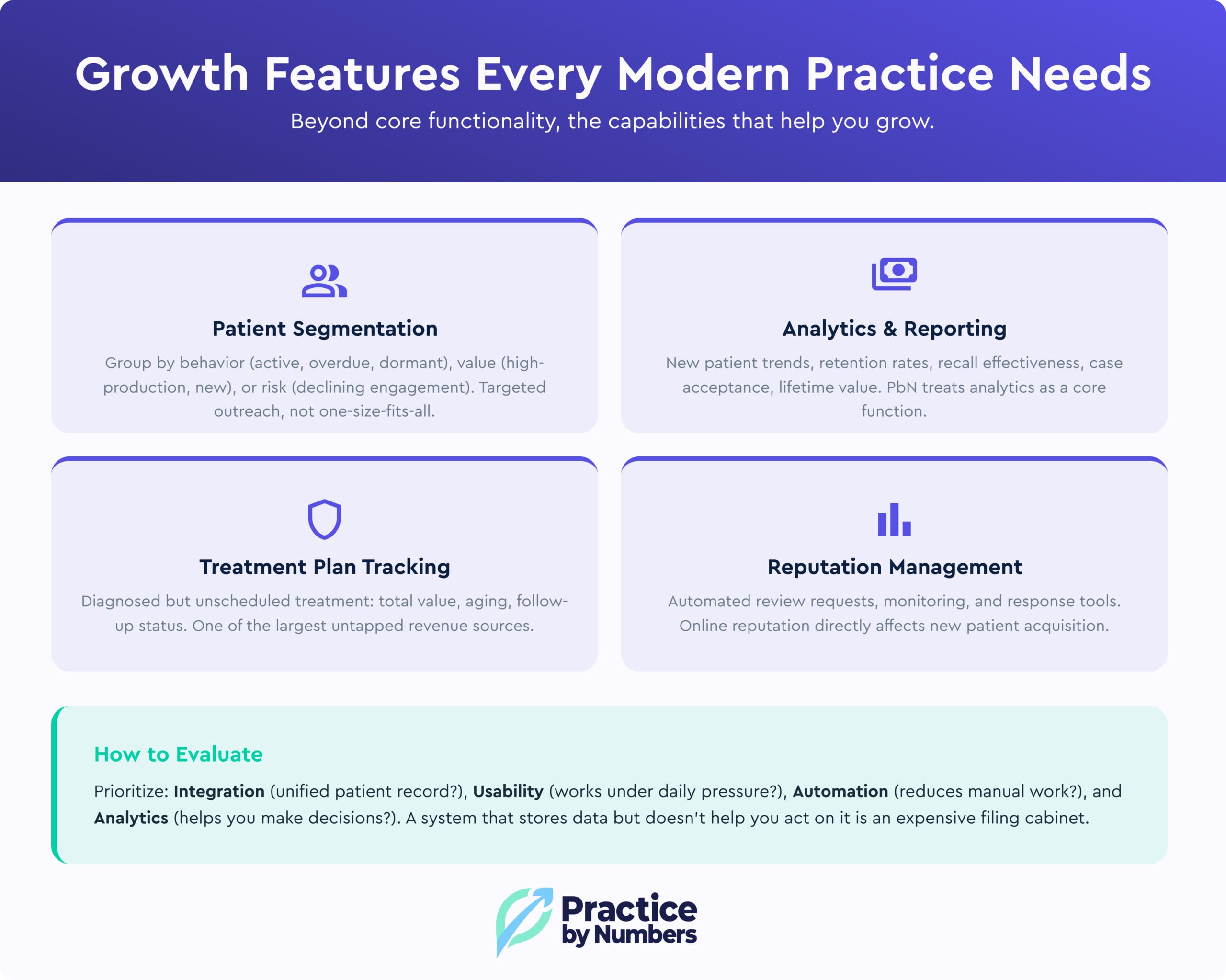
Patient segmentation
Not every patient requires the same type of communication. Patient segmentation allows practices to organize patients based on factors such as:
- Appointment history
- Recall status
- Diagnosed treatment
- Insurance type
- Production value
- Age
- Engagement stage
Instead of sending identical messages to every patient, practices can deliver more relevant outreach. For example, encouraging overdue hygiene patients to schedule, following up with patients who postponed treatment, or reconnecting with inactive patients.
More personalized communication typically leads to higher response rates and stronger patient retention.
Analytics and reporting
Patient management generates valuable operational data, but that information only becomes useful when it’s easy to understand. Comprehensive reporting should provide visibility into:
- New patient acquisition
- Recall effectiveness
- Patient retention
- Appointment utilization
- Treatment acceptance
- Cancellations
- Production trends
- Patient lifetime value.
Rather than relying on assumptions, practice owners can use these insights to identify bottlenecks, measure team performance, and make informed business decisions backed by data.
Platforms like Practice by Numbers treat analytics as a core function by connecting patient management data with production, billing, scheduling, and operational metrics. This creates a complete picture of how patient relationships influence overall practice performance.
Treatment plan tracking
One of the largest hidden growth opportunities in dentistry comes from diagnosed treatment that patients haven’t yet scheduled.
Treatment tracking provides visibility into unscheduled treatment plans, including total treatment value, diagnosis dates, patient follow-up status, and aging reports. Instead of relying on spreadsheets or memory, teams can prioritize outreach based on urgency or treatment value.
By consistently following up with patients who have accepted or expressed interest in treatment, practices often recover significant revenue without increasing new patient marketing spend.
Reputation management
Online reviews have become an essential part of patient acquisition.
Reputation management tools automate review requests after appointments, monitor reviews across platforms, notify teams of new feedback, and simplify response management.
Strong online ratings increase visibility in local search results, improve patient trust, and influence whether prospective patients choose your practice over nearby competitors. Because reputation directly impacts patient acquisition and retention, it has become an important part of modern patient management.
👉 Learn How to Manage Google Reviews Without It Taking Up Everyone’s Time
Evaluating Systems
When comparing dental patient management systems, focus on capabilities that improve both patient care and operational efficiency.
- Integration: Does the platform connect scheduling, communication, billing, reporting, and patient records into one unified workflow?
- Usability: Can your team learn and use it efficiently during busy clinical days without creating additional complexity?
- Automation: Does it eliminate repetitive administrative work such as reminders, recalls, follow-ups, and review requests?
- Analytics: Does it provide meaningful insights that help improve patient retention, production, scheduling, and financial performance?
The best systems don’t simply collect information, they transform patient data into actionable insights that help practices make better decisions, improve patient experiences, and increase long-term profitability.
👉 End-to-End Patient Journey Tracking for Dental Practices
How Practice by Numbers Turns Patient Data Into Growth
Managing patient information is only part of the equation. The bigger challenge is turning that information into timely communication, consistent follow-up, and better patient experiences.
The Practice by Numbers Patient Relationship Management (PRM) Suite helps practices manage every stage of the patient journey by connecting communication, automation, and insights into one platform. Instead of relying on multiple disconnected tools, your team can engage patients more effectively while reducing manual work.
Key capabilities include:
- Automated Patient Communication: Send appointment reminders, recalls, confirmations, review requests, and personalized follow-up campaigns through text and email, all triggered automatically based on patient activity.
- Digital Patient Intake: Replace paper forms with secure online registration, medical history, insurance, and consent forms that flow directly into your practice management system, improving accuracy and reducing front-desk workload.
- Online Scheduling & Patient Engagement: Make it easy for patients to request or book appointments online while giving your team visibility into scheduling activity and patient interactions.
- Review Management: Automatically request reviews after appointments, monitor your online reputation across platforms, and respond to patient feedback from a centralized dashboard.
- Revenue Recovery & Treatment Follow-up: Identify diagnosed-but-unscheduled treatment, automate outreach to patients who haven’t scheduled, and help recover revenue opportunities already within your patient base.
- Practice Intelligence: Connect patient engagement with operational and financial performance through dashboards that track retention, case acceptance, recall effectiveness, production, and other key practice metrics.
Together, these capabilities help practices create a more connected patient experience, from the first appointment request through ongoing recall and long-term retention. Rather than simply storing patient information, Practice by Numbers helps teams build stronger patient relationships while improving operational efficiency and practice growth.