A dental office manager is often the operational backbone of the practice. From keeping the schedule full and the team aligned to ensuring claims are submitted and patients are cared for, dozens of responsibilities compete for attention every day. The challenge isn’t knowing what needs to be done. It’s making sure critical tasks don’t get lost in the chaos of a busy schedule.
That’s where a daily checklist becomes invaluable.
A structured routine helps office managers stay proactive instead of reactive. It creates consistency, improves team accountability, reduces costly mistakes, and ensures patients receive a smooth experience from check-in to checkout.
This guide walks through a practical dental office manager’s daily checklist, organized by time of day, along with weekly responsibilities that keep the practice running efficiently.
TL;DR
A daily checklist helps dental office managers stay organized, reduce operational mistakes, and improve patient experience.
- Morning Priorities
- Review today’s schedule
- Run a 10–15 minute team huddle
- Resolve leftover issues from yesterday
- Confirm staffing and coverage
- Throughout the Day
- Monitor patient flow
- Address concerns immediately
- Track production and schedule performance
- Submit claims promptly
- Respond to calls, texts, and patient messages
- End-of-Day Tasks
- Prepare tomorrow’s schedule
- Reconcile payments
- Review unfinished work
- Check key practice metrics
- Secure the office
- Weekly Focus Areas
- Insurance and collections follow-up
- Recall and reactivation efforts
- Team scheduling
- Staff communication
- Marketing performance reviews
The most effective office managers combine operational consistency with real-time visibility into the practice’s performance.
Why Every Dental Office Manager Needs a Daily Checklist
Dental practices generate hundreds of moving pieces every day. Patients arrive, appointments change, insurance claims move through different stages, and staff members juggle multiple priorities at once.
Without a documented process, small issues quickly become larger problems:
- Open appointments go unfilled
- Insurance claims sit unsent
- Treatment opportunities are missed
- Patient concerns remain unresolved
- Team communication breaks down
A daily checklist creates a repeatable system that ensures essential operational tasks happen consistently, regardless of how busy the day becomes.
The result is better patient experiences, healthier cash flow, and a more predictable workday for the entire team.
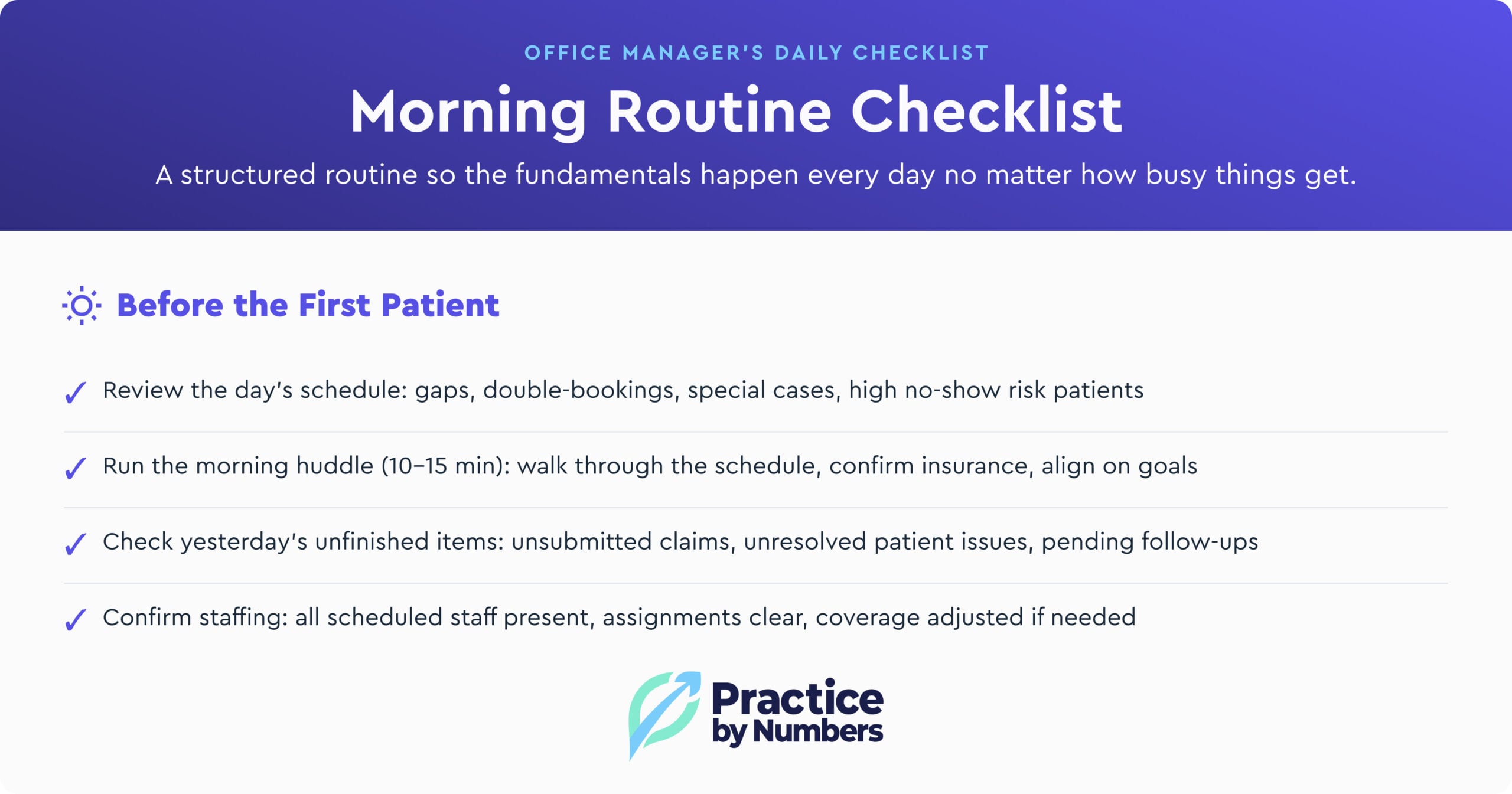
Before the First Patient: Morning Setup
The first hour of the day often determines how smoothly the rest of the schedule will run. Investing time in preparation allows the team to anticipate challenges rather than react to them.
Review Today’s Schedule
Start by reviewing every appointment on the schedule.
Look for:
- Open chair time that could be filled
- Potential double-booking issues
- High-value procedures
- New patient appointments
- Patients with outstanding treatment plans
- Patients with a history of cancellations or no-shows
This early review helps identify opportunities before the day gets busy. A schedule is more than a calendar. It’s a forecast of today’s production, staffing requirements, and patient experience. Small adjustments made in the morning can prevent significant disruptions later in the day.
Run the Morning Huddle
A brief morning meeting aligns the entire team around the day’s priorities.
A productive huddle should cover:
- Production goals
- New patient arrivals
- Schedule opportunities
- Outstanding patient balances
- Special patient considerations
- Pending treatment opportunities
- Team responsibilities
👉 Learn How to Run a Dental Morning Huddle That Actually Works
Clear Yesterday’s Loose Ends
Before today’s workload begins, review unfinished items from the previous day.
Examples include:
- Unsubmitted insurance claims
- Patient callbacks
- Insurance verification issues
- Unresolved billing questions
- Incomplete documentation
Unfinished tasks tend to multiply. Addressing them first thing in the morning prevents operational bottlenecks from accumulating throughout the week.
Confirm Staffing and Coverage
Verify that all scheduled team members are present and prepared.
If there are absences:
- Reassign responsibilities
- Adjust appointment flow
- Update providers
- Communicate expectations clearly
Last-minute staffing issues become much harder to solve once patients begin arriving.
During the Day: Active Management
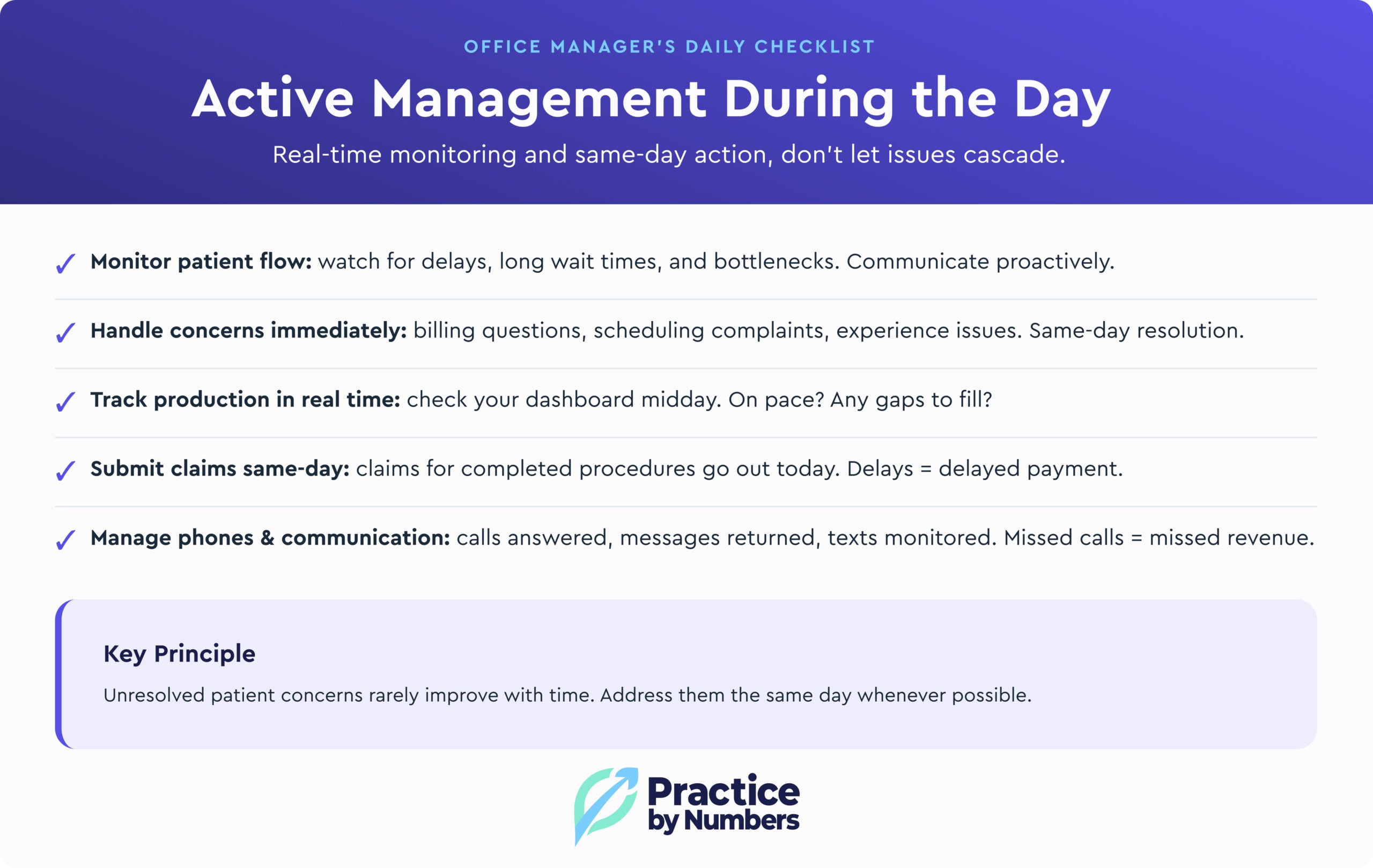
The office manager’s role shifts from planning to execution as patients move through the practice. The goal is to keep operations running smoothly while minimizing disruptions to patient care.
Monitor Patient Flow
Watch for delays, bottlenecks, and scheduling conflicts.
Pay attention to:
- Extended wait times
- Rooms running behind schedule
- Hygiene bottlenecks
- Delayed treatment starts
Patients are generally understanding when delays occur. They become frustrated when delays are not communicated. Proactive communication protects patient satisfaction and helps preserve trust.
Address Patient Concerns Immediately
Patient concerns rarely improve when left unresolved.
Common issues include:
- Billing questions
- Insurance confusion
- Scheduling concerns
- Service complaints
- Communication issues
Fast resolutions prevent minor frustrations from becoming negative reviews, cancellations, or patient attrition.
Track Production Throughout the Day
Rather than waiting until the end of the month, successful practices monitor performance in real time.
Check:
- Scheduled production
- Completed production
- Treatment acceptance activity
- Open chair opportunities
Midday visibility creates opportunities to recover from schedule gaps before revenue is lost.
Submit Claims Promptly
Completed treatment should move into the claims process as quickly as possible. Best practice is to submit claims on the same day services are completed whenever possible.
Faster claim submission generally leads to faster reimbursement and healthier cash flow. Delays create unnecessary accounts receivable challenges.
Stay on Top of Calls and Messages
Every unanswered communication represents a potential missed opportunity.
Monitor:
- Phone calls
- Voicemails
- Patient texts
- Online inquiries
- Appointment requests
For many prospective patients, the first interaction with your practice determines whether they book an appointment or continue searching elsewhere.
👉 Here’s How You Can Streamline Dental Office Communication & Scheduling
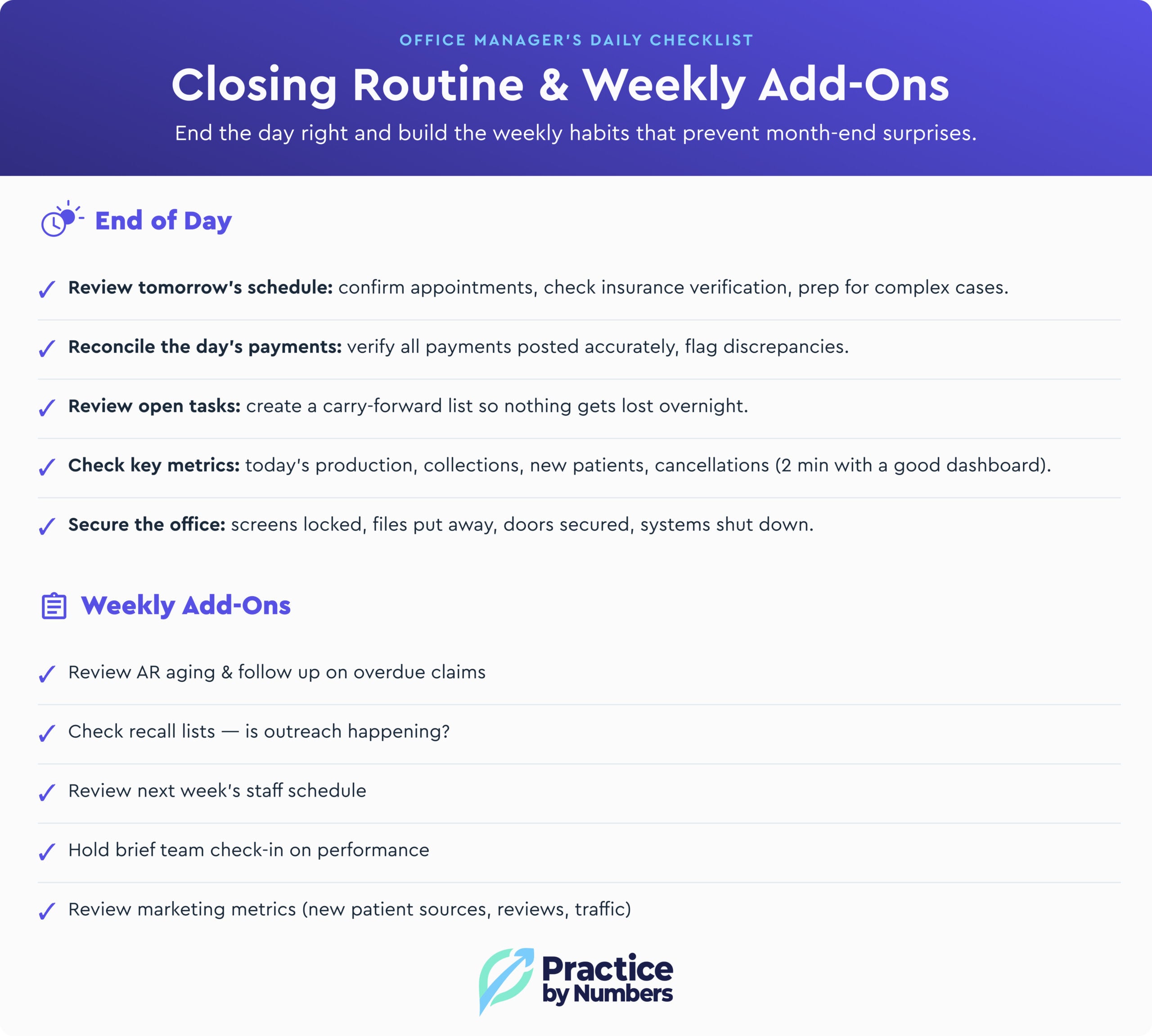
End of Day: Closing Routine
The most effective office managers don’t simply finish today’s work. They prepare tomorrow for success.
Review Tomorrow’s Schedule
Evaluate the next day’s appointments before leaving.
Check:
- Appointment confirmations
- Insurance verification status
- Production goals
- Treatment opportunities
- New patient preparation
A prepared schedule reduces morning stress and helps the team start the day organized.
Reconcile Payments
Review all financial activity from the day.
Verify:
- Patient payments
- Insurance payments
- Payment postings
- Outstanding balances
Daily reconciliation prevents financial discrepancies from becoming larger accounting issues.
Review Open Tasks
Create a carry-forward list for unfinished responsibilities.
Examples include:
- Patient callbacks
- Insurance follow-up
- Vendor communications
- Staff requests
Documented follow-up creates continuity and reduces the chance of important work falling through the cracks.
Review Key Practice Metrics
Take a few minutes to review the numbers that matter most.
Monitor:
- Production
- Collections
- New patients
- Case acceptance activity
- Schedule utilization
Daily visibility helps identify trends early rather than discovering problems weeks later.
Secure the Office
Before leaving:
- Lock workstations
- Secure patient information
- Verify system shutdowns
- Check office security procedures
Protecting patient data and maintaining compliance are essential responsibilities of every dental practice.
Weekly Add-Ons to the Daily Checklist
Daily activities keep the practice moving. Weekly reviews ensure long-term growth and operational health. Schedule time each week for these higher-level responsibilities.
Review Outstanding Insurance Claims and Balances
Focus on:
- Aging claims
- Outstanding patient balances
- Collection opportunities
- Insurance follow-ups
Consistent attention improves cash flow and reduces accounts receivable issues.
Review Recall and Reactivation Efforts
Evaluate:
- Overdue hygiene patients
- Unscheduled treatment
- Recall effectiveness
- Reactivation campaigns
Patient retention is often one of the most cost-effective growth opportunities available.
Review Staffing and Scheduling
Look ahead to:
- PTO requests
- Upcoming schedule gaps
- Training needs
- Staffing coverage
Advanced planning reduces operational disruptions.
Hold a Team Check-In
A short weekly meeting helps identify challenges before they become larger problems.
Discuss:
- Wins
- Obstacles
- Process improvements
- Team feedback
Strong communication creates stronger teams.
Review Marketing Performance
Understand where new patients are coming from and whether marketing investments are generating results.
Track:
- New patient sources
- Website activity
- Reviews and reputation metrics
- Call conversion performance
Growth becomes easier when decisions are backed by data.
👉 Here’s How Dental Practice Analytics Improve Revenue, Retention, and Operational Control
How Practice by Numbers Helps Office Managers Stay on Top of Daily Operations
A daily checklist is only effective when the right information is easy to find. Practice by Numbers brings operational, financial, and patient data into one platform so office managers can spend less time gathering information and more time taking action.
With Practice by Numbers, front office teams can:
- Run more productive morning huddles with Daily Huddle insights and patient alerts
- Track production, collections, schedule utilization, and goals in real time with Practice IQ
- Monitor unscheduled treatment and patient reactivation opportunities
- Identify open chair time and scheduling gaps before they impact production
- Review outstanding balances and payment trends
- Track new patient flow, referral sources, and retention metrics
- Monitor call performance, missed calls, and patient communication activity
- Access role-based dashboards that surface the metrics most relevant to office managers
- Consolidate data from multiple systems into a single source of truth
Instead of pulling reports from different places, office managers get a clear view of practice performance throughout the day, helping them make faster and more informed decisions.