Behind every smooth dental visit is a team you never see in the chair. They keep the schedule full, billing clean, and the staff on the same page. This is dental office management, and it is the engine that keeps a practice running. When the management side runs well, the practice grows. When it does not, even the best dentist in town can’t make up for it.
This guide walks through who does what, what they do each day, and the tools and habits that help the best offices run well.
TL;DR
- Dental office management is everything outside the chair that keeps the practice running as a business.
- The office manager is the operations leader who makes sure nothing slips through the cracks.
- The treatment coordinator turns recommended treatment into booked treatment, a big driver of revenue.
- Good tools (practice software, patient messaging, insurance checks, dashboards) make all of this easier.
- The best practices share five habits: daily huddles, weekly KPI checks, checklists, staff training, and smart automation.
What Dental Office Management Actually Covers
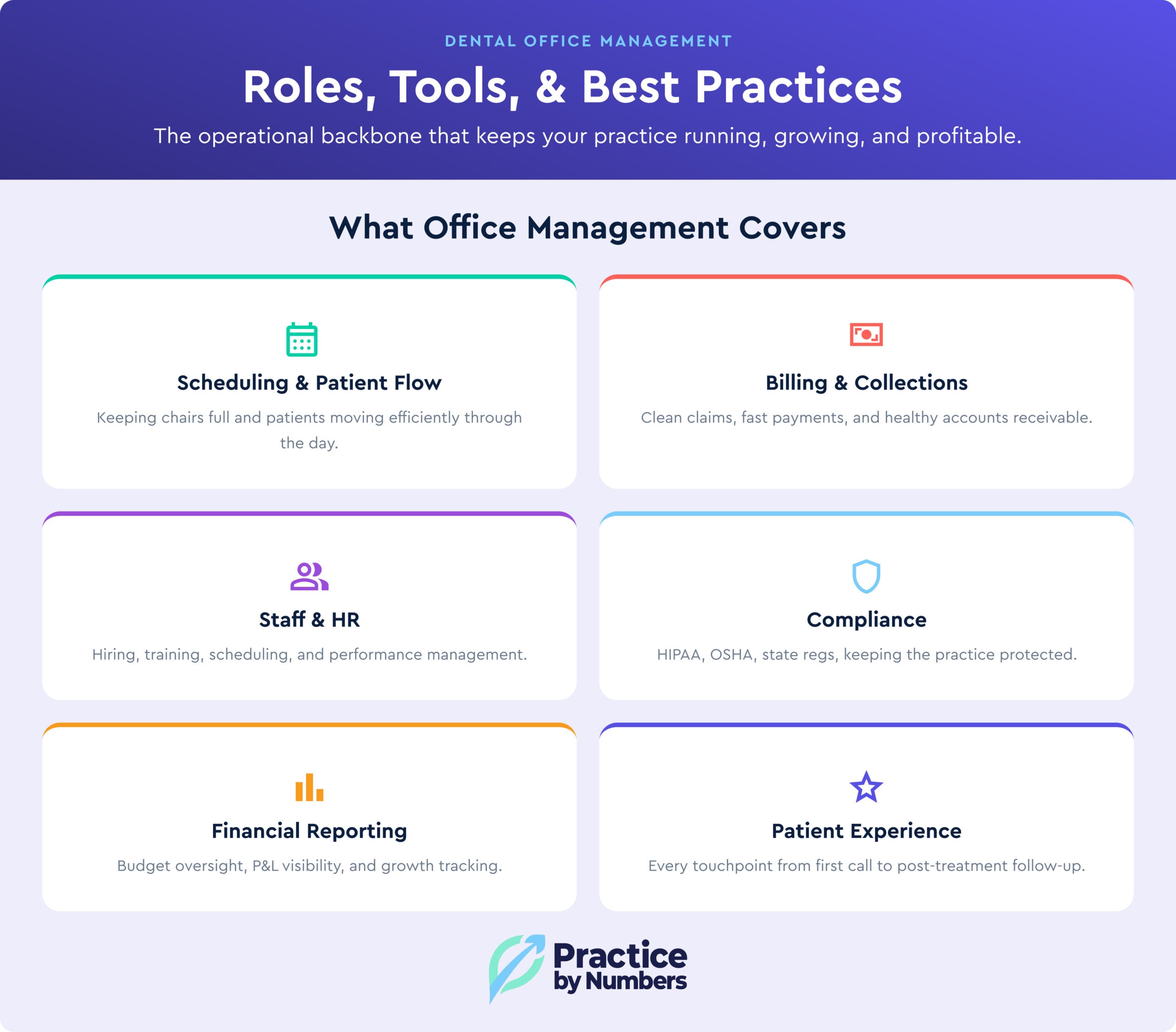
Dental office management covers everything outside the clinical chair that keeps the practice working as a business. That is a lot of ground:
- Scheduling and patient flow
- Front desk work and patient communication
- Billing, collections, and insurance
- Hiring, training, and managing staff
- Staying compliant (HIPAA, OSHA, state rules)
- Ordering supplies and managing vendors
- Tracking the numbers and watching the budget
- Keeping the patient experience consistent
No one person does all of this alone. But the office manager is usually the one who makes sure it all connects and nothing gets dropped.
The Dental Office Manager Role
The dental office manager is the operations leader of the practice. In most offices, this person reports straight to the owner or lead dentist and oversees the non-clinical team.
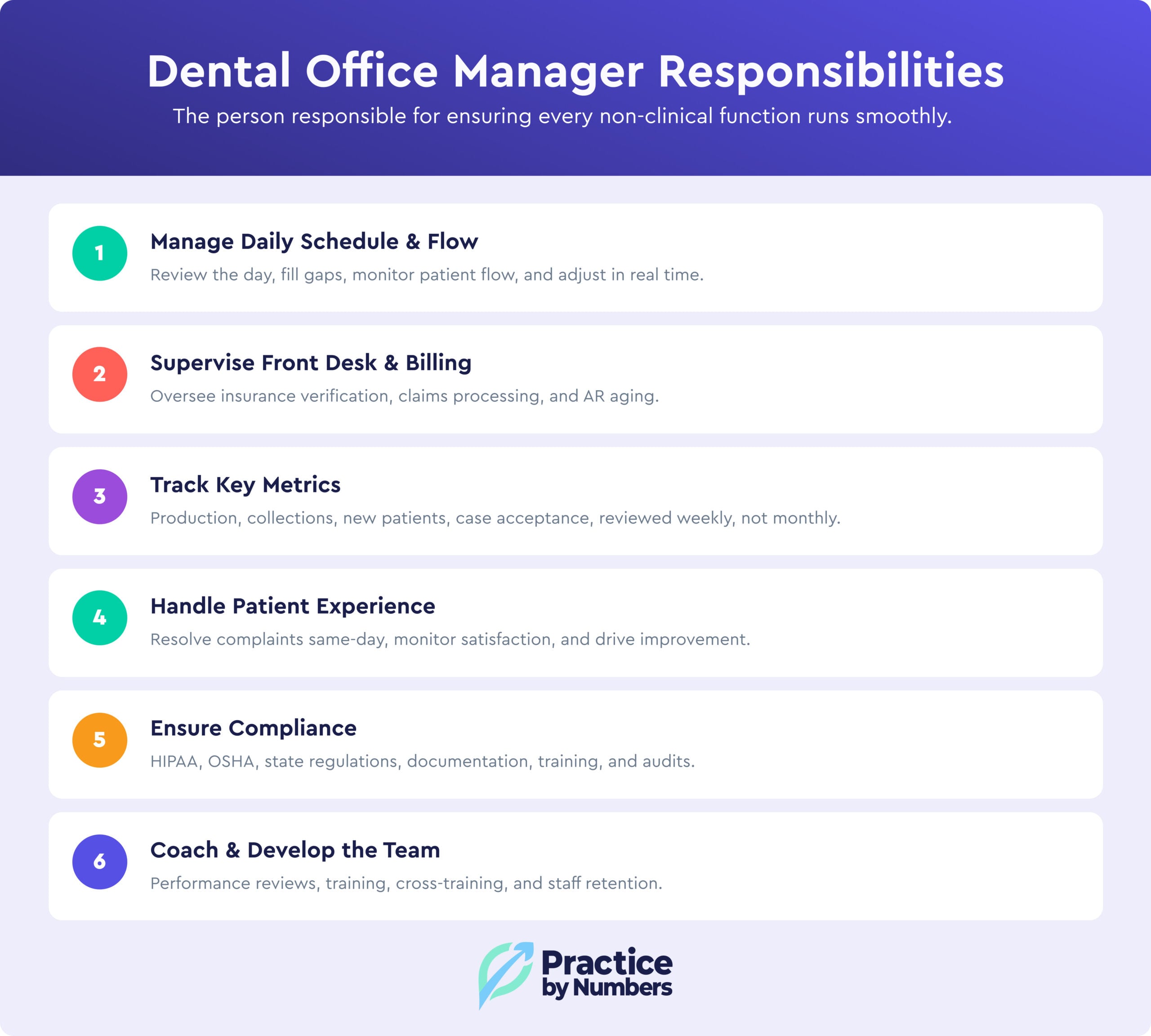
Their main jobs include:
- Running the daily schedule and patient flow
- Supervising the front desk, billing, and treatment coordination team
- Overseeing insurance checks and claims
- Watching the key numbers (production, collections, money owed, new patients)
- Handling patient complaints
- Managing staff schedules, training, and reviews
- Keeping the practice compliant with HIPAA, OSHA, and state rules
- Working with vendors for supplies, equipment, and software
The best office managers are part administrator and part leader. They manage the systems, and they coach the team. A practice with a strong office manager usually has less staff turnover, fewer billing mistakes, and a steadier patient experience.
👉 See How to Become a Dental Office Manager
The Treatment Coordinator’s Role in Office Management
The treatment coordinator is one of the most important non-clinical roles in a dental practice. While the office manager oversees operations, the treatment coordinator focuses on helping patients move forward with recommended care.
The treatment coordinator connects what the dentist recommends to what the patient actually does. After the dentist explains the diagnosis, the treatment coordinator walks the patient through the plan, explains the cost and insurance, talks through payment options, and helps the patient say yes.
This role has a direct effect on case acceptance, the share of recommended treatment that patients agree to book. Practices with a dedicated treatment coordinator almost always see higher case acceptance than practices where the dentist or front desk squeezes it in between other tasks.
Because they work directly on case acceptance, treatment coordinators have a significant impact on practice growth. In many practices, the office manager tracks treatment acceptance rates while the treatment coordinator works to improve them.
Tools That Make Office Management Easier
Modern dental offices rely on a mix of technology to keep operations running efficiently. The right tools reduce administrative work, improve visibility into practice performance, and help teams deliver a better patient experience.
1. Practice Management Software (PMS): The operational hub of the practice. A PMS handles scheduling, patient records, charting, billing, insurance claims, and other day-to-day administrative tasks. Popular platforms include Dentrix, Eaglesoft, Open Dental, and Curve Dental.
👉 Top 10 Dental Practice Management Systems Comparison Factors
2. Patient Communication Tools: Automated reminders, recall campaigns, two-way texting, and review requests help reduce no-shows, improve patient engagement, and free up front-desk staff from repetitive outreach.
3. Insurance Verification Tools: Coverage verification software helps teams confirm benefits before appointments, reducing claim denials, unexpected patient balances, and time spent on manual verification.
4. Digital Patient Forms: Online intake forms or kiosks allow patients to complete paperwork before arriving, speeding up check-in, reducing data entry, and improving record accuracy.
5. Analytics & Performance Dashboards: Reporting platforms help office managers track production, collections, case acceptance, schedule utilization, accounts receivable, and other key performance indicators. Solutions like Practice by Numbers integrate with major practice management systems to provide real-time visibility into practice performance, helping managers identify issues early and make more informed decisions.
Payment & Financing Solutions: Modern payment tools simplify collections, offer flexible payment options, and help patients move forward with treatment while improving cash flow for the practice.
Best Practices for Dental Office Management
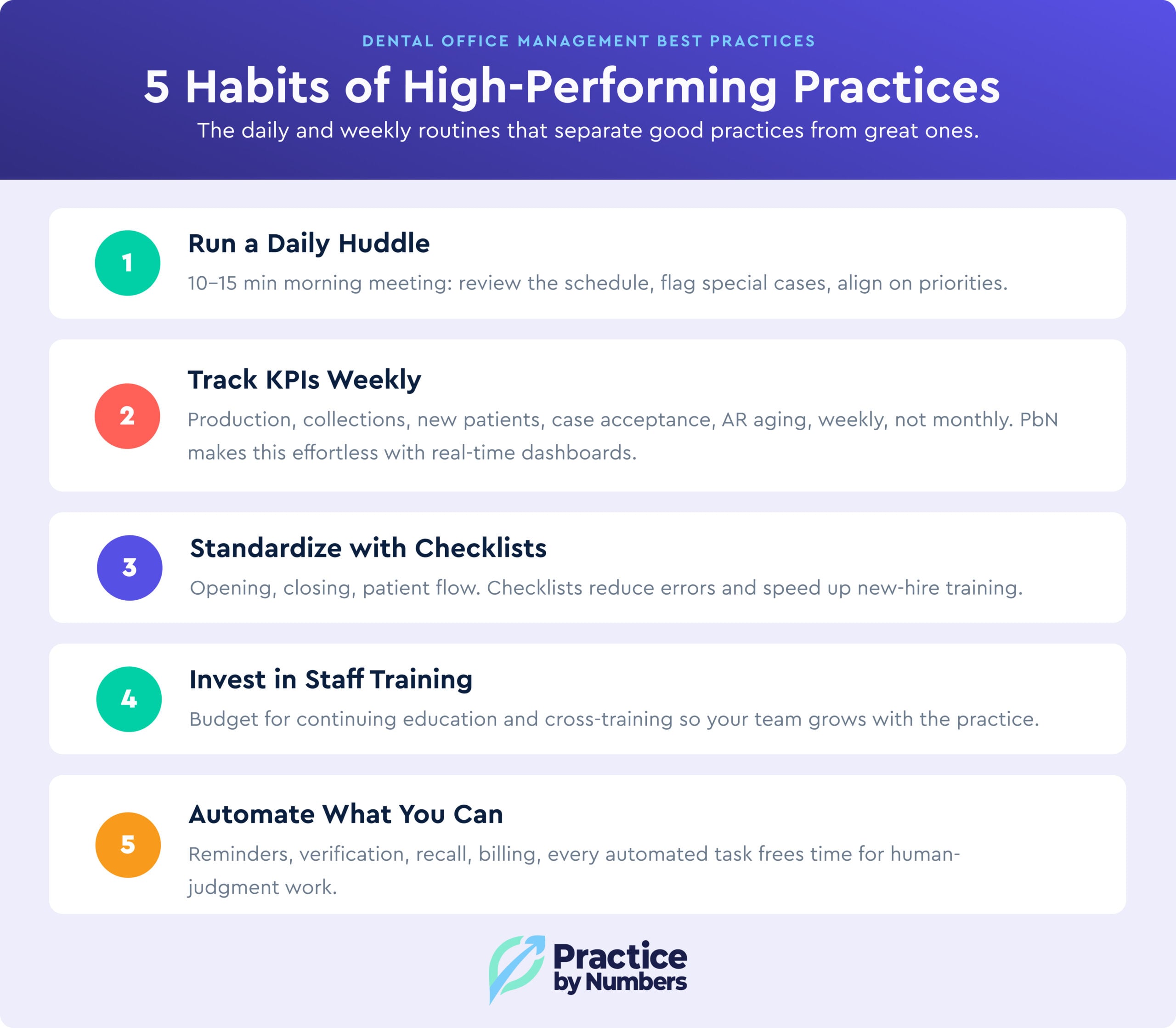
The best-run dental practices are not necessarily the busiest. They are the most consistent. Strong office management creates predictable operations, a better patient experience, and healthier financial performance. These five habits make the biggest difference.
1. Run a Daily Huddle: Start each day with a 10–15 minute team meeting to review the schedule, identify open chair time, discuss patient needs, confirm treatment opportunities, and address potential challenges before they become problems. A well-run huddle keeps the entire team aligned and proactive.
👉 Learn How to Run a Dental Morning Huddle That Actually Works
2. Track Key Performance Indicators Weekly: Successful office managers don’t wait until month-end to review performance. Monitor production, collections, new patient volume, case acceptance, schedule utilization, and accounts receivable every week. Frequent reviews help teams spot trends early and make adjustments before small issues become costly problems.
3. Standardize Processes with Checklists: Consistency is critical in a busy dental office. Documented checklists for opening procedures, patient check-in, insurance verification, treatment presentation, and end-of-day tasks help reduce errors, improve accountability, and make onboarding new team members easier.
4. Invest in Ongoing Team Development: The most effective teams never stop learning. Regular training in patient communication, insurance processes, scheduling, treatment coordination, and customer service helps staff stay confident and adaptable. Cross-training team members also improves coverage when someone is out of the office.
5. Automate Repetitive Administrative Tasks: Automation allows staff to focus on patients instead of paperwork. Appointment reminders, recall campaigns, patient forms, insurance verification, payment collection, and reporting can all be streamlined with technology. The less time the team spends on manual tasks, the more time they can spend creating a great patient experience.
How Practice by Numbers Simplifies Dental Office Management
The challenge with dental office management is not a lack of tools. It’s managing schedules, patient communication, insurance, payments, reporting, and team performance across multiple systems.
Practice by Numbers helps bring those moving parts together.
- See the numbers that matter: Monitor production, collections, case acceptance, new patients, and other KPIs without waiting for month-end reports.
- Keep the team aligned: Give everyone visibility into the day’s schedule, patient needs, and priorities so fewer details fall through the cracks.
- Reduce administrative workload: Automate repetitive tasks like reminders, recalls, forms, insurance workflows, and payment processes.
- Improve practice performance: Turn disconnected data into actionable insights that help managers identify issues early and make better decisions.
Instead of juggling separate tools and spreadsheets, office managers get a clearer view of the practice and more time to focus on growth.
FAQs
Q. What is the most important skill for a dental office manager?
Managing systems and people at the same time. Knowing billing, scheduling, and compliance is the baseline. But leading the team including coaching, settling conflicts, and holding people accountable is what makes a manager great.
Q. How many staff does a dental office manager usually oversee?
It depends on the practice. A solo office might have 3 to 5 staff. A multi-dentist practice might have 10 to 15. Larger groups may span several locations. The principles stay the same at any size.
Q. Does a dental office manager need clinical experience?
It helps but is not required. Knowing dental terms and procedures makes talking with providers easier. But strong admin, money, and leadership skills matter more for the role than a clinical background.