Patient communication has become one of the biggest drivers of practice growth, retention, and operational efficiency.
Not long ago, most dental offices relied almost entirely on phone calls. Today, patients expect communication to happen on their terms. They want appointment reminders by text, self-service scheduling, fast responses, and convenient ways to reach your office without waiting on hold.
Practices that adapt to these expectations create better patient experiences, reduce administrative workload, and keep schedules full. Practices that don’t often struggle with missed appointments, lost opportunities, and patient attrition.
The good news? Modern dental communication systems make it easier than ever to deliver the experience patients expect while helping your team work more efficiently.
- A modern dental office communication system combines VoIP calling, texting, automation, online scheduling, and communication analytics.
- VoIP phone systems offer more flexibility, visibility, and cost savings than traditional landlines.
- Two-way texting has become one of the most preferred communication channels among dental patients.
- Automated reminders, recalls, and follow-ups help reduce no-shows and improve patient retention.
- AI-powered call intelligence can identify missed opportunities and improve front-desk performance.
- HIPAA compliance is essential for any communication tool that handles patient information.
- Integrated platforms create a complete communication history, giving teams the context they need to serve patients effectively.
What Is a Dental Office Communication System?
A dental office communication system is the collection of tools a practice uses to communicate with patients before, during, and after appointments.
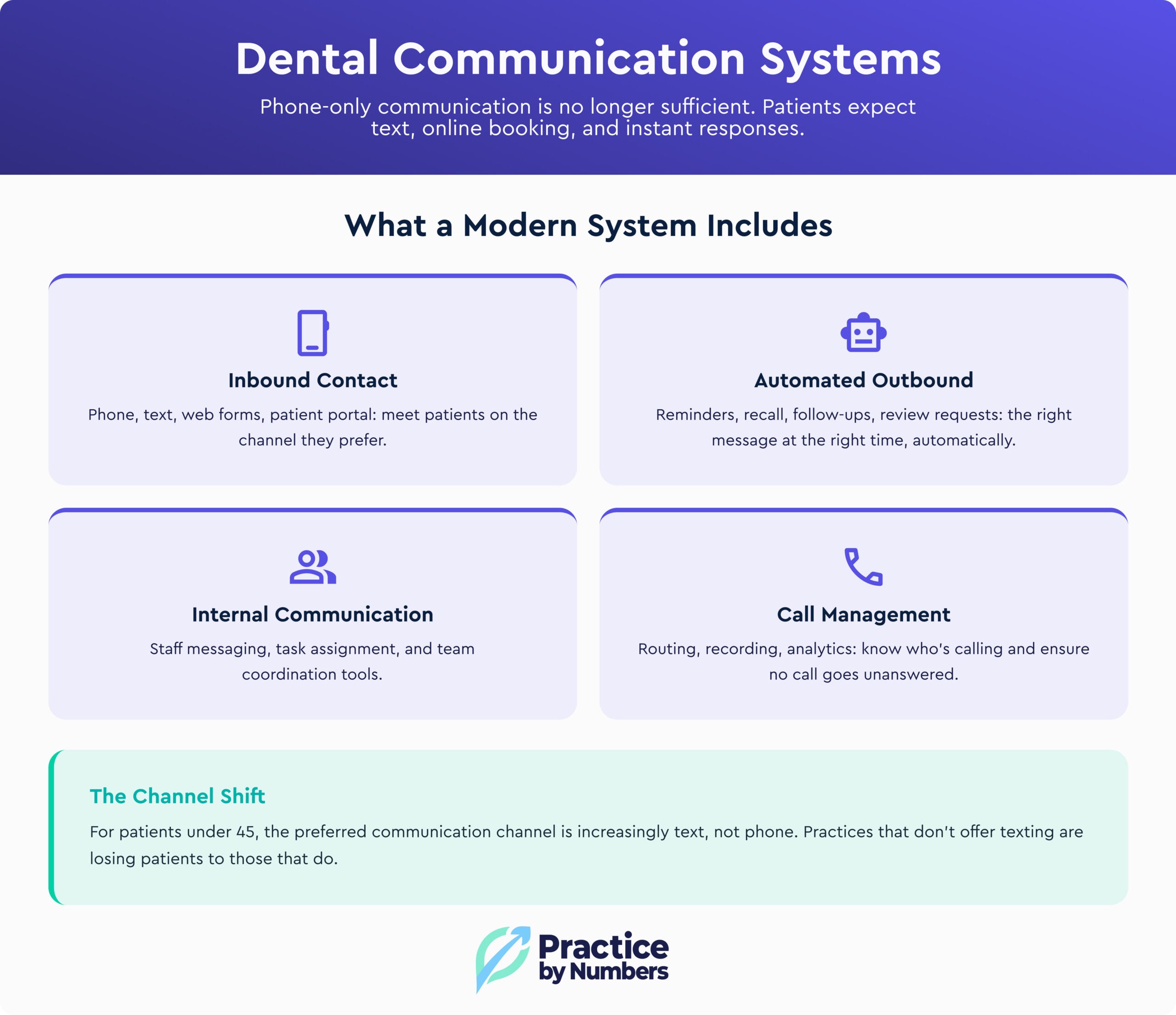
Modern systems go far beyond answering phones. They create a connected patient experience across multiple channels while helping teams manage communication efficiently.
Most modern systems include:
- Phone and VoIP communications
- Two-way patient texting
- Appointment reminders
- Recall and reactivation campaigns
- Online appointment booking
- Internal team communication
- Call tracking and analytics
- Patient portals and self-service tools
Rather than managing separate communication tools, many practices now prefer integrated platforms that keep every interaction connected to the patient record.
This creates a single source of truth for both patients and staff.
Why Is Patient Communication So Important for Dental Practices Today?
Patient expectations have shifted dramatically over the last decade.
Consumers are accustomed to receiving instant updates from banks, retailers, airlines, and healthcare providers. They expect the same convenience from their dental office.
When communication is slow or inconsistent, practices often experience:
- More missed appointments
- Lower patient retention
- Increased phone volume
- Front-desk bottlenecks
- Negative online reviews
- Lost new-patient opportunities
On the other hand, practices with strong communication systems often benefit from:
- Higher appointment confirmation rates
- Reduced no-shows
- Better patient satisfaction
- Increased recall effectiveness
- Faster response times
- Improved staff productivity
Communication has evolved from an administrative function into a competitive advantage.
👉 Learn How to Diagnose Front-Desk Conversion Loss Without Listening to a Single Recording
What a Modern Dental Communication System Includes
To understand how modern systems work, it helps to break them into four core areas.
1. Inbound Communication
Inbound communication includes every way patients contact your practice.
Examples include:
- Phone calls
- Text messages
- Website forms
- Online booking requests
- Web chat
The goal is simple: make it easy for patients to reach your office through the channel they prefer.
2. Outbound Communication
Outbound communication includes messages initiated by the practice.
These commonly include:
- Appointment reminders
- Recall campaigns
- Treatment follow-ups
- Reactivation campaigns
- Review requests
- Payment reminders
Automating these touchpoints ensures consistency while reducing manual effort.
3. Internal Communication
Strong patient communication depends on strong team communication.
Modern platforms help teams:
- Share patient updates
- Track follow-up tasks
- Coordinate across departments
- Manage communication histories
This becomes especially important for multi-provider and multi-location practices.
4. Call Management and Analytics
Communication systems should provide visibility into performance.
Analytics can reveal:
- Missed call volume
- Peak call times
- Response rates
- New patient call conversion
- Team performance trends
Without measurement, practices often underestimate how much revenue is lost through communication breakdowns.
Phone Systems: VoIP vs. Traditional Landlines
One of the biggest communication upgrades practices make is replacing traditional phone systems with VoIP technology.
What Is VoIP?
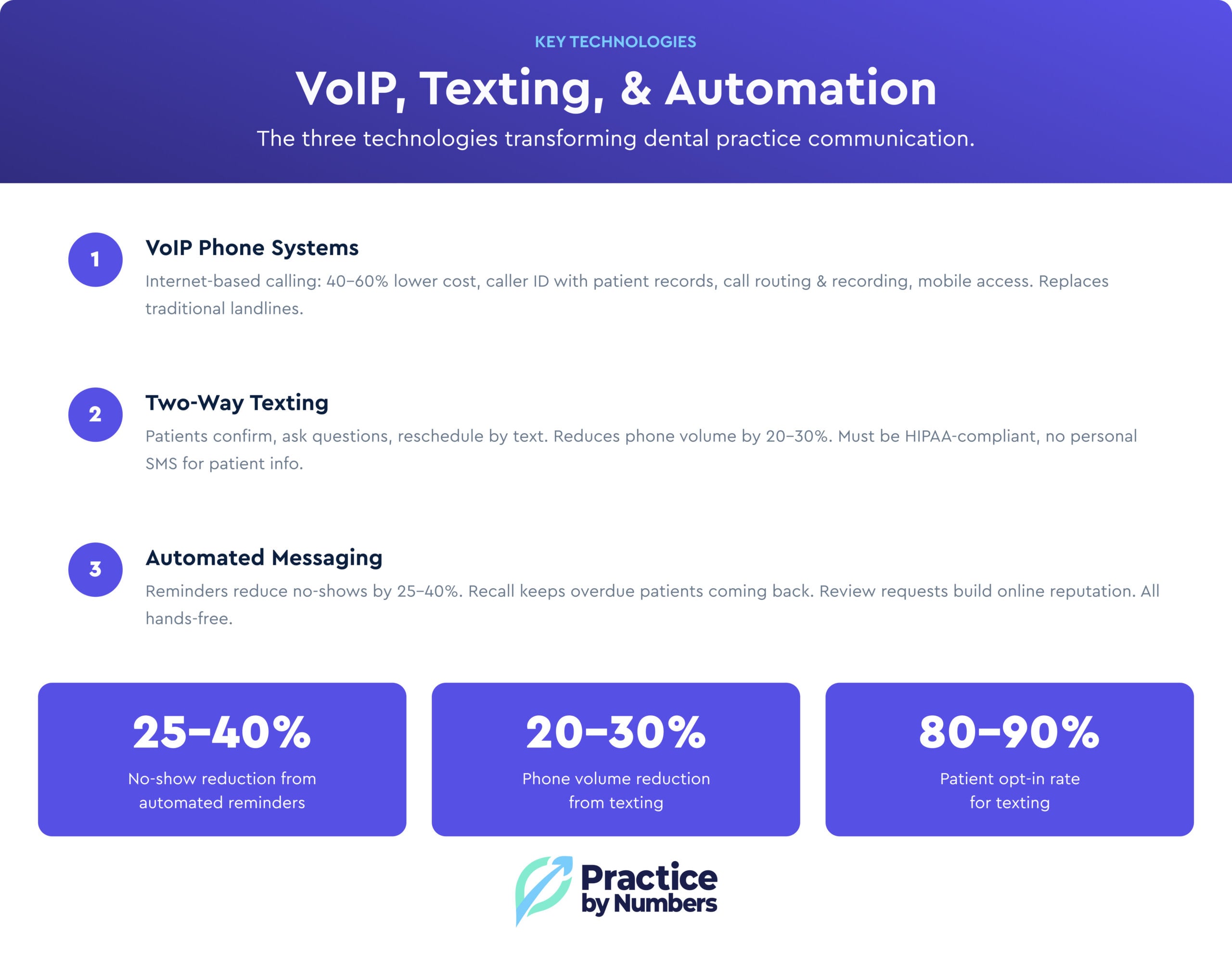
VoIP (Voice over Internet Protocol) allows phone calls to travel through the internet instead of traditional telephone lines.
This creates a more flexible and feature-rich communication system.
Benefits of VoIP for Dental Practices
Modern VoIP systems typically offer:
- Call routing and auto attendants
- Call recording
- Mobile and desktop calling
- Multi-location connectivity
- Call analytics
- Voicemail-to-text capabilities
- Integration with practice software
These capabilities help teams manage calls more efficiently while creating a better patient experience.
Why Dental Practices Are Moving Away From Landlines
Traditional phone systems often provide limited visibility into call activity.
VoIP systems can provide:
- Caller information before answering
- Appointment visibility during calls
- Intelligent routing
- Performance tracking
- Missed-call recovery workflows
For busy front desks, these capabilities translate directly into fewer missed opportunities and more productive conversations.
👉 See How You Can Streamline Dental Office Communication & Scheduling
Two-Way Texting: The Communication Channel Patients Prefer
Text messaging has become one of the most effective communication tools available to dental practices.
Many patients prefer sending a quick text rather than making a phone call, especially for routine scheduling questions.
Benefits of Two-Way Texting
Two-way texting allows patients to:
- Confirm appointments
- Request rescheduling
- Ask simple questions
- Respond to reminders
- Receive links and forms
For dental teams, this often results in:
- Lower phone volume
- Faster response times
- Reduced interruptions
- Improved patient satisfaction
Because conversations are asynchronous, staff can respond efficiently without constantly stopping other work.
HIPAA Compliance Considerations
Not all texting tools are appropriate for healthcare communication.
Practices should use HIPAA-compliant messaging platforms that provide:
- Encryption
- Secure storage
- User access controls
- Audit trails
- Business Associate Agreements (BAAs)
Personal texting apps should never be used to share protected health information.
Automated Messaging: The Highest-ROI Communication Tool
If there’s one communication feature that consistently delivers measurable results, it’s automation.
Automated workflows ensure patients receive the right message at the right time without requiring staff intervention.
Appointment Reminders
Appointment reminders help:
- Reduce no-shows
- Improve attendance
- Minimize last-minute cancellations
Even a small reduction in missed appointments can significantly impact production.
Recall Campaigns
Recall systems automatically reach out to patients who are overdue for hygiene or treatment.
Benefits include:
- Improved patient retention
- Better schedule utilization
- Increased recurring revenue
- Stronger patient relationships
Follow-Up Campaigns
Follow-up communication helps maintain engagement after appointments.
Examples include:
- Post-operative instructions
- Treatment follow-ups
- Satisfaction surveys
- Continuing care reminders
Review Requests
Online reputation plays a major role in attracting new patients.
Automated review requests help practices:
- Generate more reviews consistently
- Improve online visibility
- Increase patient trust
- Strengthen local SEO performance
How AI Is Changing Dental Communication
Artificial intelligence is becoming an increasingly important part of dental communication systems.
Instead of simply recording interactions, AI can help practices understand and improve them.
AI-Powered Call Analysis
Modern AI tools can help identify:
- Missed opportunities
- Scheduling issues
- Common patient concerns
- Team coaching opportunities
This gives practice leaders greater visibility into front-desk performance.
AI Call Summaries
Rather than manually documenting every conversation, AI can generate summaries and key action items.
Benefits include:
- Reduced administrative work
- Improved documentation
- Faster follow-up
- Better team communication
AI-Assisted Follow-Up
AI can also support patient communication by generating:
- Follow-up messages
- Call summaries
- Response recommendations
- Workflow suggestions
As staffing challenges continue across healthcare, these efficiencies become increasingly valuable.
How Practice by Numbers Connects Patient Communication
Many practices struggle because communication tools operate in separate systems. Phone calls happen in one platform. Texts happen in another. Patient information lives elsewhere.
Practice by Numbers takes a connected approach by bringing communication workflows into a unified ecosystem. Its Patient Relationship Management (PRM) suite includes appointment reminders, two-way texting, follow-up campaigns, review management, online booking, patient communication workflows, and voice capabilities that integrate with leading practice management systems.
PbN Voice
PbN Voice is a cloud-based VoIP phone system designed specifically for dental practices. Key capabilities include:
- PMS-integrated caller information
- Real-time patient screen pops
- Smart call routing
- Call analytics
- Voicemail-to-text
- Cloud-based calling from desktop or mobile devices
- Missed-call recovery workflows through automated text follow-ups
Call AI
Practice by Numbers also offers AI-powered call intelligence capabilities. These tools can help practices:
- Generate AI call summaries
- Score calls for coaching opportunities
- Identify missed opportunities
- Track call outcomes
- Analyze call performance trends
Patient Communication Automation
PRM suite helps automate patient engagement through:
- Appointment reminders
- Recall campaigns
- Reactivation campaigns
- Two-way texting
- Review requests
- Follow-up communications
- Online booking workflows
When communication channels are connected to patient records and practice workflows, teams spend less time switching between systems and more time focusing on patient care.
👉 See How Patient Relationship Management Boosts Practice Revenue
How to Choose the Right Dental Office Communication System
Not every platform offers the same capabilities. When evaluating solutions, look for:
- Integration Capabilities: The system should integrate with your practice management software to eliminate duplicate work and maintain accurate records.
- HIPAA Compliance: Every communication channel should support healthcare compliance requirements.
- Automation Features: Look for built-in reminders, recalls, follow-ups, and review management workflows.
- Communication Channels: Patients increasingly expect multiple options, including:
- Phone
- Text
- Online booking
- Patient portals
- Analytics and Reporting: Visibility into communication performance helps practices continuously improve.