Insurance verification is a foundational task, but foundational does not mean simple. Practices that verify well, meaning consistently, thoroughly, and early, tend to see fewer denials, faster collections, and smoother patient relationships. Practices that treat it as a quick checkbox run into avoidable rejections and billing disputes.
Here are the verification habits that high-performing practices tend to share.
TL;DR
- Verify every patient before every visit, not only new patients.
- Check benefits in depth, not just whether coverage is active.
- Verify a couple of days ahead so there is time to resolve issues.
- Use a standard checklist so results are consistent across the team.
- Document everything and share clear cost estimates with patients.
What Is Dental Insurance Verification?
Dental insurance verification is the process of confirming a patient’s insurance eligibility, benefits, coverage limitations, and financial responsibility before treatment. It helps the dental practice understand what the patient’s plan may cover and what the patient may be expected to pay.
A thorough verification typically goes beyond checking whether coverage is active. Depending on the treatment, the team may need to confirm:
- Eligibility and effective dates
- Annual maximum and remaining benefits
- Deductible and amount already met
- Coverage percentages
- Frequency limitations
- Waiting periods
- Procedure-specific exclusions or limitations
- Coordination of benefits
- Pre-authorization requirements
The information gathered during verification can then be used to prepare the team, create a patient estimate, and reduce avoidable surprises during billing.
Why Is Dental Insurance Verification Important?
Insurance verification directly affects both the patient experience and the practice’s revenue cycle. When coverage information is outdated or incomplete, practices may face rejected claims, incorrect estimates, delayed collections, and difficult financial conversations with patients.
A reliable verification process helps the practice:
- Reduce claim and billing issues by identifying coverage limitations before treatment
- Improve collections by establishing clearer expectations around patient responsibility
- Increase treatment confidence by giving patients better information before they commit to care
- Protect the patient experience by reducing unexpected bills
- Save staff time by catching insurance issues before the appointment
Verification is therefore not just an administrative task. It is an important part of preparing both the practice and the patient for the financial side of care.
👉 Here Are 10 Dental Practice Management Tips Every Office Should Try
What Should Dental Insurance Verification Include?
A complete dental insurance eligibility verification process should answer three basic questions:
1. Is the patient currently eligible?
Confirm that the plan is active and that the patient and subscriber information matches the insurance record.
2. What benefits are available?
Review the benefits and limitations that apply to the patient’s planned procedures, including deductibles, annual maximums, coverage percentages, waiting periods, and frequency limitations.
3. What is the patient’s expected responsibility?
Use the verified information to estimate what insurance may pay and what the patient may owe, while making it clear that estimates are not guarantees of payment.
Once these questions are answered, the practice has a much stronger foundation for treatment planning, scheduling, and financial conversations.
What Are the Best Practices for Dental Insurance Verification?
Effective dental insurance verification is not simply about checking more information. It is about creating a process that is timely, consistent, thorough, and easy for the entire team to follow.
The following best practices can help dental practices build a more reliable verification workflow.
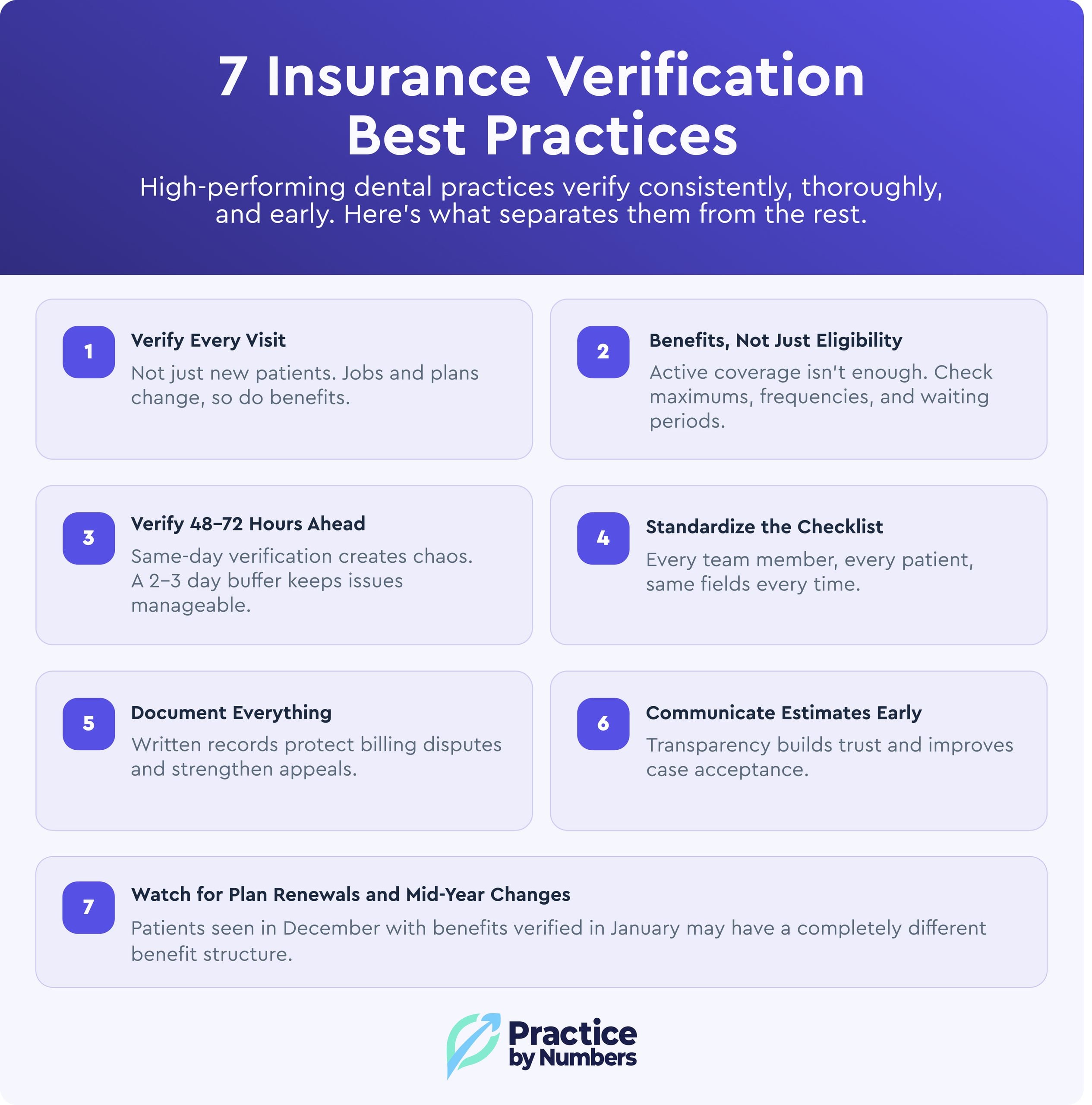
1. Verify Before Every Visit, Not Just New Patients
This is the most common gap. Established patients change jobs, switch plans, or lose coverage between visits, so verifying only new patients leaves you blind to changes for most of your schedule.
Make verification a standard pre-appointment step for every patient. Automated tools make this practical at scale. Without automation, prioritize at least new patients, patients not seen in six or more months, and anyone scheduled for a major procedure.
2. Verify Benefits, Not Just Eligibility
Confirming active coverage is necessary but not enough. The details that prevent denials sit deeper: annual maximum remaining, deductible status, coverage percentage by category, waiting periods for new plans, and frequency limitations.
A patient may have active insurance but no remaining benefits for the year, or they may be inside a waiting period for major work. These details change whether and how you bill, and the patient deserves to know before treatment begins.
3. Verify 48 to 72 Hours Ahead
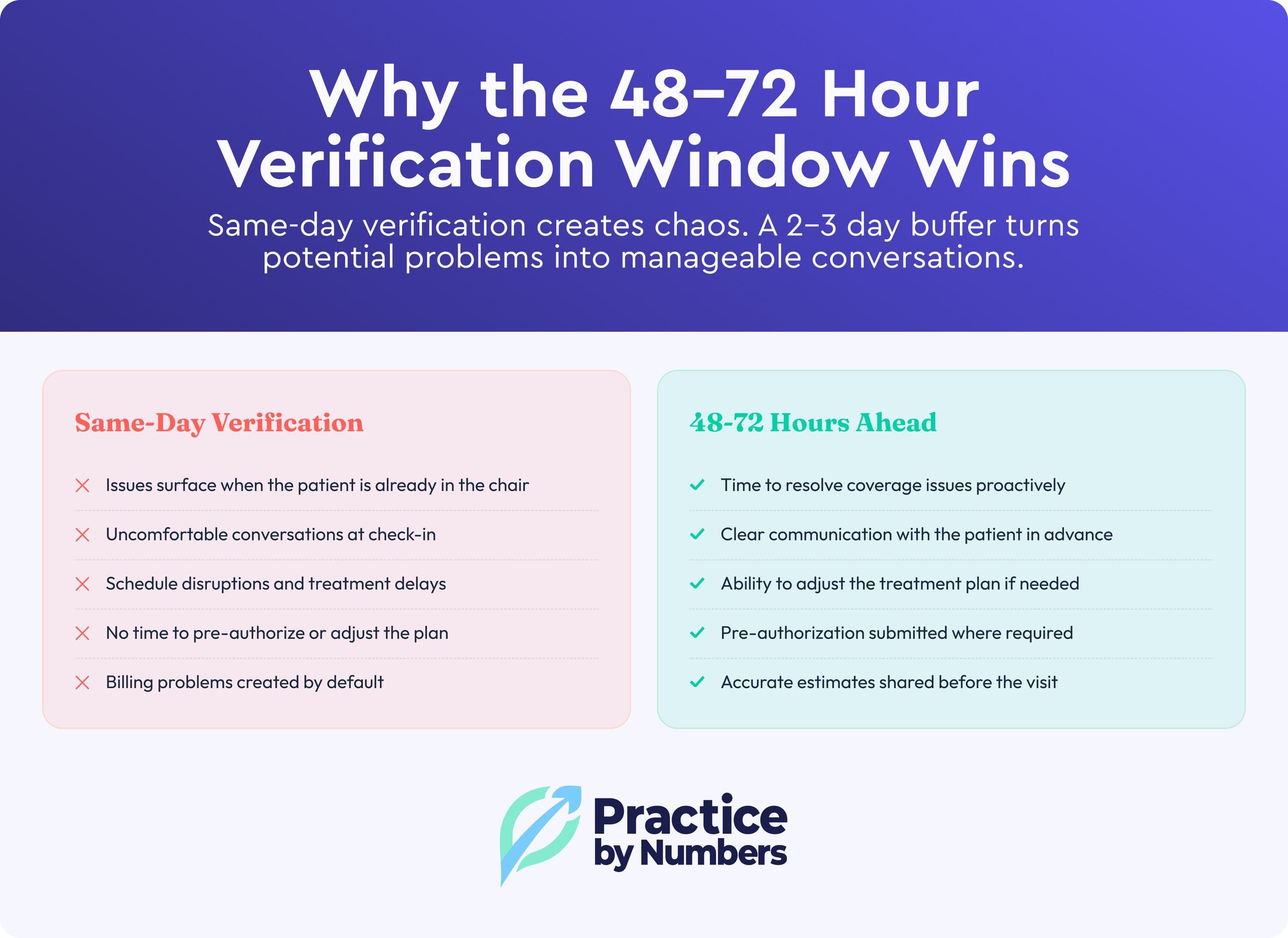
Same-day verification creates stress. If a coverage issue surfaces when the patient is already in the chair, you face an uncomfortable conversation, a possible schedule disruption, and a billing problem all at once.
Verifying two or three days ahead gives the team time to resolve issues, talk with the patient, adjust the plan if needed, and handle any pre-authorizations. That buffer turns potential problems into manageable conversations.
4. Standardize the Verification Checklist
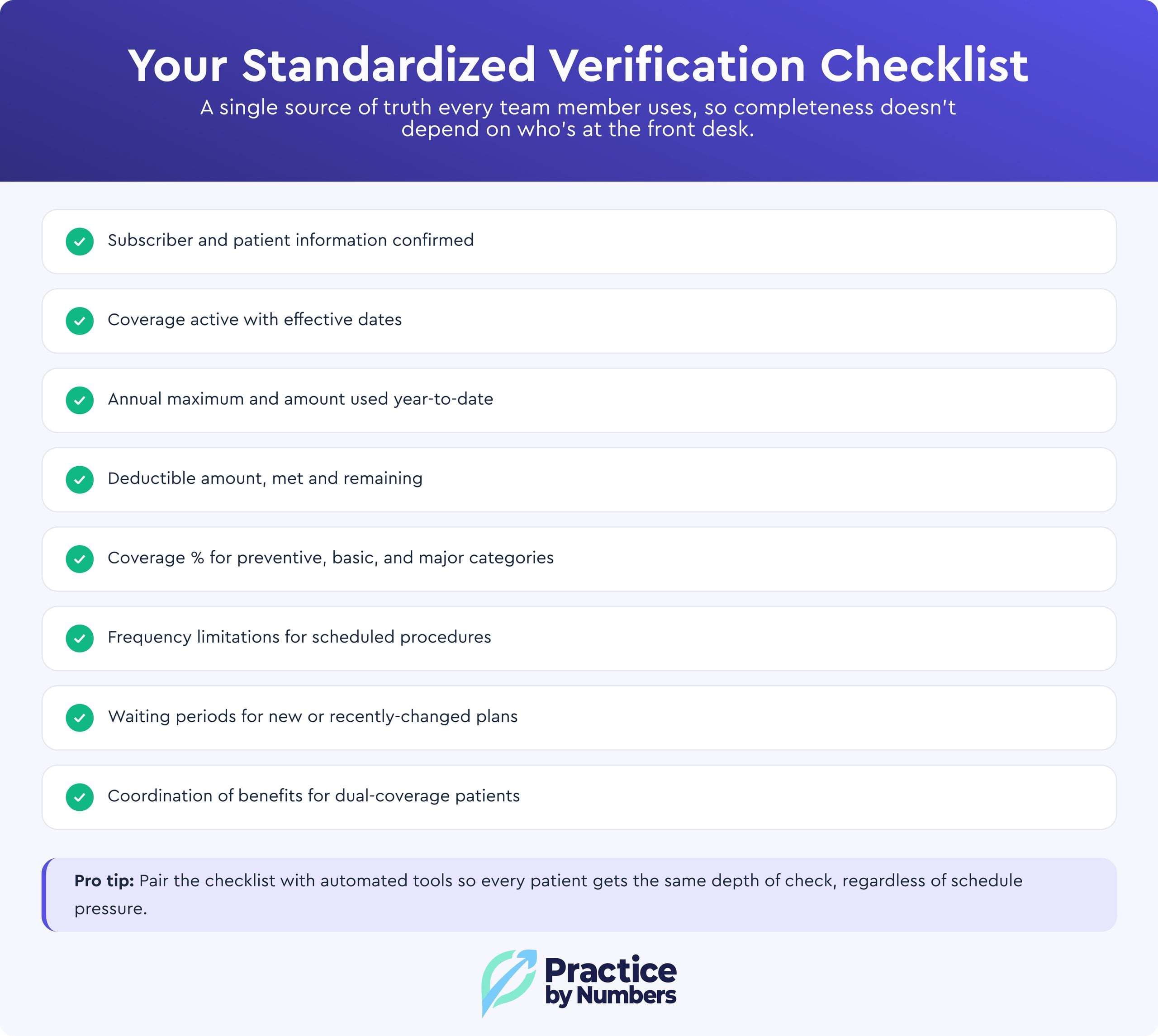
When different team members check different things, results vary. A standard checklist that everyone follows keeps verification complete no matter who does it.
At a minimum, it should confirm subscriber and patient details, active coverage with effective dates, annual maximum and amount used, deductible and amount met, coverage percentages for preventive, basic, and major categories, frequency limitations for the scheduled procedures, waiting periods, and coordination of benefits status.
👉 See How Patient Relationship Management Boosts Practice Revenue
5. Document Everything in the Patient Record
Verbal confirmations from a phone call are hard to reference later. Written results are not. Whatever method you use, record the results in the patient’s file with the date, the details confirmed, and the source. This protects the practice during billing disputes, supports appeals, and gives the clinical team what they need for planning.
6. Share Estimated Costs With Patients Before Treatment
Verification is not only an internal process. Once benefits are confirmed, give the patient a clear estimate of their out-of-pocket cost. This builds trust, helps patients feel comfortable moving ahead, and prevents the billing surprises that strain relationships. Note that the estimate is based on current information and may change with the actual treatment and payer processing. Setting expectations honestly is more valuable than promising an exact figure.
7. Watch for Plan Renewals and Mid-Year Changes
Most plans renew annually, resetting maximums and deductibles, and some employers switch carriers mid-year. It helps to know the common renewal dates for your most frequent payers and re-verify accordingly. A patient seen in December with benefits checked in January may have a completely different benefit picture, so staying alert to these shifts prevents claims built on outdated information.
👉 See How a Fragmented Tech Stack Holds Dental Practices Back
How Practice by Numbers Makes Best Practices the Default
A strong verification process shouldn’t depend on someone remembering every step. Practice by Numbers helps make insurance verification a more connected part of the patient workflow.
Before the appointment: Insurance eligibility and benefits can be verified ahead of time, giving your team an opportunity to catch coverage issues before the patient arrives.
During patient preparation: Verified information and estimates are available alongside the patient record, so the team has the context needed for financial conversations.
After verification: The information remains documented for future reference, reducihng the need to repeat the same research or rely on scattered notes.
The result is a verification process that is more consistent, easier to manage, and less dependent on manual follow-up.