Your phones are recording more intelligence about your practice than any dashboard. Most practices never look at it. Here’s what call transcription is actually telling you and why it matters.
TL;DR
- Every patient call produces six layers of data that most practices completely ignore
- AI call summaries eliminate the need to listen to recordings. Managers get actionable context in under 30 seconds per call
- Practices that actively monitor call data recover lost bookings, reduce no-shows, and coach staff with real evidence instead of gut instinct
- Sentiment alerts catch unhappy patients before they leave a negative review or ghost the practice entirely
- You don’t need a data team. A simple ten-minute daily routine is enough to unlock serious value
- If you’re using PbN AI’s Call AI module, this intelligence is already being captured, you just need to start using it
Every call your front desk takes leaves a trail. A patient asks about pricing. A new patient hesitates and hangs up. A recall call goes cold halfway through. An insurance question goes unanswered. What happens to all of that? In most practices, it disappears the second the call ends.
Call transcription changes that. But the thing is, most dental practices that have it switched on never actually use it. The tab exists. The data is there. And nobody looks. This post is about why that matters, what you’re leaving on the table, and what changes when you pay attention to your call data.
In dental AI ecosystems, call transcription is often treated as “storage,” not “strategy.” The real value lies not in recording conversations, but in converting them into structured intelligence that directly influences scheduling, treatment acceptance, and patient retention.
What Does Call Transcription Actually Capture?
Call transcription converts spoken words into readable, searchable text. When paired with AI, it also summarises, tags, and categorises each call so you can see what happened at a glance, without reading walls of text. Modern call transcriptions surfaces distinct layers of intelligence from every single call.
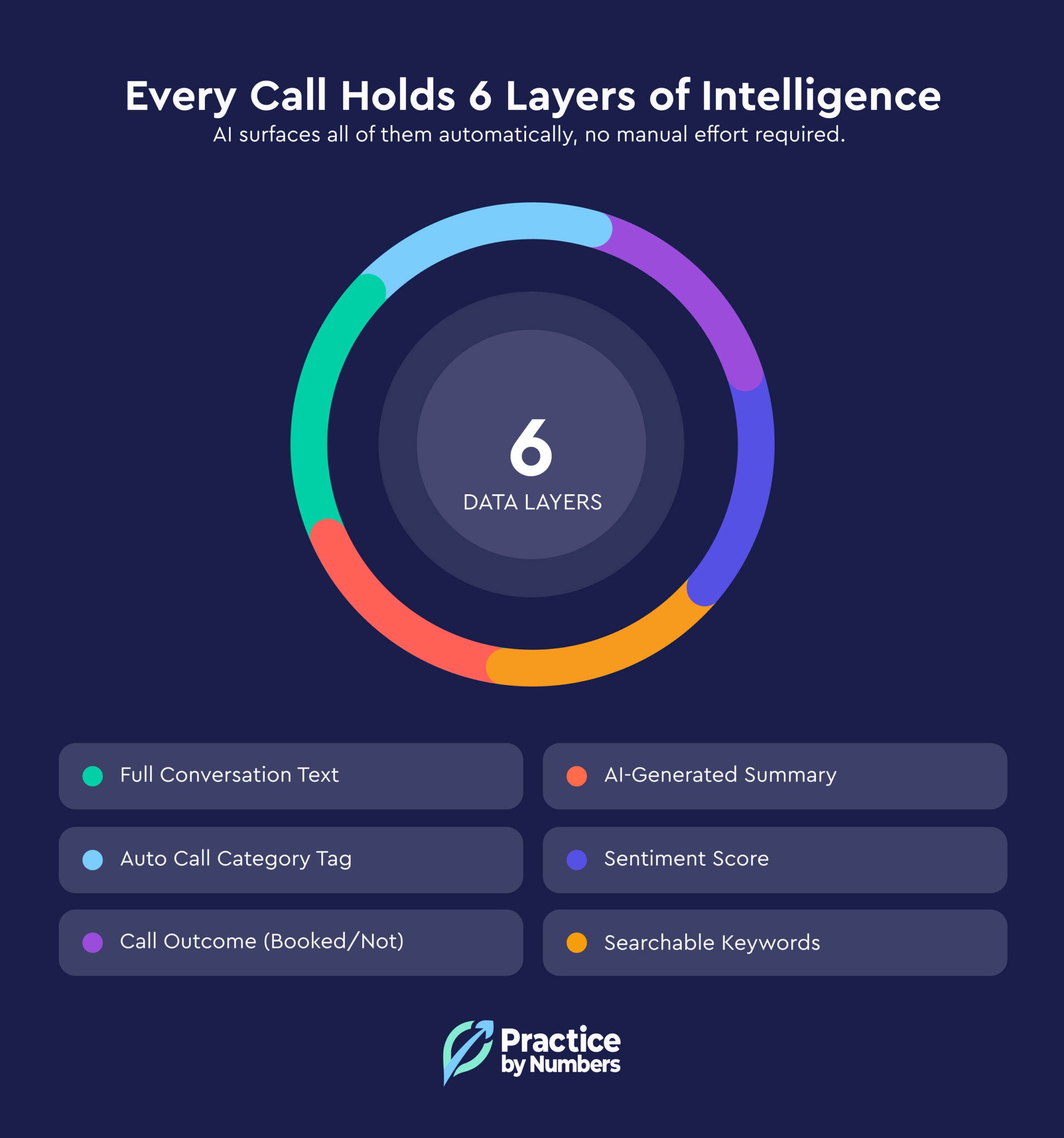
Beyond text conversion, advanced transcription systems detect intent signals such as treatment interest, urgency level, price sensitivity, and booking hesitation. This transforms raw conversation data into structured patient intent profiles that can be tracked over time.
It also enables:
- Keyword-based search (e.g., “implant,” “pricing,” “emergency pain”)
- Patient journey tracking across multiple calls
- Identification of missed conversion opportunities
- Real-time coaching inputs for front desk teams
Why Is Nobody Using This Data?
The honest answer is that most practices think of phone calls as a communication tool, not a data source. The call happens. The appointment gets booked (or doesn’t). And everyone moves on.
There’s also a misunderstanding about what reviewing transcriptions requires. Many assume you have to listen to recordings or read entire conversations. With AI summaries, you don’t. You get a 3-line read on what happened and what needs to happen next.
The second reason is visibility. If call data isn’t surfaced somewhere you’re already looking, it just doesn’t get seen.
The real barrier isn’t technology adoption, it’s workflow design. Practices rarely assign ownership to call intelligence, meaning insights exist but don’t translate into action. Without integration into daily huddles or management reviews, even the best AI data becomes invisible.
The perhaps the most significant reason is that the cost of inaction is invisible. You cannot easily quantify the patient who called about full-arch implants, did not get a satisfying answer about financing, and booked with a competitor the next day. That loss never shows up on a report. It was just a call that ended. Call AI makes those invisible losses visible and that is when practices start paying attention.
What Changes When You Actually Look at Your Call Transcriptions?
Let’s be concrete. Here’s what practices typically discover when they start reviewing their call summaries and how the outcome of an identical patient interaction changes completely.
What usually gets uncovered:
- High-intent patients who never got a follow-up call
- Front desk uncertainty around pricing or treatment explanation
- Missed urgency signals in emergency cases
- Repeated confusion around insurance or financing options
- Lost new patients due to hold times or missed callbacks
What improves immediately:
- Faster response to high-value leads
- Better scripting for treatment explanations
- Reduced leakage in new patient bookings
- Improved patient experience consistency
- Clear coaching opportunities backed by real calls
This is where conversation intelligence shifts from passive review to active revenue recovery.
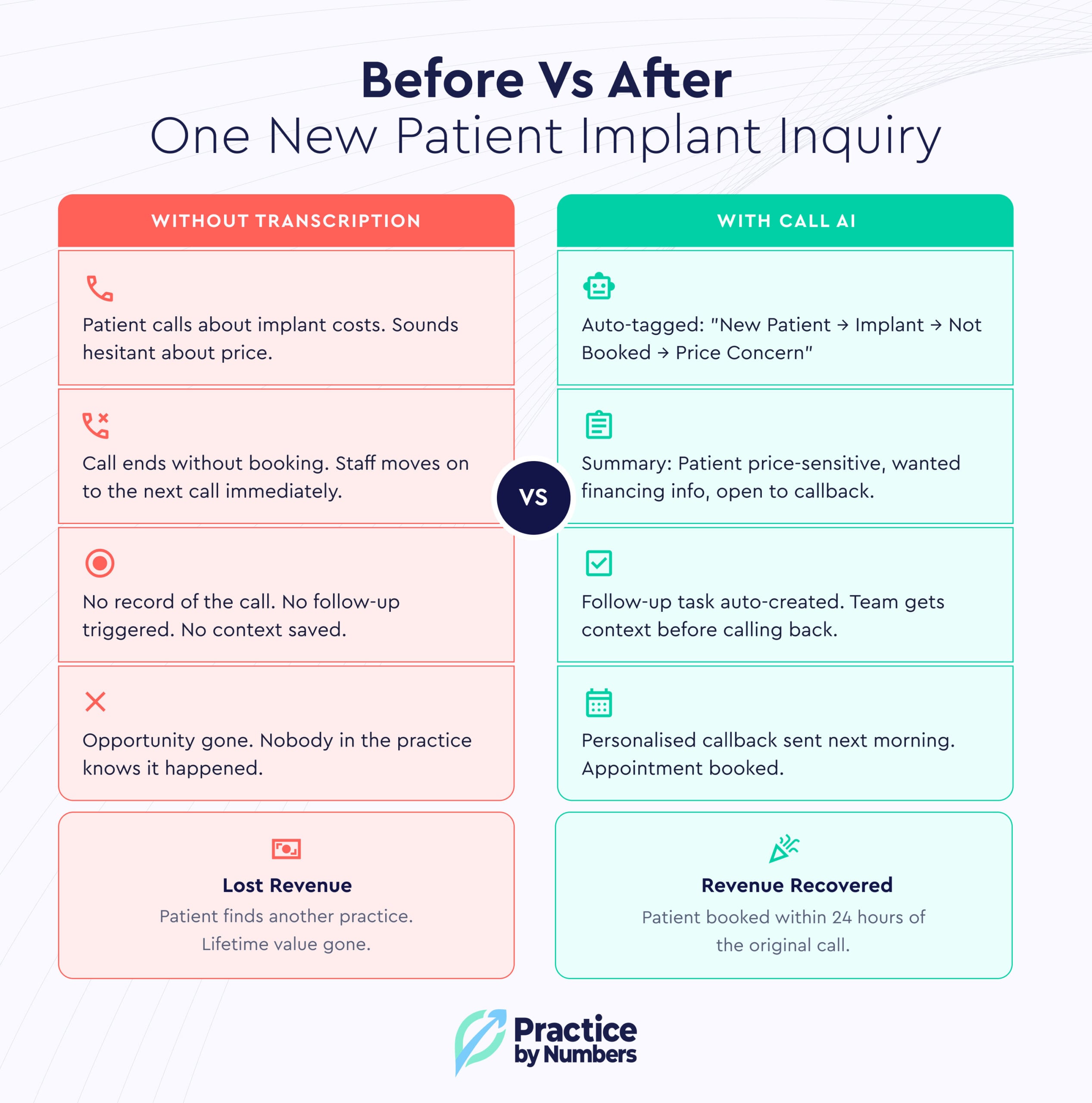
Beyond revenue, the before-and-after extends into every dimension of practice performance:
- Staff coaching becomes evidence-based, not opinion-based. Instead of telling a front desk team member that their phone manner needs work, you can show them the exact call where a patient’s hesitation was met with a rushed response. Specific, fair, and deeply more effective than general feedback.
- Patient disputes become simple to resolve. When a patient claims they were quoted a different price or never told about a cancellation policy, you have the transcript. The record is clear and complete.
- Process gaps become impossible to ignore. When twenty calls in a month ask the same insurance question and receive different, inconsistent answers, that pattern shows up in the data. You fix the script once and the problem stops repeating.
- New patient acquisition becomes measurable. You can see exactly what proportion of new patient inquiries are converting, where the drop-off is happening, and which staff members are most effective at new patient conversations. That is strategic intelligence that most practices are currently running completely blind on.
What Metrics Can You Pull From Transcription Data?
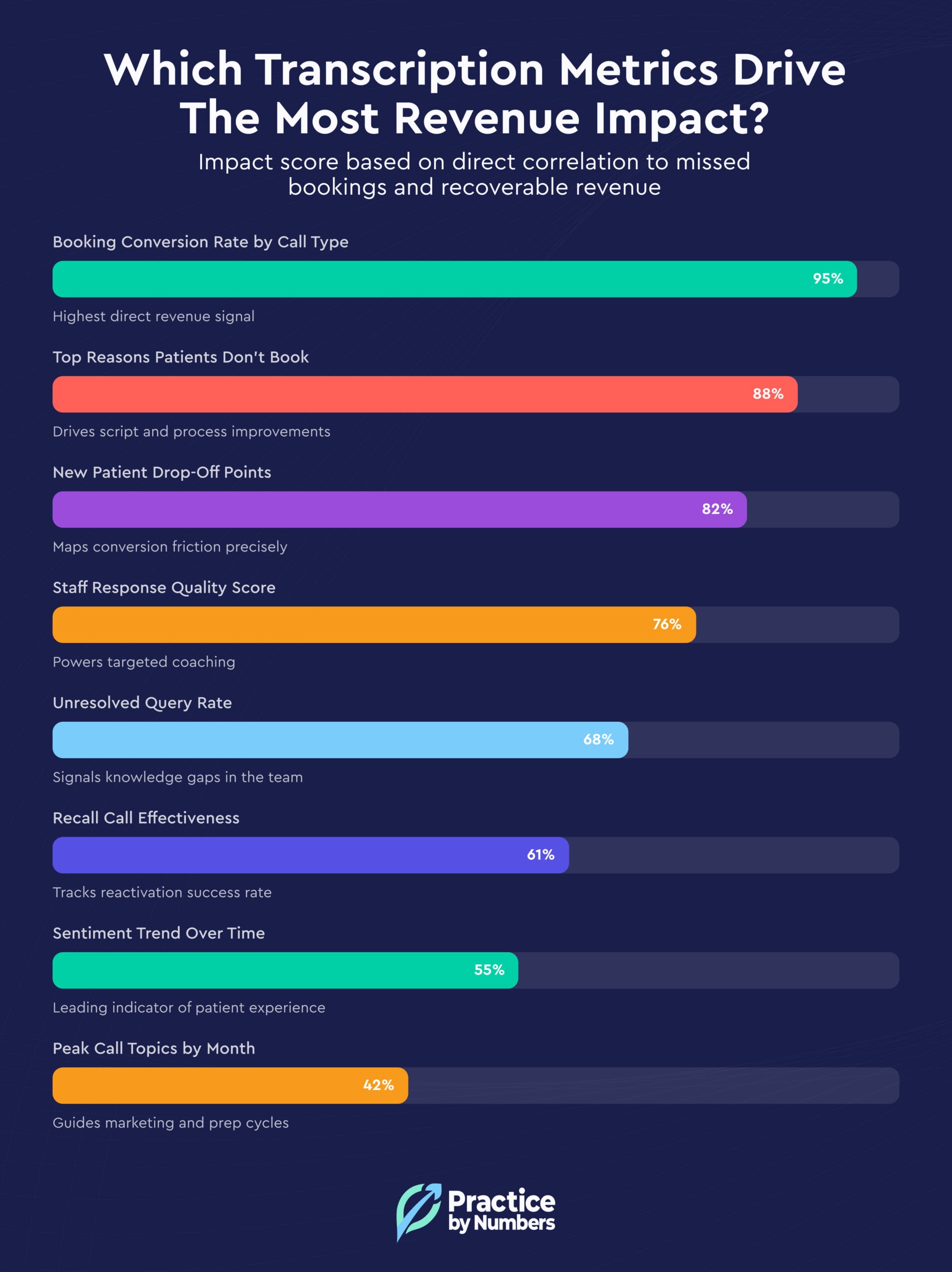
Transcriptions, analysed at scale across weeks or months, reveal patterns that no single report can show. Here’s how each key metric stacks up in terms of how directly it impacts practice revenue and which your team should prioritise first.
Core metrics practices unlock include:
- Call-to-appointment conversion rate
- Missed call recovery rate
- New vs returning patient ratio
- Peak-hour call volume distribution
- Treatment interest frequency (by procedure type)
- Sentiment trends across patient interactions
- Front desk response consistency
Why this matters:
These metrics bridge a critical gap between marketing spend and actual booked revenue. Instead of guessing which campaigns work, practices can directly trace calls back to outcomes.
If you’re asking “how do I improve dental practice call conversion rates?” this is where the answer starts: transcription-driven call analytics.
👉 See How Dental Practice Analytics Improve Revenue, Retention, and Operational Control
How Do You Go From “Transcriptions Are On” to “We Actually Use This”?
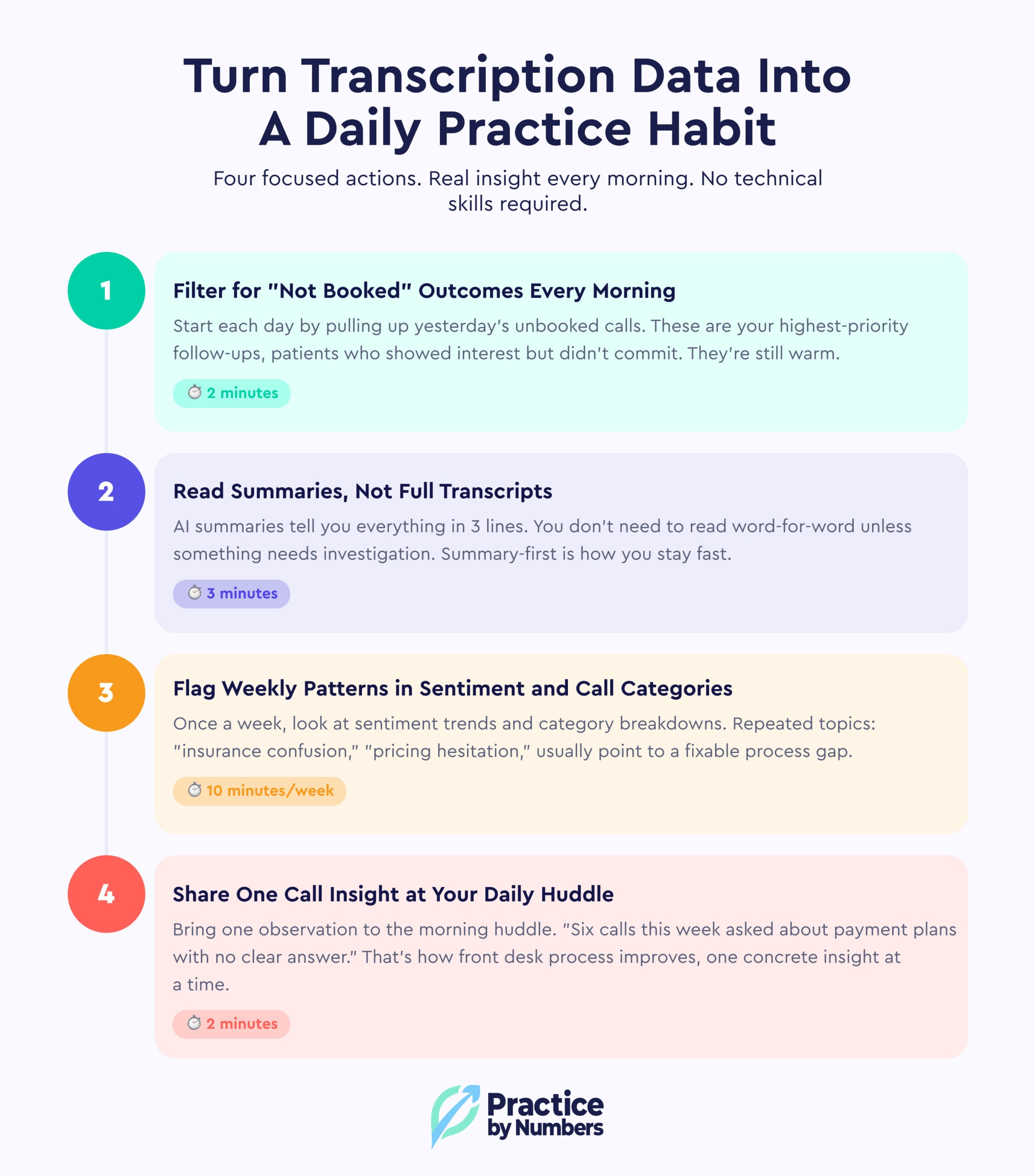
You don’t need a data team. You need a simple routine. Here’s how practices that use call transcription well make it part of their rhythm without it taking more than ten minutes a day.
- Start with “lost calls” review once a day
- Focus only on AI summaries, not full transcripts
- Flag repeated objections (price, timing, trust gaps)
- Share one insight per day in team huddles
- Track one improvement metric weekly (e.g., conversion rate)
Operational insight:
The highest-performing practices don’t review everything, they review patterns. That shift alone turns transcription from a passive archive into an active coaching system.
Turn Every Patient Call Into Actionable Insight with PbN Call AI
PbN Call AI is built for dental practices, especially multi-location setups handling 200+ monthly calls and teams struggling with inconsistent phone performance or limited coaching visibility.
It solves a core gap which is patient calls contain high-value intelligence, but most practices can’t track, interpret, or act on them effectively, leading to missed revenue and subjective coaching decisions.
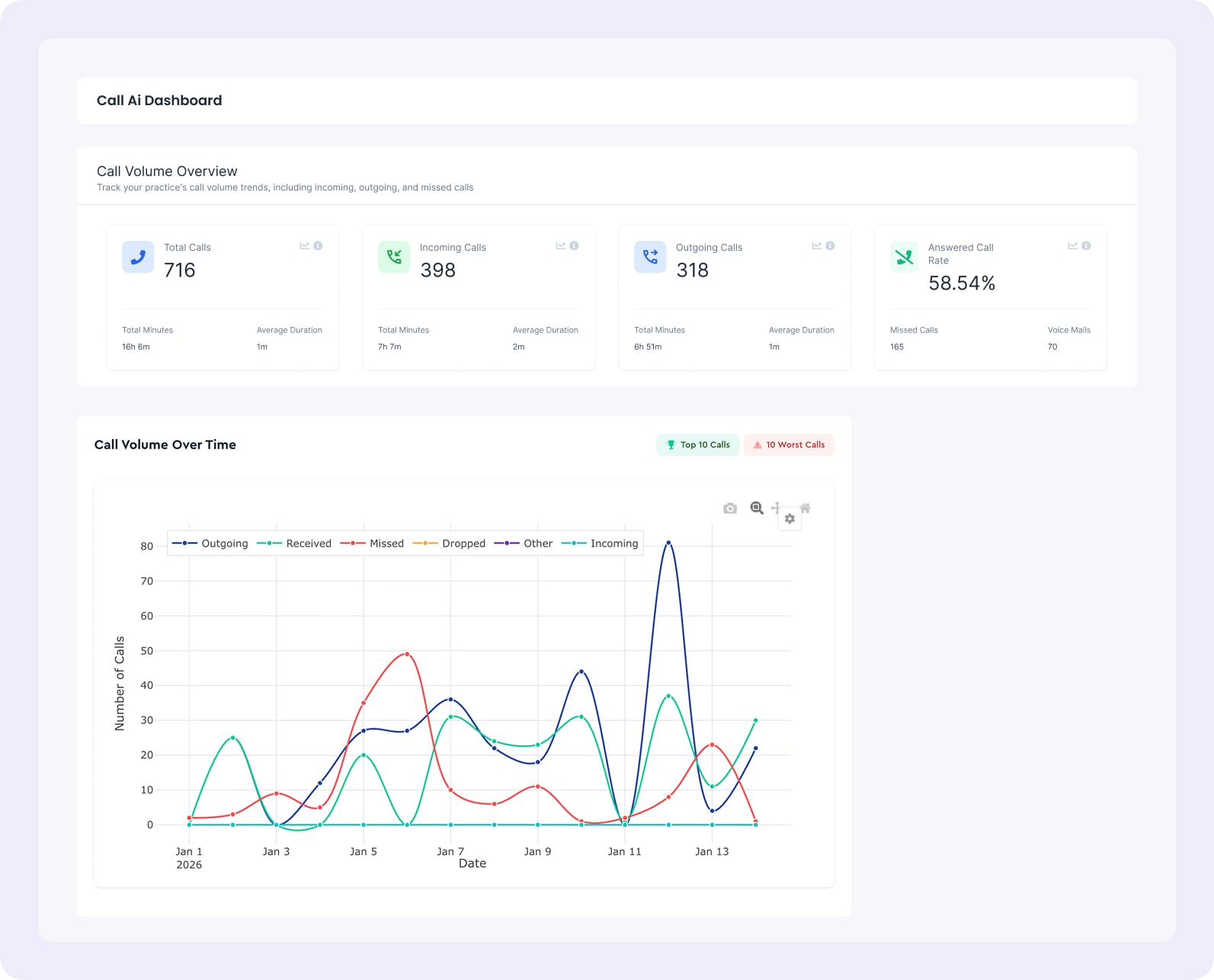
Call AI includes:
- Call transcription with searchable archives, turning every conversation into a permanent, auditable record for instant verification, dispute resolution, and performance review.
- AI-generated summaries condense full calls into 30-second insights covering intent, outcomes, objections, and follow-ups, removing the need for manual review.
- Sentiment analysis with real-time alerts flags negative or at-risk interactions instantly, helping prevent no-shows and reputation loss.
- Call performance analytics provide dashboards for conversion rates, peak-hour trends, patient mix, and marketing ROI, enabling data-driven staffing, coaching, and campaign optimization.
Instead of treating calls as isolated interactions, PbN connects them to scheduling, revenue, and patient experience outcomes, helping practices identify leaks, improve conversion, and coach teams using real conversations, not assumptions.
👉 See The Complete PbN AI Guide
Final Takeaway
Call transcription is no longer just a backend feature, it’s a front-line intelligence system for modern dental practices. When every patient call is captured, summarized, and analysed, practices stop relying on assumptions and start making decisions based on real conversations. The result is clearer coaching, fewer missed opportunities, and a more consistent patient experience across the board. If your phones are already running through PbN AI, the data is there. What changes everything is simply starting to use it.