Dental practices face a specific challenge of delivering quality clinical care while running a profitable small business. Your team handles it all while you focus on the dental work itself. A large part of their day goes into repetitive tasks like sending reminders, tracking unpaid bills, updating patient information, and handling no-shows. These tasks are important, but they don’t always need constant manual effort. These jobs just require someone to do them consistently day after day.
And that’s what AI is really good at.
TL;DR
AI in dental practices helps you:
- Fill empty slots with smarter scheduling
- Never miss patient calls
- Automate insurance verification & billing
- Improve diagnostic accuracy with AI-assisted imaging
- Boost recall with personalized follow-ups
Result: Less admin work for staff, fewer gaps in the schedule, and a smoother, faster patient experience.
What Is AI in Dental Practices?
AI in dental practices refers to the use of artificial intelligence to automate routine tasks, support clinical decisions, and improve communication with patients. Instead of replacing your team, AI works in the background to take over time-consuming administrative work. It helps make processes faster, more consistent, and less prone to error.
As a result, your staff spends less time on repetitive tasks and more time focusing on patients. At the same time, patients benefit from quicker responses, smoother scheduling, and a more seamless overall experience.
5 Ways AI Is Improving Overall Experience in Dental Practices
AI is already being used in dental practices across five key areas: scheduling, phone systems, billing, diagnostics, and patient recall. These are the areas where automation creates the biggest impact on efficiency and patient satisfaction.
Let’s look at how each one works.
1. Smarter Patient Scheduling That Fills the Chair
Empty chairs mean lost revenue. AI-powered scheduling tools analyze cancellation patterns, procedure types, and patient preferences to optimize your appointment book. When a cancellation happens, the system can automatically reach out to the best-fit patient from a waitlist and fill the gap.
Over time, AI learns:
- Which patients are more likely to cancel on specific days
- Which procedures take longer than expected
- Which time slots are in the highest demand
Instead of a static calendar, your schedule becomes dynamic and self-improving.
What staff experience: Less phone tag, fewer last-minute gaps, and a schedule that runs more smoothly.
What patients experience: Easier booking, shorter wait times, and appointments that fit their preferences.
2. AI-Powered Phone Systems That Never Miss a Call
The front desk cannot answer every call, especially during peak hours. But every missed call is a potential new patient lost. AI-powered phone systems can:
- Answer calls instantly
- Schedule appointments
- Respond to common questions
- Route complex queries to staff
What staff experience: Fewer interruptions during busy hours and less pressure to handle every incoming call.
What patients experience: Instant responses, no voicemail delays, and quicker appointment scheduling.
👉 See How Virtual Receptionists Improve Call Coverage in Dental Practices
3. Automated Insurance Verification and Billing
Insurance verification is one of the most time-consuming administrative tasks in a dental practice. AI tools can automatically:
- Verify eligibility automatically before appointments
- Flag coverage limitations
- Reduce the back-and-forth that slows down the billing cycle
On the claims side, AI catches coding errors and documentation gaps before submission, reducing denials and the costly rework they require.
What staff experience: Hours saved per week on manual verification and claims follow-up.
What patients experience: Fewer billing surprises and faster processing of their insurance benefits.
4. Enhanced Diagnostic Imaging Support
AI imaging tools analyze dental radiographs and flag potential findings such as early caries, bone loss, and periapical pathology that require closer review. The technology does not diagnose. It highlights areas of interest so the clinician can make a more informed decision.
This is especially valuable in high-volume practices where a clinician may review dozens of images per day. AI acts as a consistent, tireless second opinion that catches what fatigue might miss.
What staff experience: More confidence in image reviews and reduced chances of missing small details.
What patients experience: More accurate assessments and better-informed treatment discussions.
5. Personalized Patient Recall and Reactivation
Recall is the engine of a healthy dental practice. AI-powered recall systems go beyond monthly postcards. They track which patients are overdue, predict who is most likely to respond, and personalize the outreach by channel (text, email, phone) and message.
The result:
- Higher reactivation rates
- Fuller schedule
- A patient base that stays connected to the practice rather than drifting away
What staff experience: Recall runs on autopilot instead of requiring manual tracking and outreach.
What patients experience: Timely, relevant reminders that feel personal rather than generic.
Key Takeaways
- AI in dental practices delivers the most impact in scheduling, phone handling, insurance processing, and patient recall.
- AI tools free staff from repetitive tasks, allowing them to focus on patient care and experience.
- Patients benefit through faster responses, fewer billing issues, and a more personalized experience.
- AI does not replace dental teams, it makes them more effective.
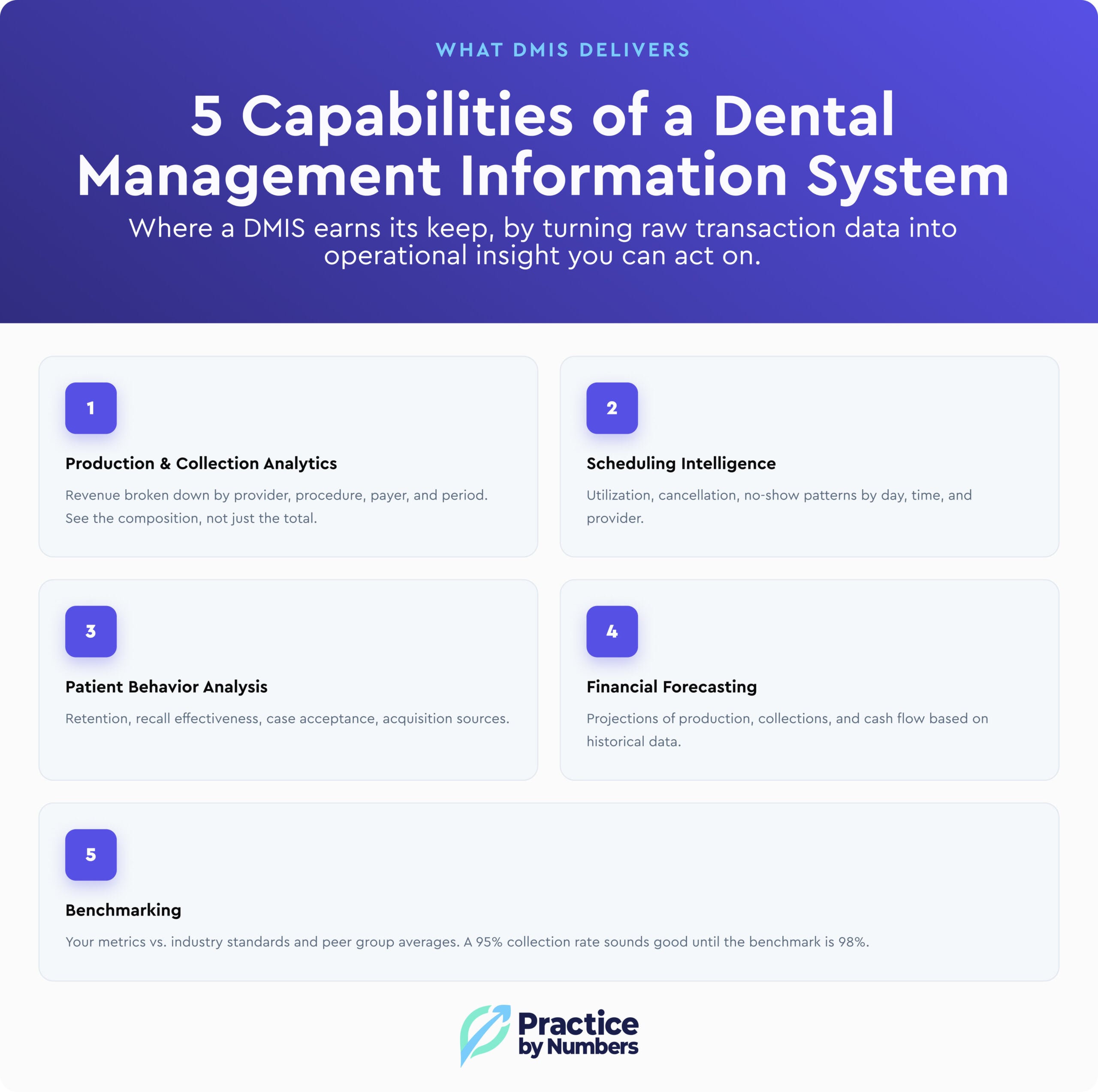
- Starting with one high-impact area (like phone answering or insurance verification) is the most practical path to adoption.
👉 Explore How PbN AI Automates Admin Work and Helps Grow Your Practice.
FAQs
Q. How much does AI cost for a dental practice?
Costs vary by tool and practice size, but most AI platforms for dental practices operate on a monthly subscription model. The ROI typically comes from recovered revenue (missed calls, denied claims, empty chairs) rather than cost savings alone.
Q. Will patients know they are talking to AI on the phone?
Modern AI phone systems sound natural and conversational. Many patients do not distinguish between an AI agent and a human receptionist. When the AI cannot handle a request, it transfers to a staff member seamlessly.
Q. Do I need to change my practice management software to use AI?
Most AI tools integrate with popular practice management systems. Check for compatibility with your specific PMS before purchasing, but switching software is rarely required.