


No two dental practices run the same way. The way one office sets up a room for a crown, writes its financial policy, or schedules a new patient looks different from the office down the road. So when a practice picks software that forces everyone into one fixed way of working, something has to give. Usually it’s the team, doing extra steps to fit the software instead of the other way around.
That’s the idea Brittany Rogars keeps coming back to. Brittany is the CEO of SKF Practice Solutions and an Open Dental expert who has spent years helping practices set up the software around how they actually operate. On a recent episode of the Practice Pulse podcast with PbN co-founder Dr. Aditi Agarwal, she made the case for why flexibility is more than a nice-to-have for a growing practice.
Rigid software makes your team work harder
When software is rigid, the cost shows up in small moments all day long. An extra click here. A workaround there. A report buried three menus deep. None of it feels like a crisis, but it adds up to real time and mental load on the front desk.
Brittany uses her own phone to explain how she thinks about it. She doesn’t want to tap through a hundred steps to reach the camera she uses most. She wants the tool set up around how she lives. The same goes for practice software.
“I want my practice management software customized to my workflows. There is nothing in Open Dental that you can’t customize and build your own workflows for.” Brittany Rogars
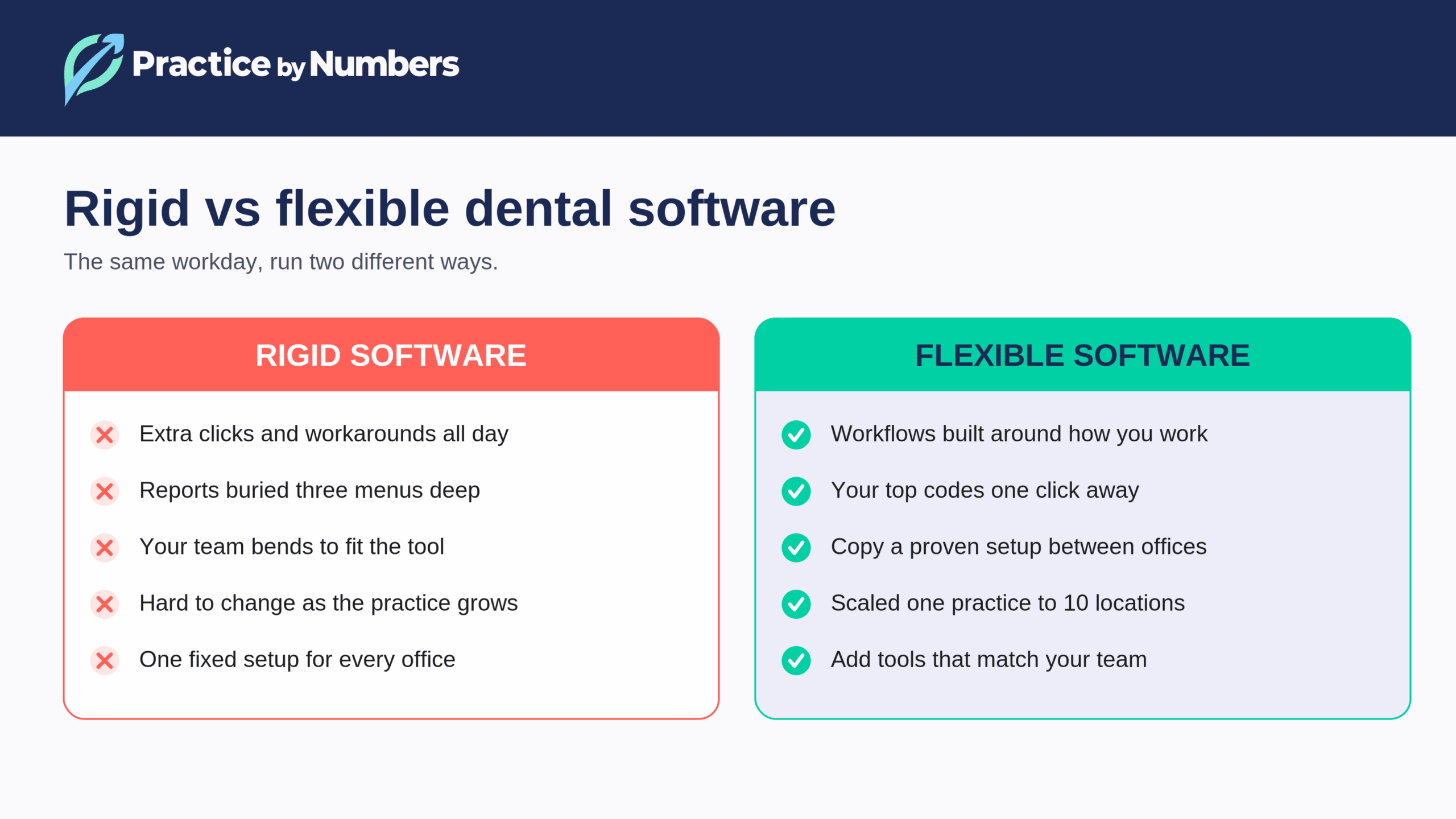
That ability to shape the software around the practice is what she points to first when people ask what makes Open Dental stand out. Walk into ten Open Dental offices and you’ll see ten different setups.
“Open Dental is kind of like a snowflake. Every office uses it differently, because it’s built around that practice.“ – Brittany Rogars
What customization actually looks like
Flexibility can sound abstract, so here are a few of the practical things Brittany sets up for practices.
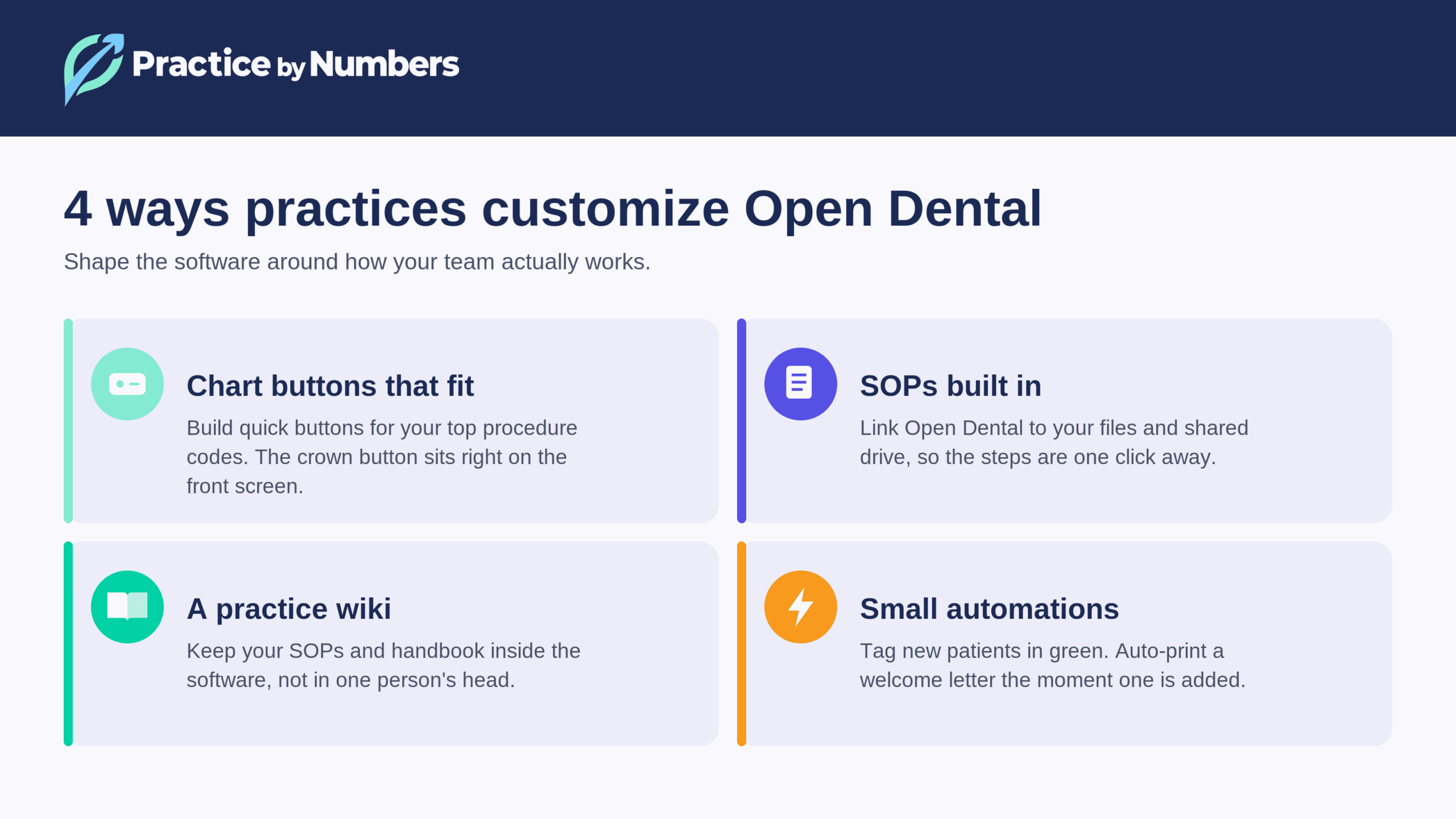
Chart buttons that match the work. Instead of digging for the codes you use most, you run your top 100 procedure codes and build quick buttons for them. If you do crowns every day, the crown button sits right on the front screen. That alone cuts charting time and the daily headache for clinicians.
SOPs built into the software. Using program links, a practice can connect Open Dental to a file or a shared drive, so the steps for scheduling an appointment or handling a balance are one click away. No walking across the office to find a dusty binder while a patient waits to check out.
A practice wiki. Teams can build an internal reference inside the software with their SOPs and employee handbook, so the knowledge lives in one place instead of in one person’s head.
Small automations. New patient appointments are tagged in green so they’re easy to spot. A welcome letter that prints automatically when a new patient is added. Little touches that keep the experience consistent without extra effort.
Flexibility becomes a growth advantage
The payoff gets bigger as a practice grows. Early in her career, Brittany helped take a practice from one location to ten in about three years, adding providers, hygienists, and multiple locations along the way.
Open Dental handled it. A newly acquired office can be set up to follow the same foundation as the home office, or built out differently if that location does things its own way. Even a brand-new practice, a de novo starting from scratch, can copy settings from an existing database. The software is designed to share, so practices can import setups from a friend, a peer, or a consultant.
“You can scale without feeling trapped inside a rigid system.“ Brittany Rogars
There’s a flip side worth naming. Open Dental’s open approach also means a lot of third-party tools can plug into it, which gives a practice a buffet of choices for building its tech stack. That freedom comes with a little homework. Not every add-on is the right fit, so it takes some due diligence to choose well. Brittany’s view is that the effort pays off, because you end up with a stack that matches your office’s mission and the way your team actually works.
The takeaway
Flexible software lets a practice build workflows around how it actually operates, instead of bending the team to fit the tool. For a growing practice, that’s the difference between software that creates limitations and software that grows alongside you.
That’s one of the reasons Open Dental has earned such a loyal following. Its flexibility allows practices to build systems that reflect how they work, not how a software company thinks they should work.
And because Open Dental is built with openness and integration in mind, practices aren’t forced to choose between keeping the PMS they love and adding new capabilities as they grow. Solutions like Practice by Numbers can complement Open Dental by adding visibility into performance, communications, and operations while allowing practices to continue working within the platform they already know and trust.
FAQs
What makes dental software “flexible”?
Flexible software lets you customize workflows, screens, and reports around how your team works, rather than forcing everyone into one fixed setup. Open Dental is a common example because so much of it can be configured per practice.
Does customization make Open Dental harder to learn?
It can add a learning curve, especially in a heavily customized office. The core actions stay the same from office to office, but buttons and layouts may sit in different places. Many practices work with a specialist to set it up cleanly.
Can Open Dental handle multiple locations?
Yes. It scales across multiple providers and locations, and settings can be copied from one database to another, which makes adding an acquired or brand-new practice much easier.
Is more flexibility always better?
Not automatically. Open systems give you many third-party choices, so it takes some due diligence to pick tools that fit your practice. The benefit is a tech stack that matches how your team actually works.
How does Practice by Numbers fit with a flexible PMS?
PbN connects to Open Dental and surfaces performance data in one place, so as a practice customizes and scales, it keeps clear visibility into how each provider and location is doing.
This article is based on a special edition of the Practice Pulse podcast featuring Open Dental expert Brittany Rogars and PbN Co-Founder Dr. Aditi Agarwal. Their conversation takes a deep dive into Open Dental, including what makes it unique, why practices are so loyal to it, and how flexibility can become a competitive advantage as a practice grows.
Listen to the full conversation to hear Brittany’s real-world examples, implementation insights, and practical advice for getting the most out of Open Dental.


