Did you know? Most dental practices do not lose patients loudly. They lose them quietly. No angry calls. No formal complaints. No obvious red flags in the schedule. Patients simply do not book the next visit. Treatment plans remain “accepted” but unscheduled. Follow-ups happen inconsistently. Front desks stay busy, yet growth feels capped. While dental teams believe they have a patient engagement problem, it’s not. This is neither a marketing problem nor a staffing problem, and it is rarely a clinical problem. In reality, it’s an engagement visibility problem.
Patients are not disengaging because reminders are insufficient or staff are not trying hard enough. They disengage because most practices operate cluelessly between critical moments: after the call, after the exam, after the treatment presentation, and after the patient leaves. When practices cannot see where patients disengage, they cannot fix it. And when engagement relies on memory, manual effort, or disconnected tools, even strong teams eventually hit a ceiling.
Traditional dental engagement focuses on touchpoints. Modern dental engagement must focus on control.
- Control over access
- Control over information flow
- Control over follow-through
- Control over outcomes
Engagement is not about sending more messages. It is about building a system that connects access, intake, communication, treatment, and follow-through into something measurable. It should ensure the right patient receives the right interaction at the right time, and that the practice can see whether it worked.
This guide breaks down what effective dental engagement actually looks like in real practices, why traditional approaches fail, and how Practice by Numbers turns engagement into measurable operational and financial outcomes.
The Industry Challenge: Dental Engagement Is Fragmented by Design
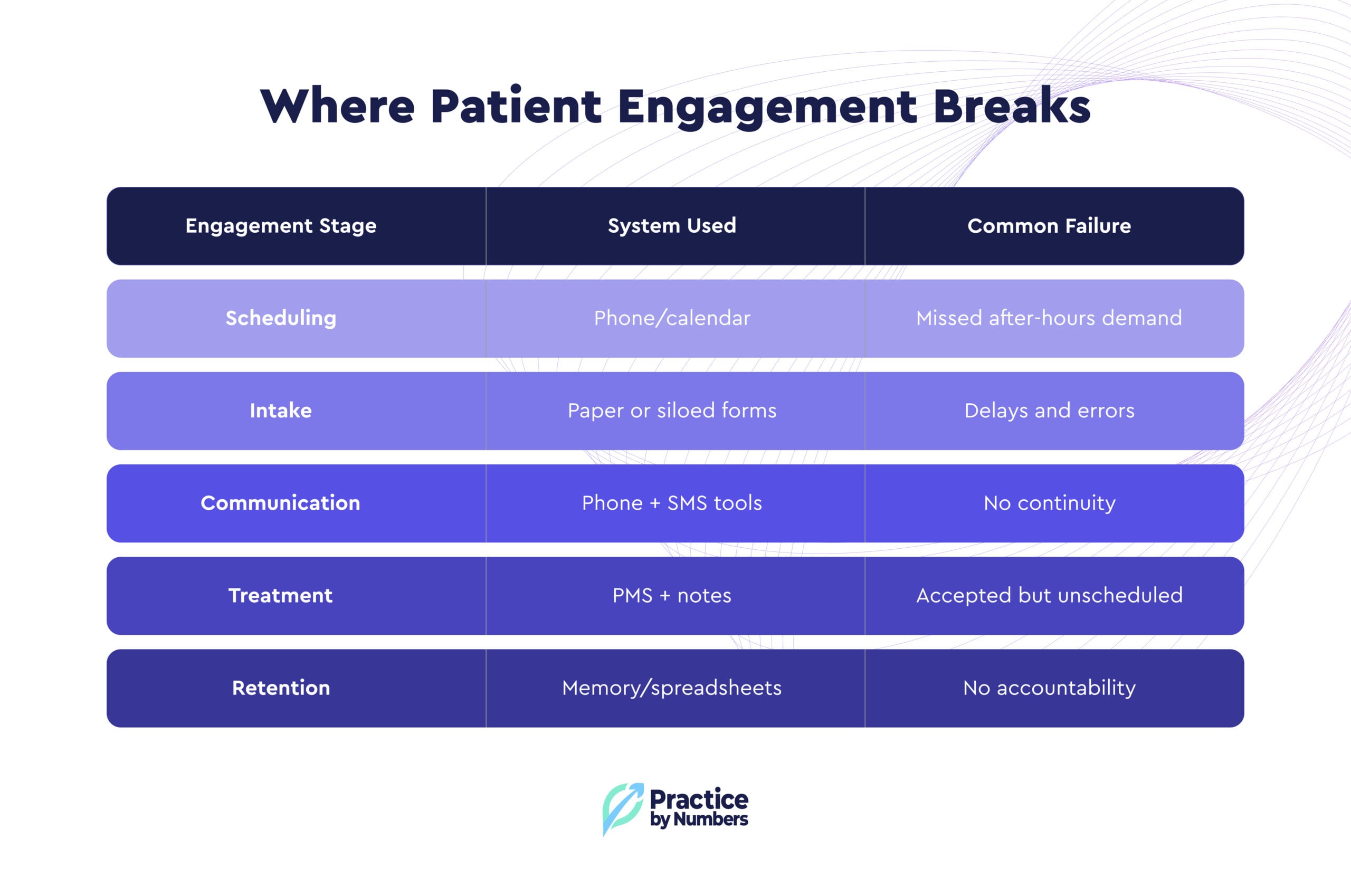
The real patient communication problem in dentistry is structural. Dental practices operate across multiple disconnected systems: PMS, phones, forms, scheduling tools, and reporting dashboards. Each system captures a fragment of the patient journey, but no single system connects them into a coherent picture. Dental practices do not suffer from a lack of effort. They suffer from fragmentation.
Engagement is spread across:
- Phones
- Front-desk memory
- Paper forms
- PMS notes
- Disconnected software tools
Each system captures activity, but none capture flow. This fragmentation creates invisible failure points. Patients call but do not schedule. Treatment is accepted but never booked. Forms are completed but not updated correctly. Follow-ups depend on memory instead of triggers. When something goes wrong, there is no clear ownership because there is no clear signal.
Until engagement is treated as a system with inputs, workflows, and outputs, adding more tools only increases complexity.
The Real Cost of Manual Workflows
Manual processes do more than slow your team down. They quietly hurt your practice in three clear ways:
1. Lost Time Where It Matters Most
Every minute your front desk spends answering routine calls or entering data is time taken away from patients. Skilled staff end up doing low-value work instead of focusing on care, coordination, and relationships.
2. Errors That Create More Work
Manual entry leads to mistakes. Those mistakes turn into billing issues, insurance delays, and confusion in the clinical workflow. Fixing them takes even more time, creating a cycle of rework.
3. No Visibility Into What’s Working
When information lives on paper or in people’s heads, it can’t be tracked or analyzed. You don’t know which treatments patients say yes to, where follow-up breaks down, or which processes actually drive results.
Without data, decisions are based on guesswork. Meanwhile, data-driven practices are improving every step of the patient experience.
Why Dental Patient Engagement Is Now a Core Operating System Requirement
Engagement becomes reliable only when it is designed into the operating model of the practice. This means removing dependency on individual effort and replacing it with structured workflows supported by data.
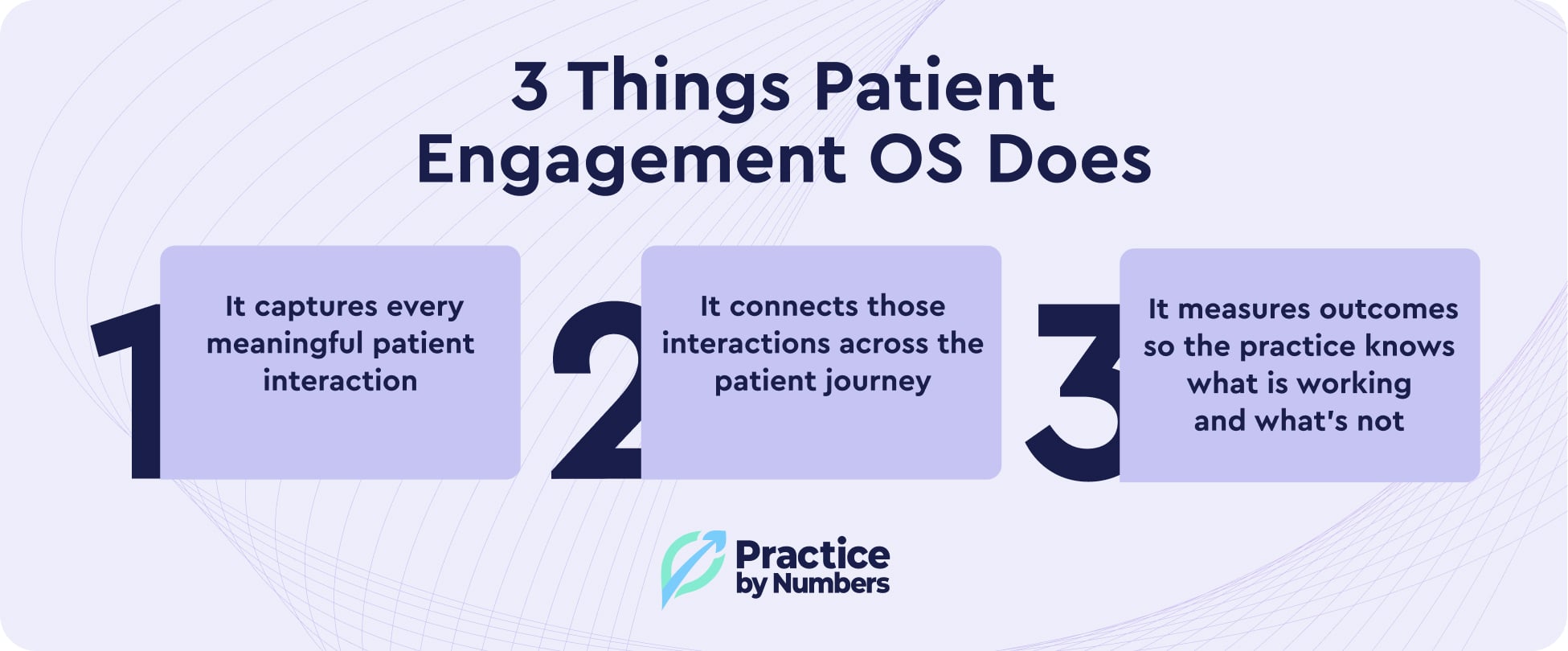
This is the shift from activity-based engagement to outcome-based engagement. Instead of asking whether reminders were sent, the practice asks whether treatment was completed. Instead of counting calls, it evaluates scheduling conversion. Instead of guessing patient loyalty, it measures retention value.
Patients under 40 expect digital-first experiences because every other service they use, like banking, healthcare, retail, and food delivery, works this way. You’re not competing with the dental practices. You’re competing with patient expectations shaped by entirely different industries.
Practice by Numbers: An End-to-End Dental Patient Engagement Platform
Practice by Numbers does not treat patient engagement as just another feature you have to add on. It is built to help practices understand where patients get stuck, where they drop off, and what actually helps them move forward.
Every part of the platform is designed to answer practical questions your team already asks every day:
- Are patients able to schedule an appointment when they want to?
- Are forms slowing down check-in?
- Are treatment plans being accepted but never scheduled?
- Are follow-ups happening, or falling through the cracks?
This is what we mean by intelligent dental patient engagement. PbN does not collect data just to show charts. It uses engagement data to help your team take the right action at the right time.
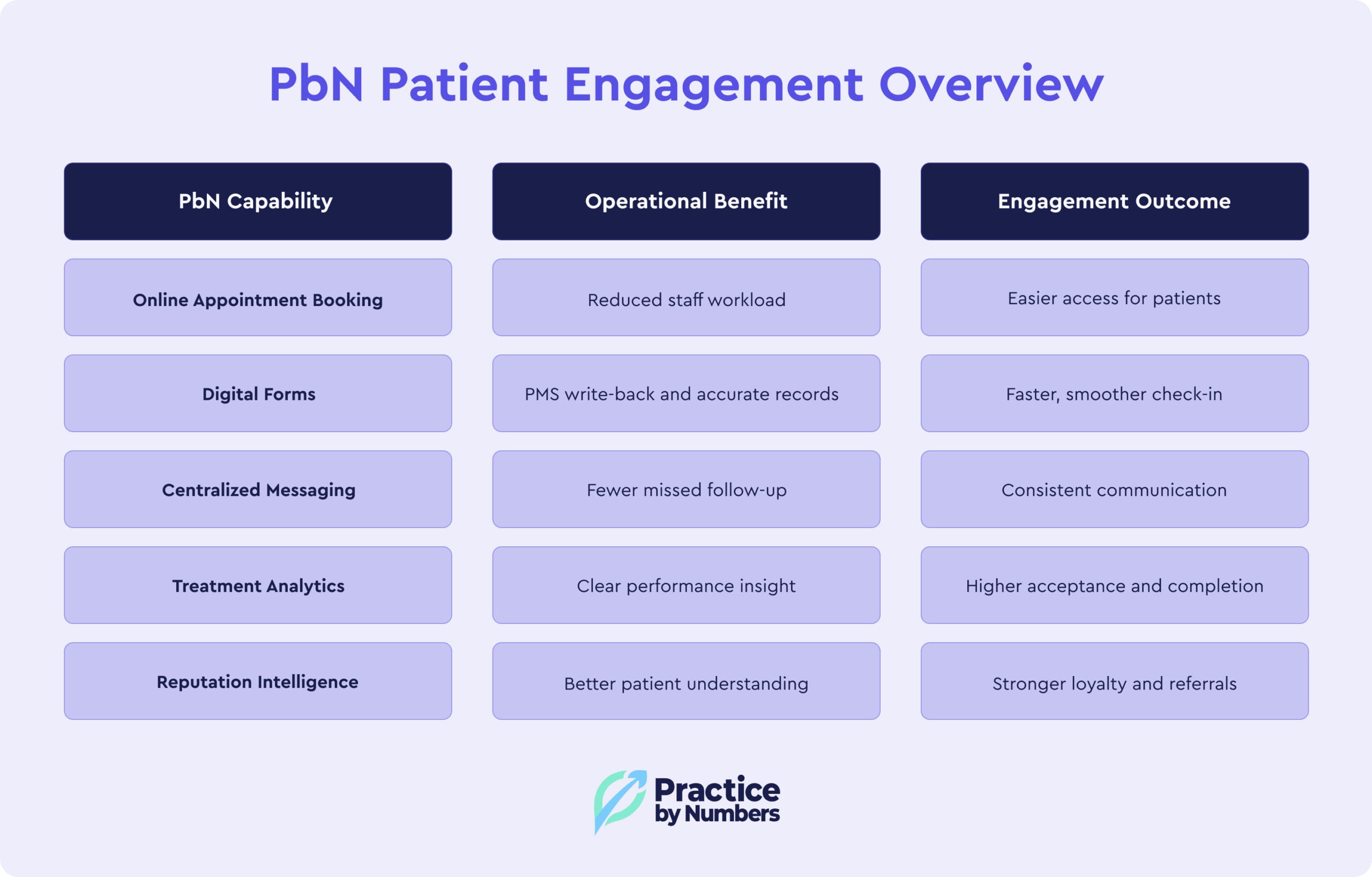
Because PbN connects directly with your Practice Management System, engagement is never separate from real operations. Appointments, forms, messages, treatment plans, and feedback all stay connected to the patient record and financial data you already rely on. That is what makes Practice by Numbers different from typical dental patient engagement software. It does not just help you reach patients. It helps you see what is happening inside your practice and fix problems before they turn into lost revenue.
I. Modernizing Patient Access and Communication
Patient access problems stem from availability gaps. The first step in patient engagement is making it effortless for patients to interact with your practice. Your practice is open for limited hours, but patients should have access to booking an appointment at all times. Practice by Numbers closes that gap by giving patients always-on digital access, even when your office is closed.
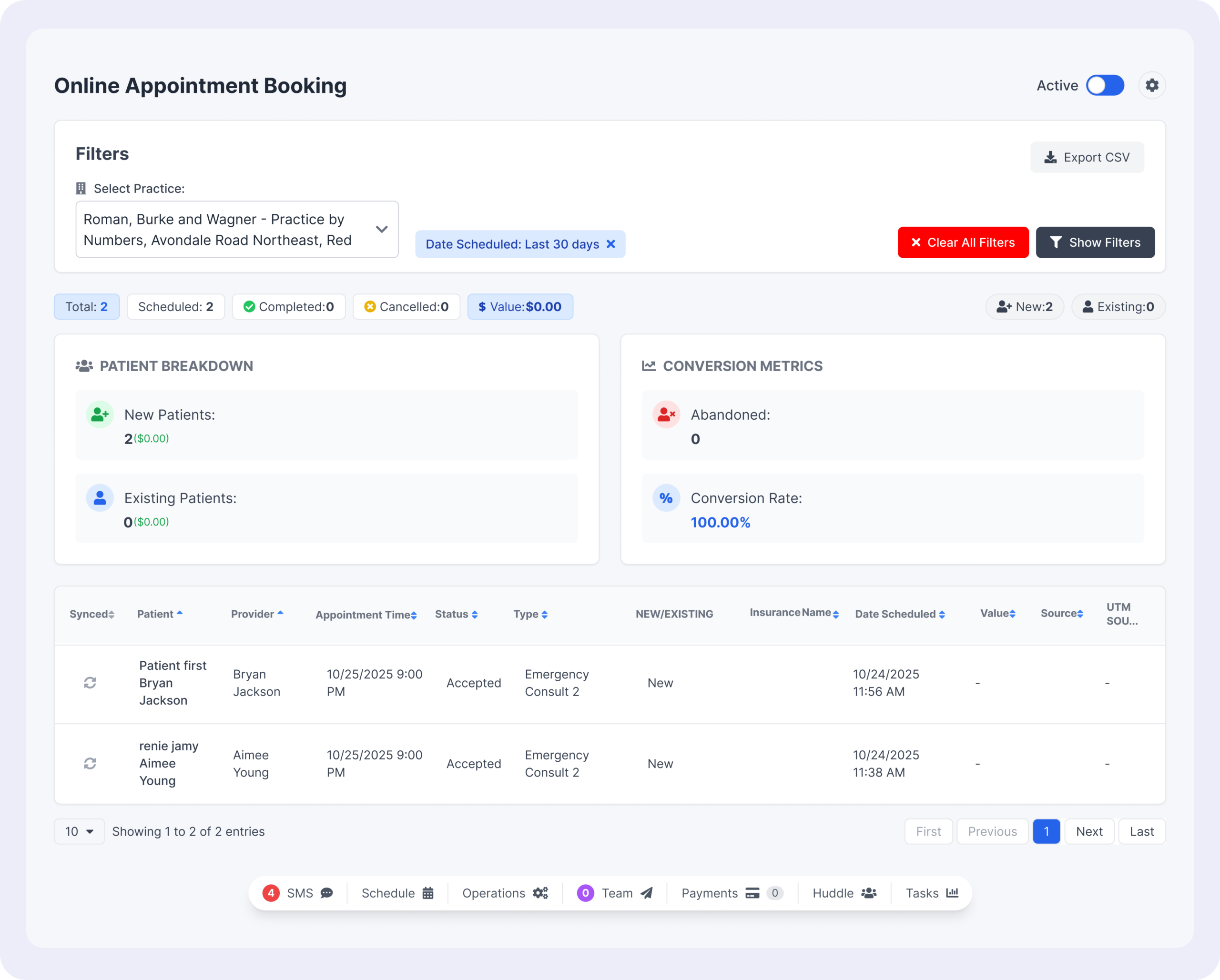
A. 24/7 Scheduling Through Online Appointment Booking (OAB)
PbN’s Online Appointment Booking gives patients direct scheduling access 24/7. This means:
- Prospective patients book instantly when researching practices at 10 PM, instead of waiting until morning and forgetting.
- Existing patients self-serve rescheduling without phone tag, reducing no-shows from scheduling conflicts.
- Your front desk focuses on in-office patients rather than answering the same scheduling questions repeatedly.
The system syncs directly with your PMS, preventing double-booking while maintaining real-time calendar accuracy. Patients see actual availability, select their preferred time, and receive automatic confirmation. No staff intervention required.
When booking is frictionless, conversion rates from “interested prospect” to “scheduled patient” increase automatically. When existing patients can easily reschedule rather than canceling, your schedule stays full.
B. The Secure PbN Patient Portal
The PbN Patient Portal fundamentally shifts the patient relationship from passive recipient to active participant. Patients gain secure access to:
- Complete dental records and imaging
- Treatment plans with detailed breakdowns
- Appointment history and upcoming visits
- Financial statements and payment options
The engagement mechanism here is psychological. When patients can review their treatment plan at home, research recommended procedures, and discuss options with family, acceptance rates improve. They’re making informed decisions on their timeline, not feeling pressured in the chair.
For your team, the portal eliminates redundant questions (“What did the dentist say I need?” “When is my next appointment?” “What do I owe?”). Patients find answers independently, and your staff handles genuine clinical questions rather than information retrieval.
The portal also enables patients to:
- Complete and submit forms digitally
- Update insurance and contact information
- Schedule follow-up appointments
- Request prescription refills
Every function the portal handles digitally is one less administrative task stealing your team’s time.
C. Enhanced Digital Communication
Effective dentist-patient communication isn’t about broadcasting, it’s about reaching patients through channels they actually use, with context they need. PbN’s communication infrastructure includes:
- SMS Messaging with Language Support: Text-based communication sees better open rates in comparison to email. PbN enables two-way SMS conversations, including multi-language support, which is critical for practices serving diverse patient populations. Patients can confirm appointments, ask quick questions, and receive timely updates without phone calls.
- PMS Write-back for Complete Documentation: Every patient interaction, like phone calls, texts, portal messages, logs automatically to your PMS (such as Dentrix Office Journal). This creates a complete communication history accessible to any team member, eliminating confusion and ensuring continuity.
- Quick-Access Tools for Efficiency: For practices using Open Dental, PbN’s Desktop app includes an Open Dental button that instantly pulls up a patient’s complete information. When a patient calls, your team accesses their entire history in seconds. No searching, no switching between systems.
These aren’t isolated features. They’re an ecosystem that ensures no patient inquiry falls through the cracks, no staff member lacks context, and every interaction is documented for follow-up.
II. Streamlining Digital Intake with PbN Forms
PbN Digital Forms helps you go entirely paperless, creating a streamlined intake process that improves data accuracy, saves staff time, and presents a modern first impression. Paper-based intake is inefficient and error-prone. PbN Digital Forms solves this by making the intake process fast, accurate, and completely digital.
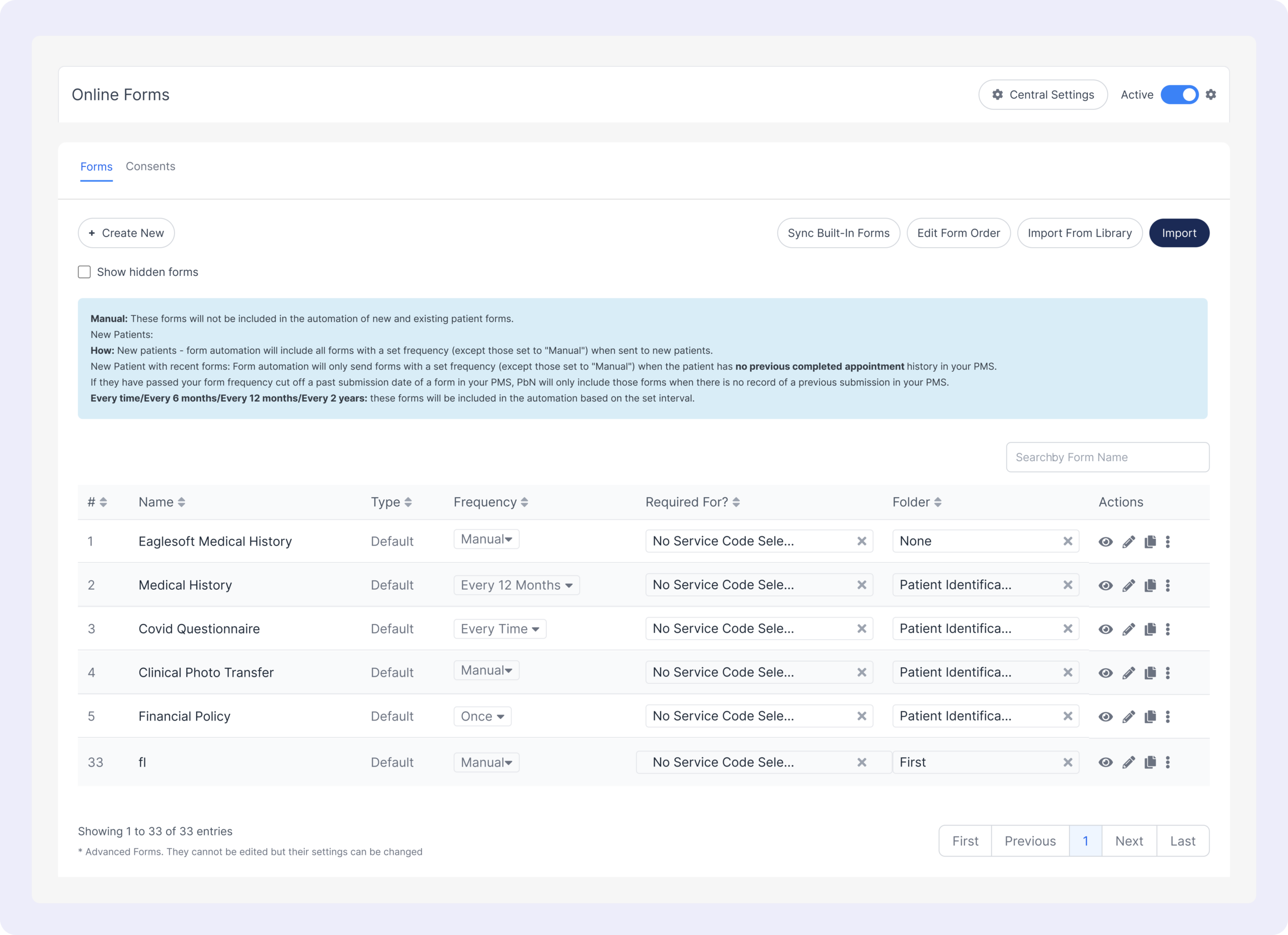
A. Customizable Forms and Seamless Data Flow
The PbN Forms Editor provides a drag-and-drop interface for creating fully customized documents:
- Patient intake forms
- Medical and dental history questionnaires
- Consent forms and treatment plan acknowledgments
- HIPAA notices and financial agreements
Complete customization control: Adjust text size, font, color, formatting, and branding elements to match your practice identity. This isn’t a generic template, it’s your form, digitized.
How data flows:
- Patient completes form digitally (via email link, portal, or kiosk) before arrival
- Information writes back directly to the PMS automatically upon submission
- No manual data entry required by your team
- Form stored digitally in the patient record for future reference
Pre-filled Updates for Returning Patients: When existing patients need to update forms (annual medical history review, insurance changes), PbN presents their previous answers pre-populated. They review, modify what’s changed, sign digitally, and resubmit. The system updates only the changed fields in your PMS.
If a patient removes sensitive information (such as SSN during an update), it clears from the PMS automatically upon submission, ensuring data accuracy without staff intervention.
The time savings math: Traditional intake requires 15 minutes of patient time plus 5-10 minutes of staff data entry per patient. Digital forms reduce this to zero staff time. Patients complete forms before arrival, information flows automatically, and your team welcomes patients ready for clinical care.
Multiply this across 20-30 patients daily, and you’ve reclaimed 3-4 hours of staff productivity.
B. Improved Patient Compliance
Digital forms only work if patients actually complete them. PbN’s design prioritizes patient convenience and experience:
- Timeout Handling for Interrupted Sessions: If a patient opens a form and then gets distracted, it times out after 10 minutes of inactivity. However, the form link remains active indefinitely. Patients can return hours or days later, and their progress is preserved, no starting over, no lost information.
- Mobile-Optimized Interface: Most patients complete forms on smartphones. PbN forms render perfectly on any device, with large touch targets, clear navigation, and progress indicators.
- Clear Instructions and Help Text: Each form section includes patient-friendly explanations, reducing confusion and incomplete submissions.
C. Known System Behavior
When patients check in using the PbN Kiosk app and complete pending forms, the system doesn’t automatically transition their Patient Flow status to “Ready to Seat.” Your team will need to manually update this status until this workflow enhancement is implemented.
(Note: It is advised to log a bug for this.)
III. Driving Treatment Acceptance and Patient Retention
Presenting treatment is easy. Converting presentations into completed dentistry is hard. This is where most practices leak massive revenue, not from poor clinical skills, but from inconsistent follow-through. PbN provides the tools needed to close this gap.
A. Measurable Treatment Efficiency
The highest-value treatment is treatment completed immediately. Same Day Treatment KPIs track your practice’s ability to convert presented treatment plans into completed procedures during the same appointment.
What SDT metrics reveal:
- Which providers excel at same-day conversion
- Which procedures are most likely to be completed immediately
- How case presentation language impacts acceptance
- What percentage of your production comes from SDT versus scheduled treatment
Same Day Treatment eliminates follow-up friction. The patient leaves with treatment complete, you capture revenue immediately, and there’s no risk of the patient not responding to their treatment plan. By tracking SDT by provider and procedure code, you identify best practices worth replicating across your team.
Beyond same-day treatment, PbN tracks overall treatment acceptance rates by specific procedure codes. This granular data answers critical questions:
- Do patients accept crown recommendations but decline implants?
- Are certain treatment coordinators more effective with high-value cases?
- Which procedures need better patient education or financing options?
If far fewer patients move forward with implants than with crowns, the issue usually isn’t clinical. It’s a sign that something in the conversation, explanation, or financing is getting in the way. The data helps you see where the real problem is.
B. Improving Patient Retention
Treatment Retention measures something different: Of patients who accepted treatment, how many actually return to complete it?
This is where practices lose staggering amounts of revenue. A patient agrees to $4,000 in treatment, intends to schedule, then life happens. Without systematic follow-up, they simply never come back.
PbN’s approach to treatment retention:
Revenue IQ Filters for Unscheduled Treatment: Identify patients with accepted but unscheduled treatment plans, filtered by:
- Remaining insurance benefits
- Treatment value
- Time since acceptance
- Patient priority status
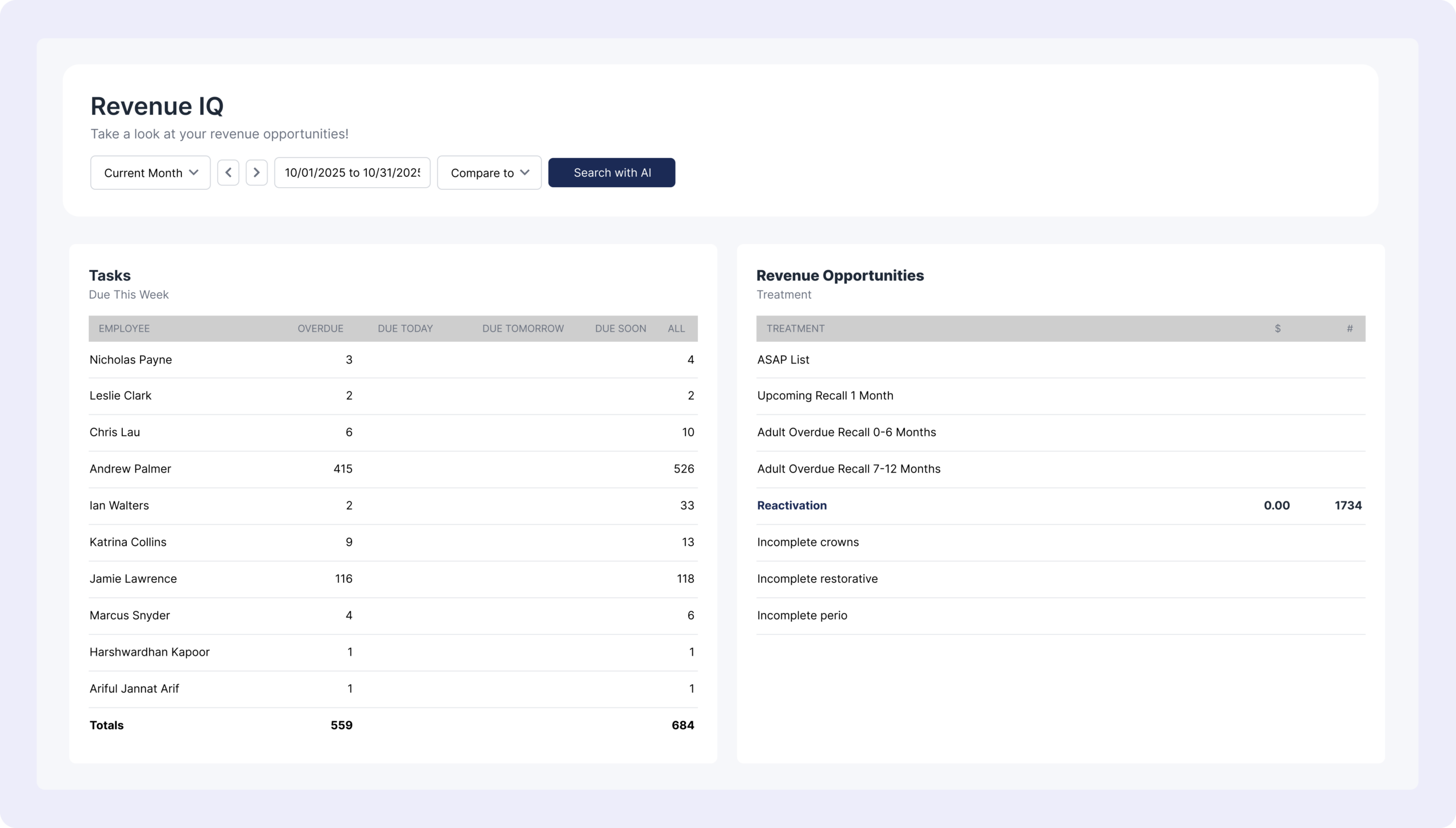
Your treatment coordinator works this list systematically, not reactively when they “remember” a patient, but proactively with clear priorities.
Hygiene Visits as Retention Touchpoints: Hygienists play a critical role in treatment retention. When patients with pending treatment return for routine cleanings, hygienists educate patients on the importance of completing recommended work. PbN flags these patients during hygiene appointments, ensuring nothing falls through the cracks.
Defining Clear Scheduling Processes: PbN provides the data infrastructure; your practice must build the process. Establish protocols for:
- When treatment coordinators follow up after acceptance (24 hours? 48 hours?)
- How many attempts before escalating to provider follow-up
- What messaging works best for different treatment types
Even a small improvement in how you follow up on unscheduled treatment can translate into a significant increase in annual production that would otherwise be left on the table.
IV. Leveraging Feedback for Continuous Improvement
Understanding the patient experience allows you to refine operations and marketing efforts. You can’t improve what you don’t measure. PbN provides dashboard-level visibility into patient value, satisfaction, and operational efficiency.
Patient Value Calculation
The Patient Demographics dashboard includes a KPI calculating per-patient value: total collections over the past year divided by the number of active patients at the end of the last month.
What this metric reveals:
- Whether your patient base is growing in value over time
- How new patient acquisition impacts average patient value
- Which patient segments are most profitable
If patient value is declining, you’re either attracting lower-value patients or failing to convert existing patients to higher-value treatment. This single metric flags strategic issues requiring investigation.
Reputation Monitoring with Word Cloud Analysis
The Reputation Page includes Word Cloud analysis that interprets key themes from patient reviews. Positive phrases like “friendly staff,” “comfortable experience,” or “excellent care” are highlighted by frequency, showing you exactly what patients value most about your practice.
How to use this data:
- Marketing messaging: Emphasize what patients already love about your practice
- Staff training: Reinforce behaviors that generate positive feedback
- Service recovery: Identify emerging negative themes before they become reputation problems
If “wait time” or “billing confusion” appears frequently in reviews, you’ve identified operational issues to address.
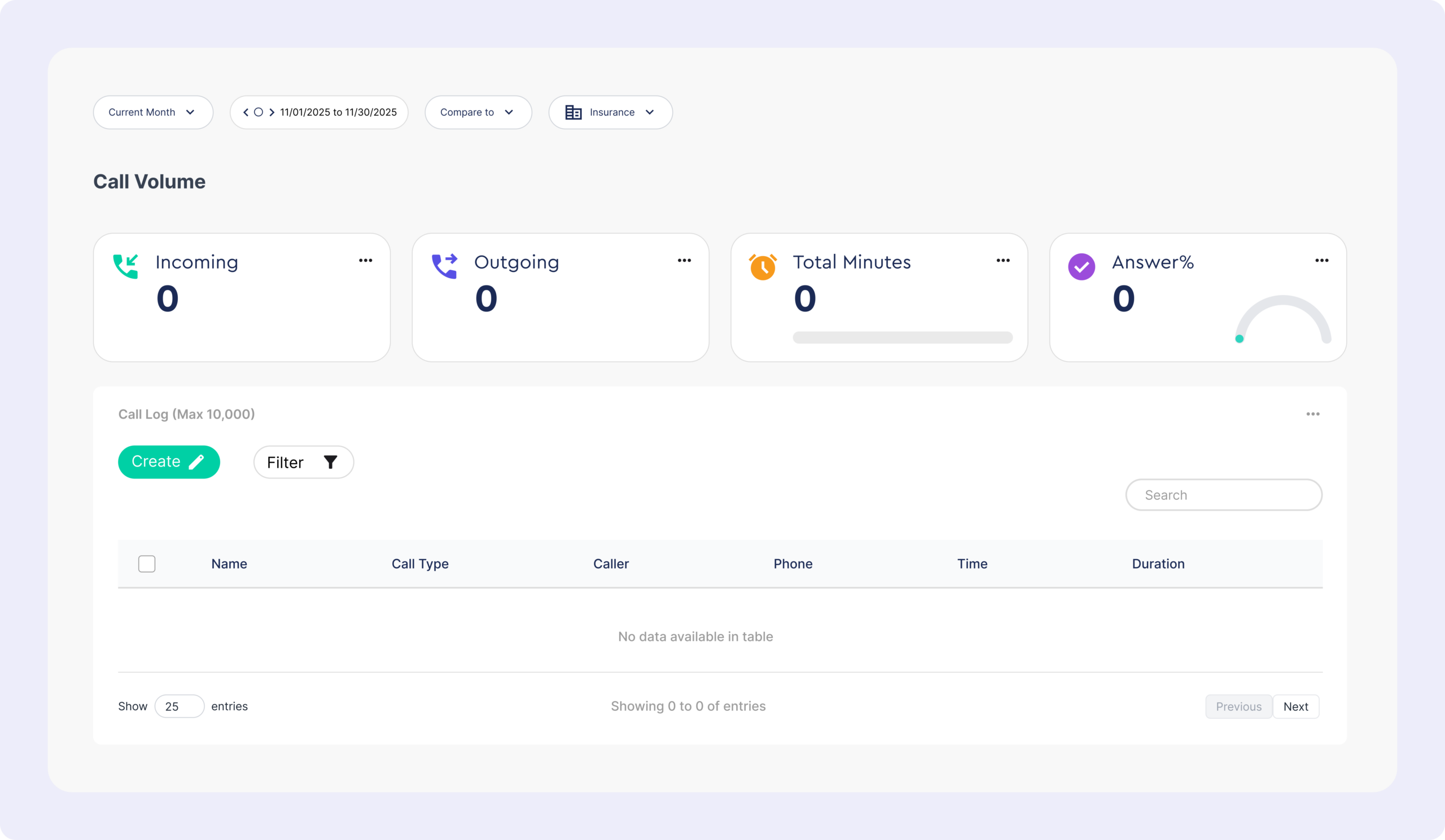
PhoneIQ Call Analytics
PhoneIQ tracks activity associated with your phone lines, including:
- Call volume by time of day
- Call duration (visible in patient overview)
- Missed call patterns
Note: PhoneIQ does not track active phone time per individual user, it monitors phone line activity rather than staff-level detail.
The Future of Dental Patient Engagement Is Not Tools. It’s Control.
The next five years will fundamentally separate dental practices into two categories: those that built digital infrastructure, and those still defending analog workflows.
This isn’t speculation. It’s already happening. Patients under 40 expect digital convenience as a baseline, not a premium feature. They compare your practice not to the dentist down the street, but to every seamless digital experience they have daily, such as booking rideshares, ordering food, managing their finances, and scheduling healthcare appointments with forward-thinking providers.
The competitive landscape is shifting fast. Corporate dental groups and DSOs are investing heavily in patient engagement technology because they understand the math: digital infrastructure scales, manual processes don’t. Independent practices that fail to keep up with these latest tools and technologies won’t lose patients overnight. They’ll slowly become the second choice, the backup option, the practice people just visit rather than recommend.
Practice by Numbers is purpose-built for this inflection point. As the complete digital foundation that positions your practice for the next decade of dental patient engagement. Every feature, from 24/7 booking to treatment retention analytics, is designed around a single principle: eliminate friction, automate consistency, compound results.
Here’s what choosing PbN means for your practice:
You stop competing on proximity and start competing on experience. You stop losing patients to practices that “just happened to answer the phone.” You stop wondering why treatment acceptance is inconsistent across providers because you have data that shows you why. You stop having staff meetings about “better follow-up” and start building systems that make follow-up automatic.
Most importantly, you future-proof your practice. As patient expectations continue evolving, as younger demographics demand more digital access, and as the competitive pressure intensifies, you’re not scrambling to catch up. You’re already there.
The question isn’t whether dental patient engagement will become fully digital. It will. The question is whether your practice will lead this transition or react to it five years too late when you’ve already lost market share to competitors who moved faster. The practices that thrive in 2030 are being built today. They’re implementing comprehensive patient engagement platforms now, training their teams on digital workflows, establishing data-driven decision-making cultures, and creating patient experiences that generate referrals simply because they’re so much better than the standard.
Practice by Numbers gives you everything you need to be that practice. The platform, the infrastructure, the analytics, the automation.
Your competitors are evaluating these same systems. Some are already implementing them. Every month you delay is a month of missed bookings, abandoned treatment plans, and patients choosing practices that made their lives easier. Digital patient engagement isn’t coming. It’s here. The only question is whether you’re going to lead or follow.