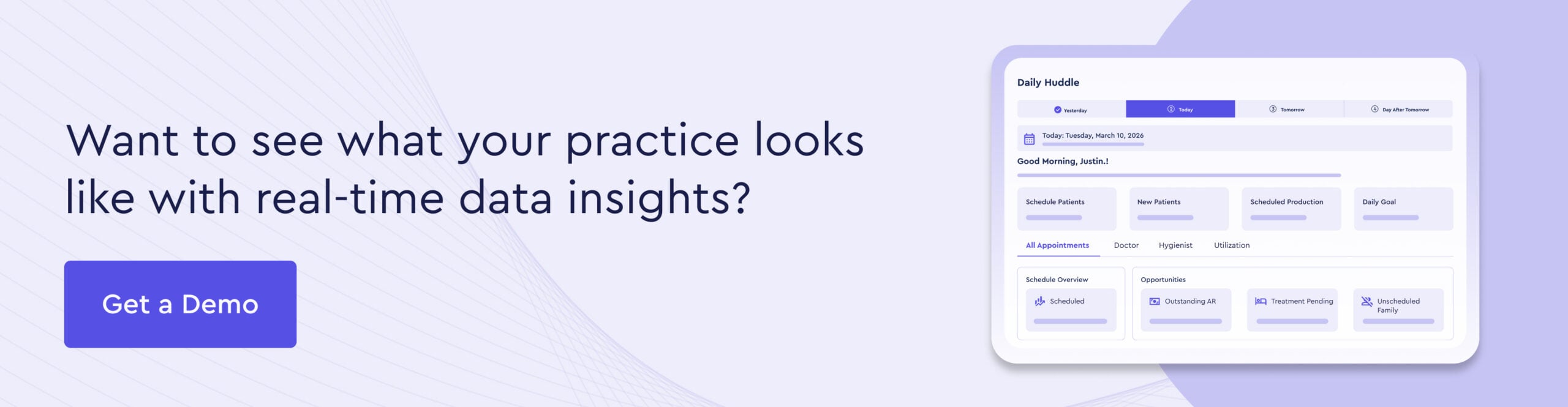
By the time most dental practices review their numbers, the moment to act on them has already passed. The issue isn’t that dental practices don’t track performance. It’s that performance is reviewed in hindsight, not managed in real time, because you barely have time to interpret data. Production reports, collections, no-show rates, everything exists, but nothing feels clear.
That’s where a dental dashboard changes the game.
Instead of digging through spreadsheets or waiting for monthly reports, you get a real-time, visual snapshot of your practice. But more importantly, you see what actually matters, not just what’s available.
If you’re a practice owner, office manager, or part of a DSO trying to simplify decisions and improve performance, this article will show you how dashboards make that possible.
In this article, we will cover:
- What a dental dashboard actually is
- Why traditional reporting fails most practices
- How dental practice analytics become actionable
- What metrics should you really focus on
- How dashboards help you make faster, smarter decisions
What is a dental dashboard and what does it really do?
A dental dashboard brings all your key practice metrics into one visual, real-time view so you can quickly understand performance and take action. It simplifies dental practice analytics by highlighting trends, gaps, and opportunities without manual analysis. It’s a visual tool that pulls together your practice data, such as production, collections, and patient flow, into one screen.
Think of it like the dashboard in your car. You don’t need to understand the engine to know when you’re low on fuel or driving too fast.
The same principle applies here. Instead of analyzing raw data, you instantly see what needs attention.
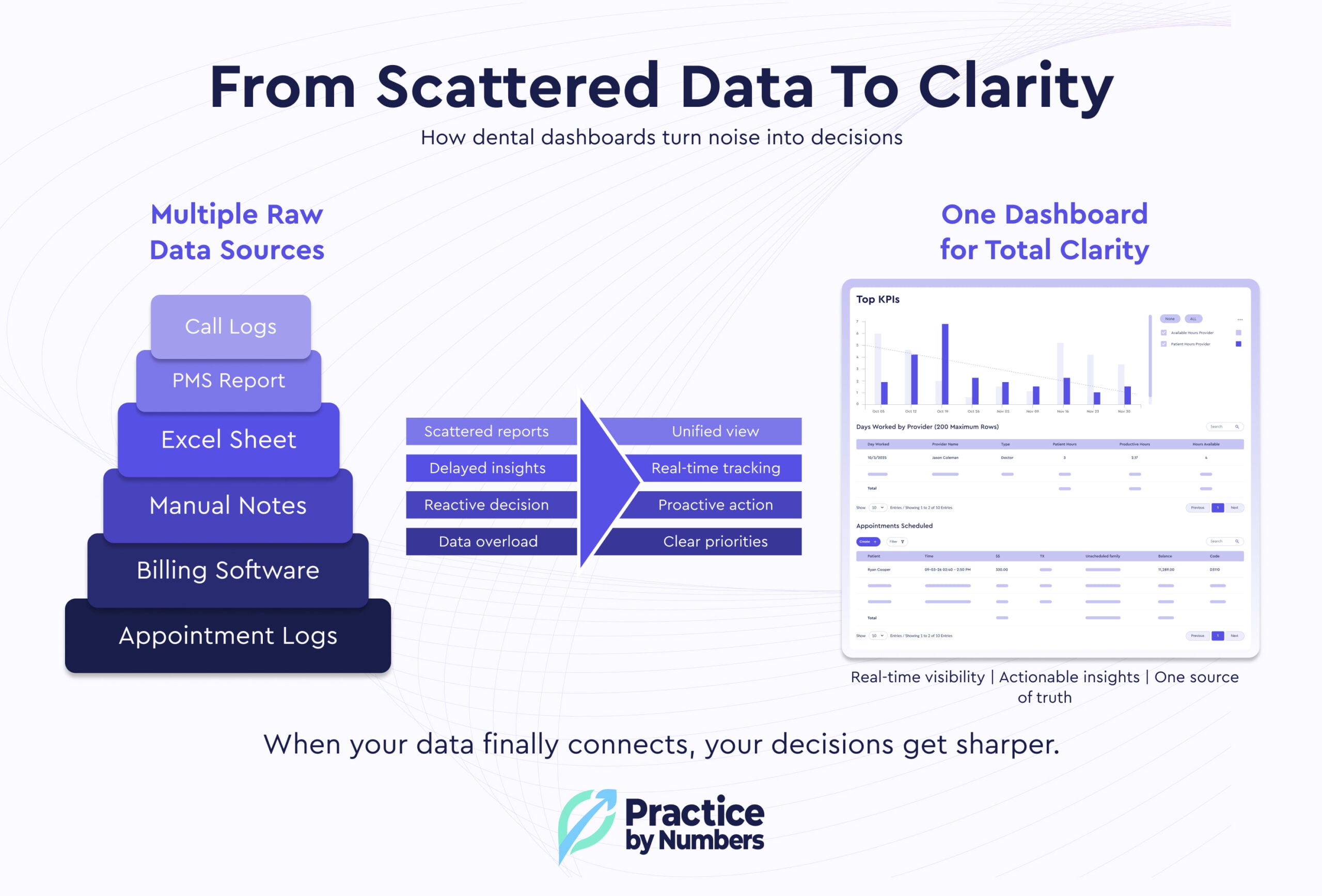
Most practices already have data. The problem isn’t a lack of information, it’s the lack of clarity.
Without a dashboard:
- Data sits in different systems
- Reports are delayed
- Insights are hard to extract
With a dashboard:
- Everything is centralized
- Updates happen in real time
- Priorities become obvious
The real value isn’t just visibility. It’s clarity + focus.
Why do most dental reports fail to drive action?
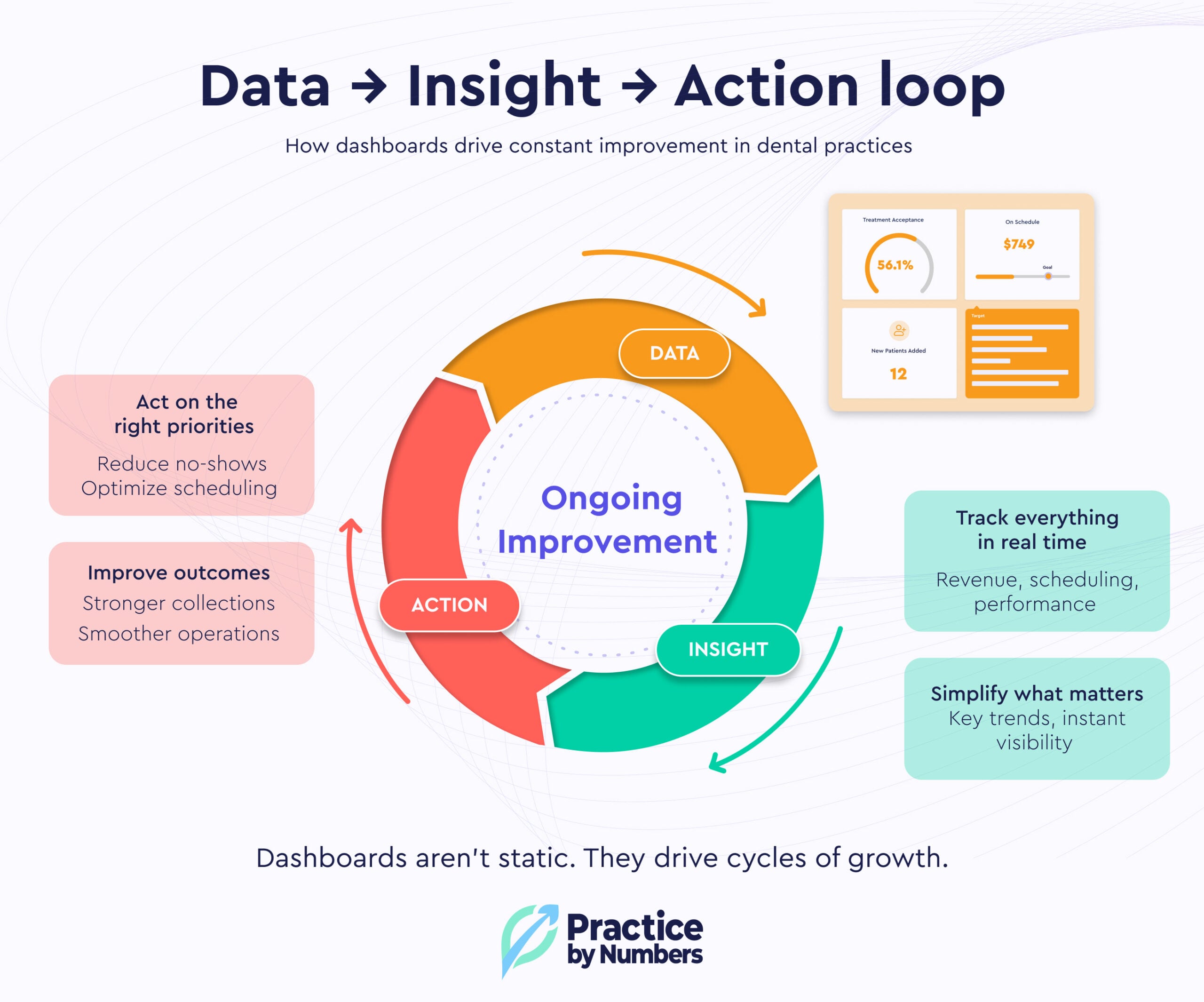
Most reports are built to show data, not to guide decisions. They’re often:
- Too detailed
- Too delayed
- Too disconnected from daily operations
You might receive a monthly report showing production dropped. But by then, it’s already too late to fix.
A dashboard solves this by shifting from hindsight to real-time awareness.
Instead of asking “What happened last month?”, you start asking “What’s happening right now, and what should I do next?”
This shift is critical. Because in dentistry:
- A missed follow-up today becomes a lost revenue opportunity tomorrow
- A drop in hygiene visits signals future production decline
- A small collection gap compounds over time
Traditional reporting tells you the story after it’s over. Dental Dashboards let you change the ending, i.e., outcomes.
How does dental practice analytics become actionable with dashboards?
Dental practice analytics refers to the process of tracking and interpreting your practice’s performance data. But raw analytics alone isn’t useful. It becomes actionable only when three things happen:
- The right metrics are visible
- The data is updated frequently
- The insights are easy to understand
A dashboard does exactly that.
For example:
- Instead of seeing total collections, you see collection percentage trends
- Instead of raw appointment numbers, you see no-show patterns
- Instead of overall production, you see provider-level performance
The key shift is that instead of just showing numbers, dental dashboards highlight what needs attention.
It’s the difference between:
- Knowing something happened
- Knowing what to do about it
And in a busy practice, that difference is everything.
What metrics should your dental dashboard actually track?
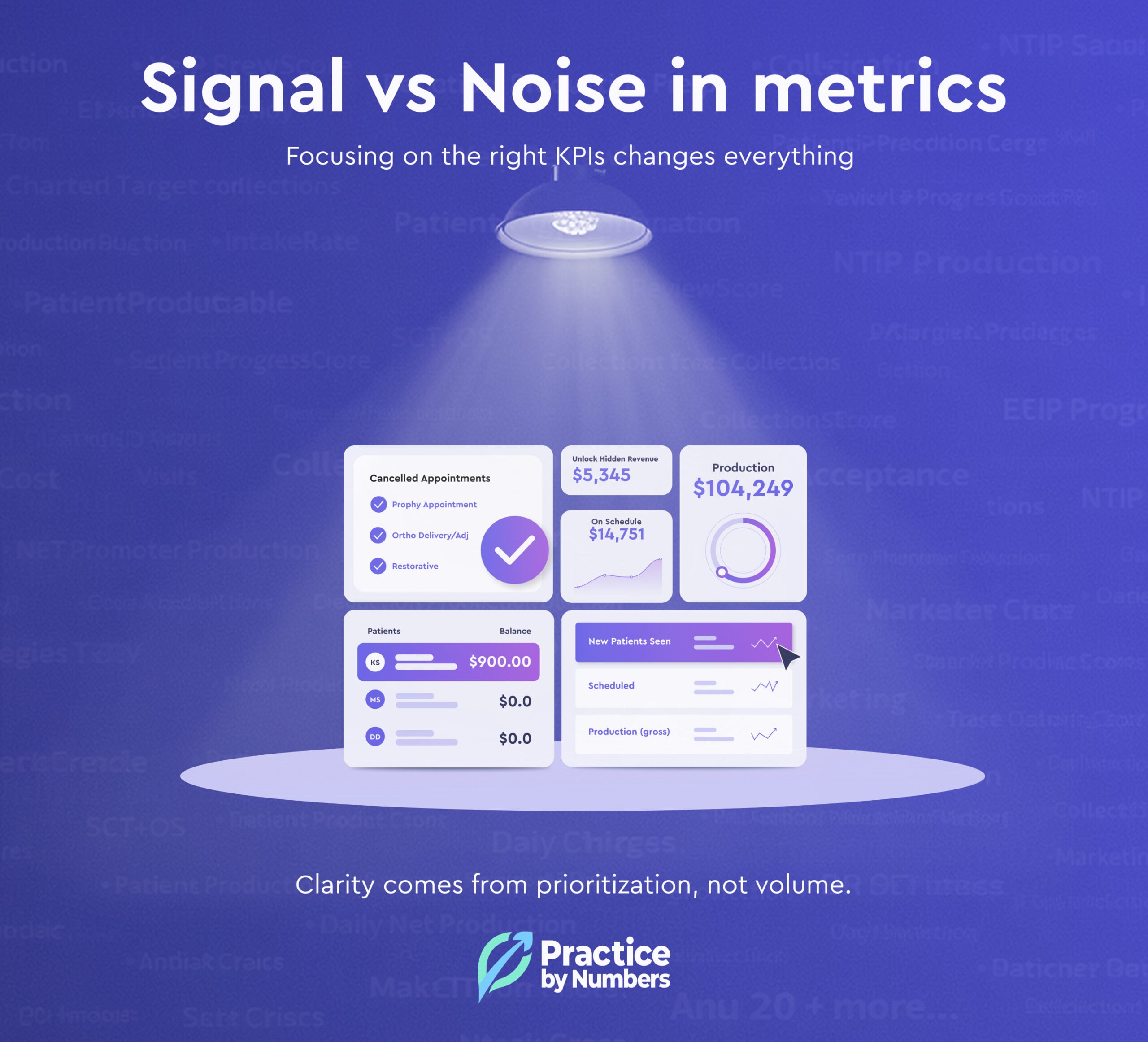
Not all metrics are equally critical to growth. Many dental practices track too much and focus on too little. A good dental dashboard filters out noise and highlights the few numbers that truly impact growth. These numbers would typically include:
- Production vs collections
- Collection percentage (how much you actually collect)
- Hygiene reappointment rate
- Case acceptance rate
- No-show and cancellation rates
The goal isn’t to track more metrics, it’s to track the right ones consistently.
For example:
- If your production is high but collections are low, the issue isn’t growth, it’s efficiency.
- If new patients are coming in but not returning, the issue isn’t marketing, it’s retention.
A dashboard connects these dots instantly.
How do dental dashboards improve collections and cash flow?
Collections are one of the most misunderstood areas in dentistry. Many practices assume strong production equals strong revenue. That’s not always true. A dental dashboard reveals the gap between what you produce and what you actually collect.
For example:
- You may notice that delayed payments are increasing
- Insurance claims are pending longer than usual
- Patient balances piling up
The moment you see these trends early, you can act before they impact cash flow.
Dashboards also:
- Highlight overdue balances
- Track payment method performance
- Show collection trends over time
This allows your team to prioritize follow-ups and improve consistency. Over time, small improvements in collections create significant financial stability.
Can a dental dashboard actually simplify daily operations?
Yes. And this is where most practices see the biggest impact. Without a dental dashboard, your team reacts to problems as they appear. With a dashboard, your team starts the day with clarity. Morning huddles become data-driven, team members know what to prioritize, and bottlenecks are identified early.
Instead of asking “What should we focus on today?”
You already know:
- Which patients need follow-ups
- Which providers need schedule optimization
- Which KPIs are slipping
This reduces decision fatigue and aligns the entire team around the same goals. And when everyone sees the same data, accountability improves naturally.
What happens when you start making decisions with real-time visibility?
Everything speeds up.
Decisions that once took weeks now happen in hours or even minutes. Instead of waiting for reports:
- You adjust schedules in real time
- You address patient drop-offs immediately
- You optimize provider performance continuously
Speed becomes your competitive advantage.
And in a market where margins are tight and expectations are high, that matters more than ever. Real-time visibility doesn’t just improve performance, it changes how your practice operates.
It shifts you from reactive to proactive.
What should you do next?
Three things matter most:
- Clarity beats complexity. A dental dashboard simplifies your data so you can actually use it.
- Real-time beats delayed insights. Faster visibility leads to better outcomes.
- Focus beats overload. Tracking the right metrics drives real growth.
If you’re still relying on scattered reports or delayed data, you’re not lacking information, you’re lacking visibility. Start by identifying the 4–5 KPIs that matter most to your practice, then explore a dental dashboard that brings them into one clear view. Because when you can see what matters, you can finally act on it.
FAQs (People Also Ask)
Q. What is included in a dental dashboard?
A dental dashboard typically includes production, collections, patient flow, case acceptance, and scheduling metrics, all displayed in a visual, real-time format.
Q. How is a dental dashboard different from reports?
Reports show past data, usually in detail. A dashboard shows real-time insights visually, making it easier to take immediate action.
Q. Do small dental practices need dashboards?
Yes. Even small practices benefit from simplified visibility, especially when managing collections, schedules, and patient retention.
Q. How often should you check your dental dashboard?
Ideally, daily. Many practices review dashboards during morning huddles to align team priorities.
Q. Can dental dashboards improve revenue?
Yes. By identifying gaps in collections, missed opportunities, and inefficiencies, dashboards help increase revenue over time.