Plenty of practice owners reach a point where their software feels like a mess, and they start shopping for a replacement. On a recent Practice Pulse podcast episode, PbN co-founder Dr. Aditi Agarwal and Dentrix expert Dayna Johnson talked through that exact moment, and Dayna’s take is worth hearing before you sign anything: switching dental software usually doesn’t fix the problem you think it will.
Here’s what she’s learned from 30 years of helping practices decide.
The Messy-Data Trap
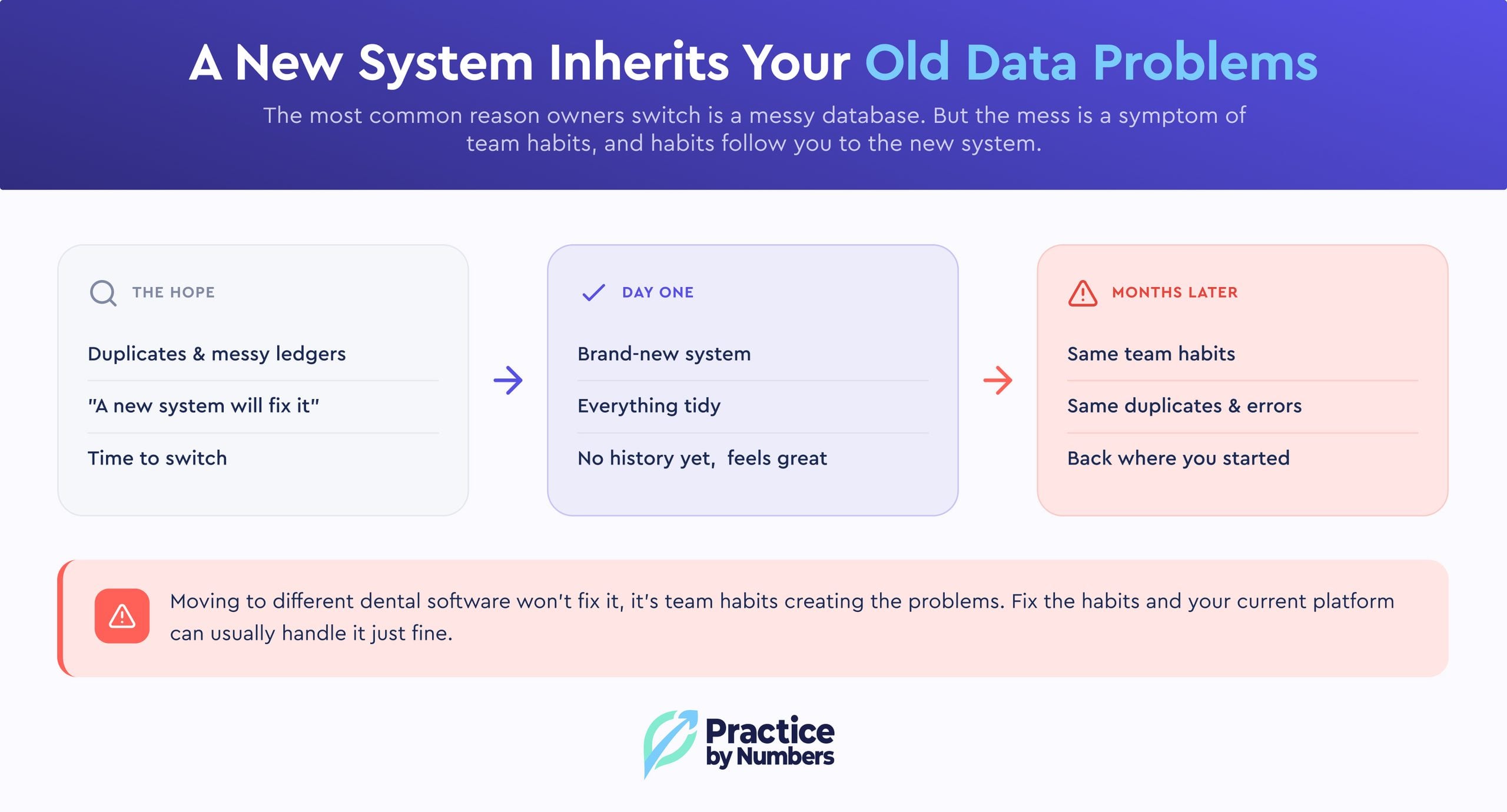
The most common reason owners give for switching is that their current database is full of duplicates and messy ledgers. Dayna hears it constantly, and she pushes back gently.
“Moving to a different software is not going to fix any of that, because it’s your team that is creating these problems in your software.”
– Dayna Johnson
The mess is a symptom. If the habits that created it don’t change, a new platform inherits the same problems within a few months.
A Clean Slate That Doesn’t Stay Clean
A new system does feel great at first. Everything is tidy because there’s no history yet. That’s the trap.
“Brand new software might give you a clean slate at the beginning, but all these problems are going to come back if you’re not trained properly.”
– Dayna Johnson
Without new habits and proper training, the clean slate fills up with the same duplicates and errors. The practice pays the full cost of switching and ends up in the same place.
The Real Cost of Switching
Switching is a major project, and Dayna is candid about what it involves.
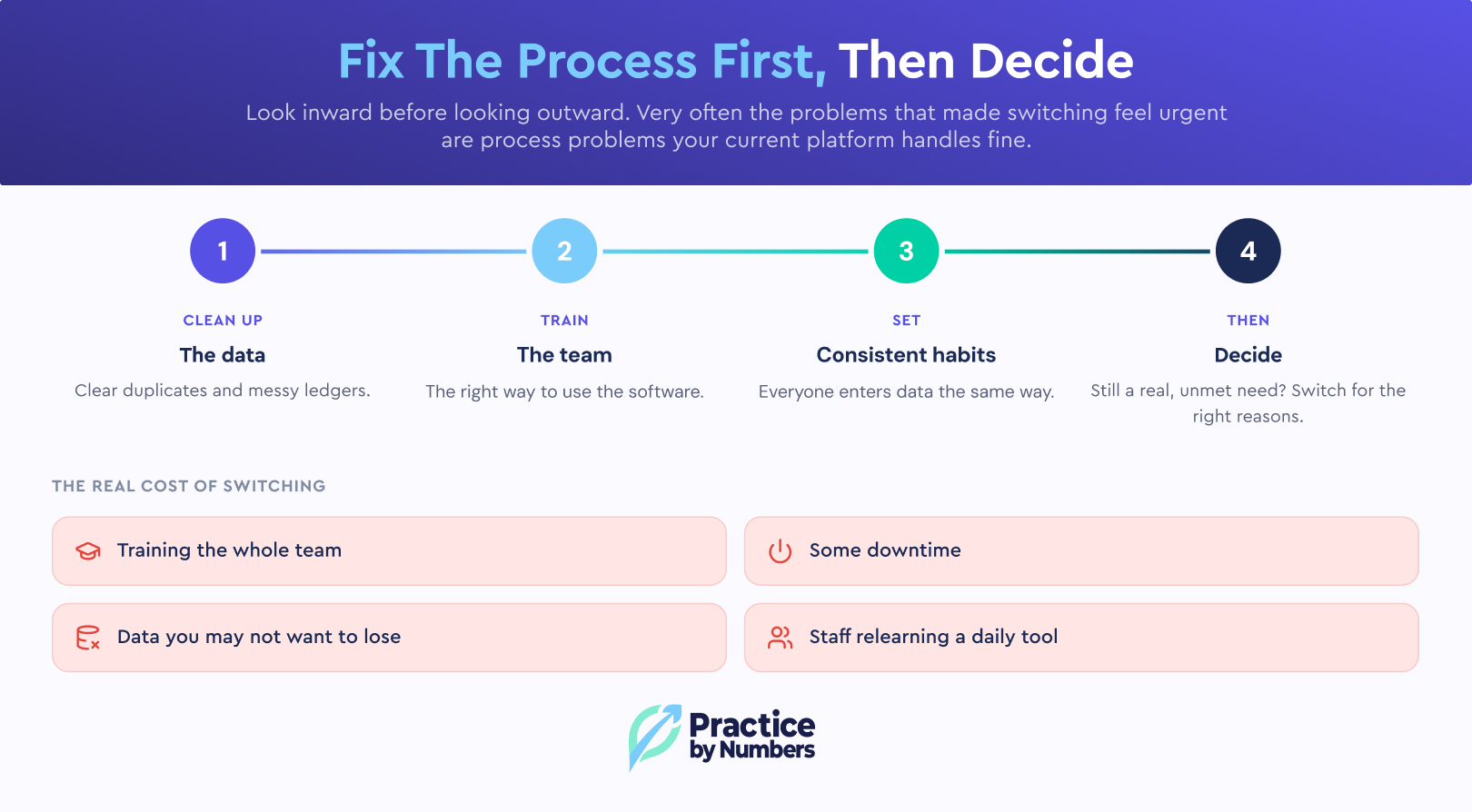
“It’s a big deal to convert to a new software. There’s a lot of training involved. There’s a little bit of downtime. You may lose some data that you don’t want to lose.”
– Dayna Johnson
There’s a human cost too. Your team knows your current software by heart, and asking them to relearn the tool they use all day is a real disruption. As Dayna put it, tell your staff you’re switching the software they use every day and they may look at you like you’re an alien.
What Your Team Already Knows Has Value
Fluency is worth protecting. A team that knows your system runs faster, makes fewer mistakes, and trains new hires more easily than a team six months into a new platform. That familiarity is an asset, and switching resets it to zero. It’s worth weighing that carefully against whatever the new system promises.
Fix the Process First, Then Decide
Dayna’s advice is to look inward before looking outward. Clean up the data, train the team on the right way to use the software, and put consistent habits in place. Very often, the problems that made switching feel urgent turn out to be process problems the current platform can handle just fine once the team is trained.
If, after that, the software still can’t meet a real need, then a switch may be the right call, made for the right reasons rather than out of frustration.
How Practice by Numbers Fits Alongside Dentrix
Practice by Numbers works alongside Dentrix to add visibility and capabilities without requiring your team to switch systems. It brings analytics, patient engagement, automated communication, online booking, and other practice management tools together in one platform.
This allows your team to:
- See practice performance more clearly with connected analytics
- Automate patient communication and follow-up
- Make it easier for patients to book and engage
- Identify opportunities to improve efficiency and revenue
You keep the Dentrix system your team already knows while adding the tools and visibility needed to manage a more connected, data-driven practice.
👉 See How Dentrix + Practice by Numbers Integration Works