Most patients don’t choose a dentist the moment they discover one. They research. They read reviews, visit your website, and compare options. And increasingly, they check your social media profiles before making a decision. That’s why social media matters. Not because every post directly generates appointments, but because your social presence helps prospective patients answer an important question: “Can I trust this practice?”
A well-maintained social media presence shows that your practice is active, professional, approachable, and engaged with its community. An outdated profile, or worse, an abandoned one, can create doubt before a patient ever picks up the phone.
This guide covers the specific practices that separate effective dental social media from noise: what to do, what to avoid, and how to turn a social media presence into something that actually supports practice growth.
TL;DR
Social media works best when it helps patients get to know, like, and trust your practice.
To get the most from your efforts:
- Post consistently, even if it’s only a few times per week
- Prioritize educational and video content
- Showcase your team and practice culture
- Share patient success stories (with proper consent)
- Respond promptly to comments and messages
- Make it easy for patients to book appointments
- Track engagement and patient acquisition over time
The goal isn’t to become an influencer. It’s to build confidence before a patient chooses your practice.
Why Social Media Matters for Dental Practices
Think about the last time you researched a local business. You probably looked beyond their website. Patients do the same. When someone finds your practice through Google, a referral, or an online review, they often visit your social media profiles before deciding to contact you. What they see helps shape their perception of your practice.
An active profile communicates credibility. A consistent stream of educational content demonstrates expertise. Team photos and office updates make your practice feel approachable and human.
In many cases, social media isn’t the channel that introduces a patient to your practice, it’s the channel that reinforces their decision to choose you.
That’s why social media should be viewed as a trust-building channel rather than a standalone lead-generation strategy.
What Content Actually Works on Social Media
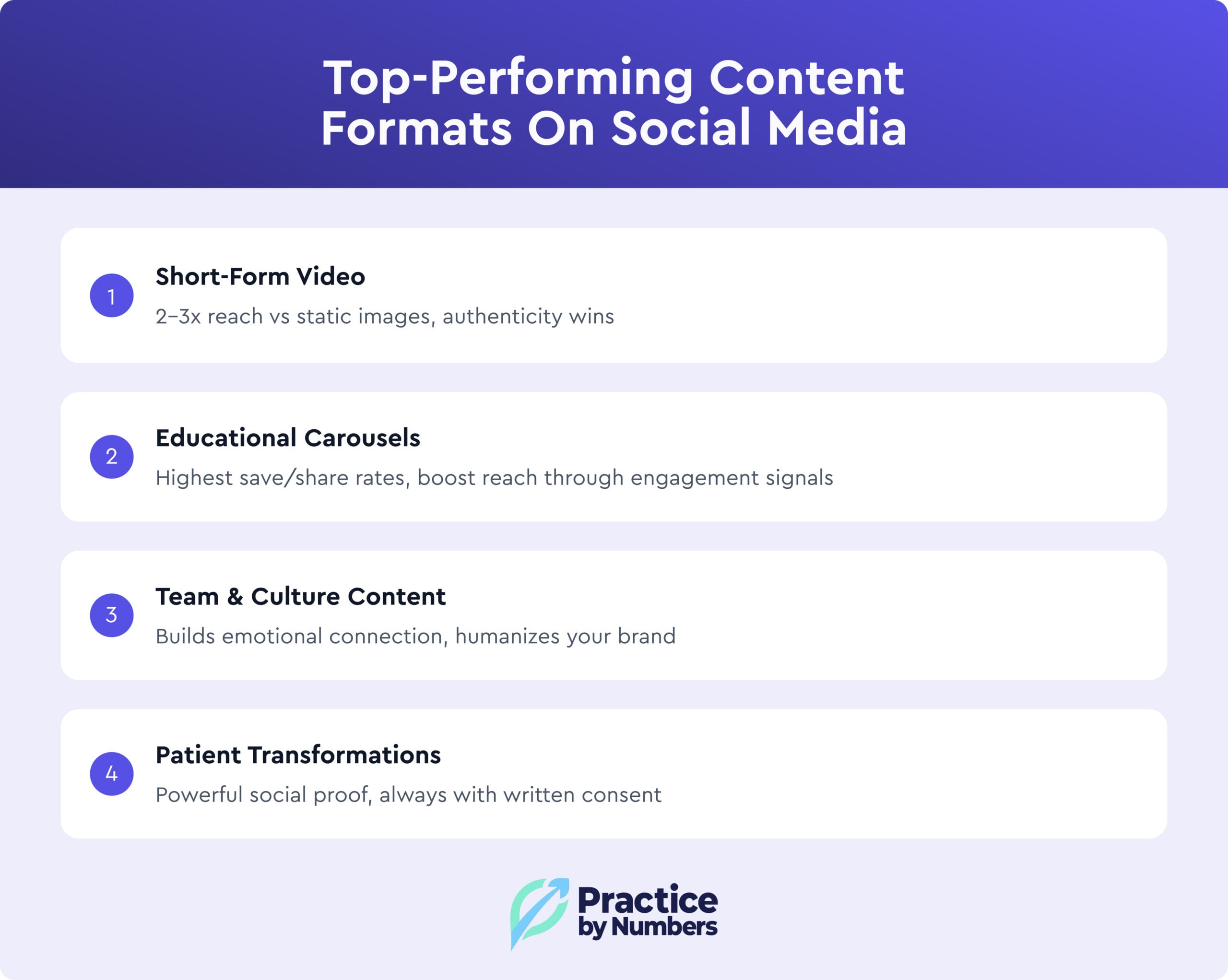
The most successful dental practices don’t treat social media like an advertising billboard. Instead, they focus on creating content that educates, reassures, and connects with patients.
Educational Content
Educational posts consistently perform well because they provide immediate value.
Topics like:
- Causes of tooth sensitivity
- Common dental myths
- Oral hygiene tips
- What to expect during specific procedures
- Preventive care recommendations
help position your practice as a trusted resource rather than a business constantly promoting itself.
Educational content is also more likely to be saved and shared, extending its reach beyond your existing audience.
Short-Form Video Content
Video continues to outperform most other content formats across social platforms.
Simple videos often work best:
- Quick oral health tips
- Procedure explanations
- Office tours
- Team introductions
- Frequently asked questions
The goal isn’t professional production quality. Patients respond more to authenticity than perfection. A helpful 30-second video recorded on a smartphone can often outperform highly produced content because it feels more personal and relatable. These get saved, shared, and bookmarked by people.
Team and Culture Content
Patients want to know who they’ll be interacting with.
Sharing team milestones, celebrations, community involvement, and behind-the-scenes moments helps humanize your practice.
These posts may not generate the highest engagement numbers, but they often play an important role in building familiarity and trust.
Patient Success Stories
Nothing builds confidence like real patient outcomes.
Testimonials, reviews, and smile transformations can be highly effective because they provide social proof and help prospective patients visualize their own results.
However, patient content should always be shared with appropriate written consent and in accordance with HIPAA requirements.
Posting Strategy That Actually Works
Consistency beats frequency: Three good posts per week, every single week, beats seven posts one week and nothing for three weeks. Pick a rhythm you can sustain forever.
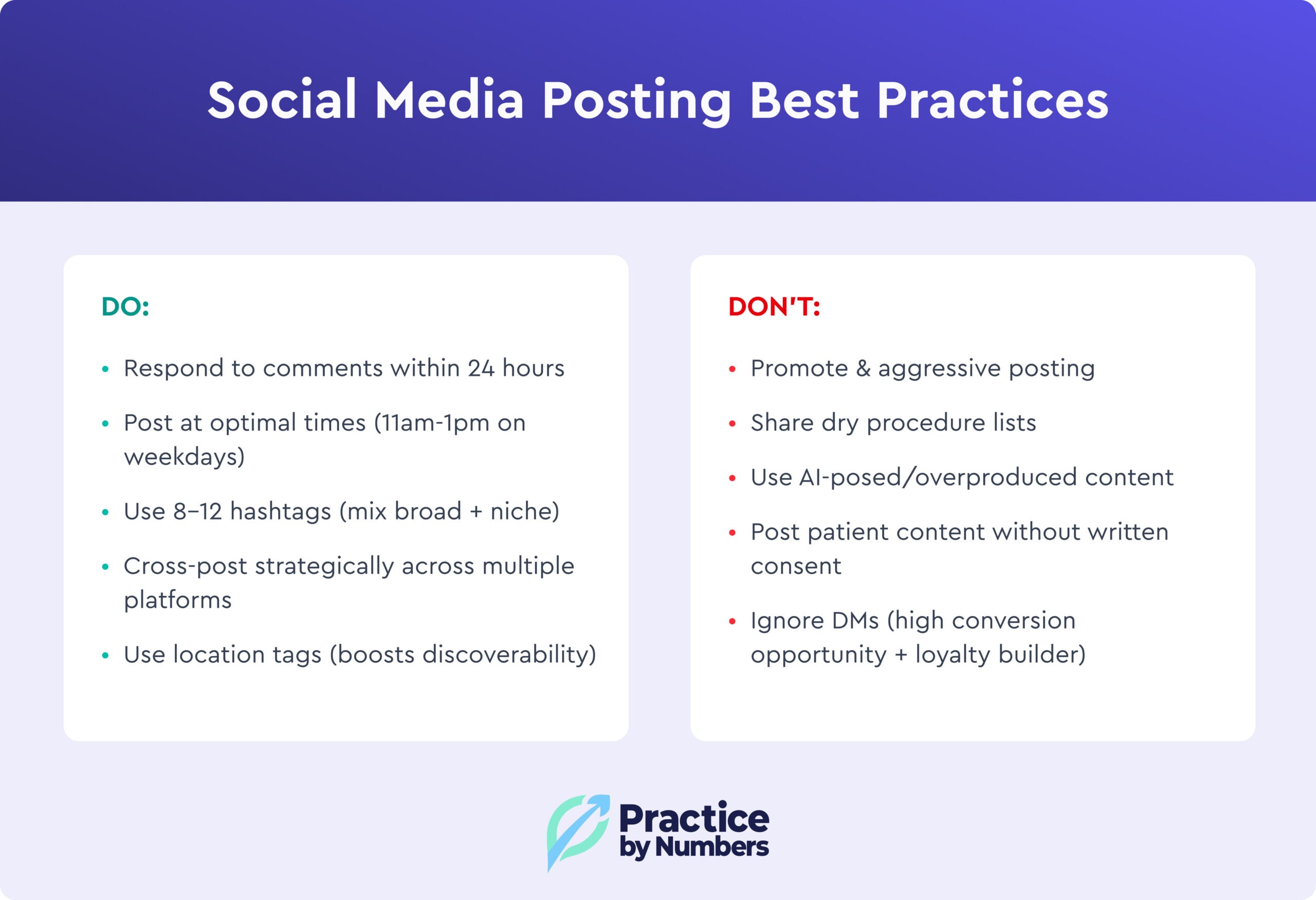
Video first: Post video as your main format. Reels and short videos get way more reach than photos on every platform. Even a simple smartphone video outperforms beautiful graphics.
Make captions count: A great photo with a lazy caption underperforms. Use captions to educate, tell a story, or ask a question. The first two lines matter most, they decide if someone reads more or scrolls past.
Answer every comment and message: This matters more than you think. When someone comments, respond within hours. When someone messages, reply quickly. This tells prospective patients that you’re attentive and care. Ignored comments say the opposite.
Use hashtags smartly: On Instagram, use 5-10 hashtags: a mix of local (#DentalPracticeMiami), dental-specific (#DentalTips), and broader health (#OralHealth). Avoid 30 hashtags (it looks spammy) or generic tags with millions of posts (your content disappears instantly).
HIPAA Rules for Social Media (Non-Negotiable)
Get written permission before posting anything featuring a patient: Photos, videos, testimonials, stories. “Sure, go ahead” verbally isn’t enough. Use a signed consent form, every time.
Never share patient information: Don’t mention diagnoses, treatment details, insurance info, or appointment details in posts or comments. This violates HIPAA.
Don’t defend yourself in negative reviews: If a patient leaves a bad review on your Facebook mentioning their treatment, don’t respond with clinical details or defensiveness. Keep responses general and professional: “We’d love to make this right. Please call us directly.”
Train your team: Anyone posting on your practice social media should know these rules. One careless post can cause real damage.
How to Turn Social Media Engagement Into Appointments
Followers aren’t patients. You need to bridge the gap.
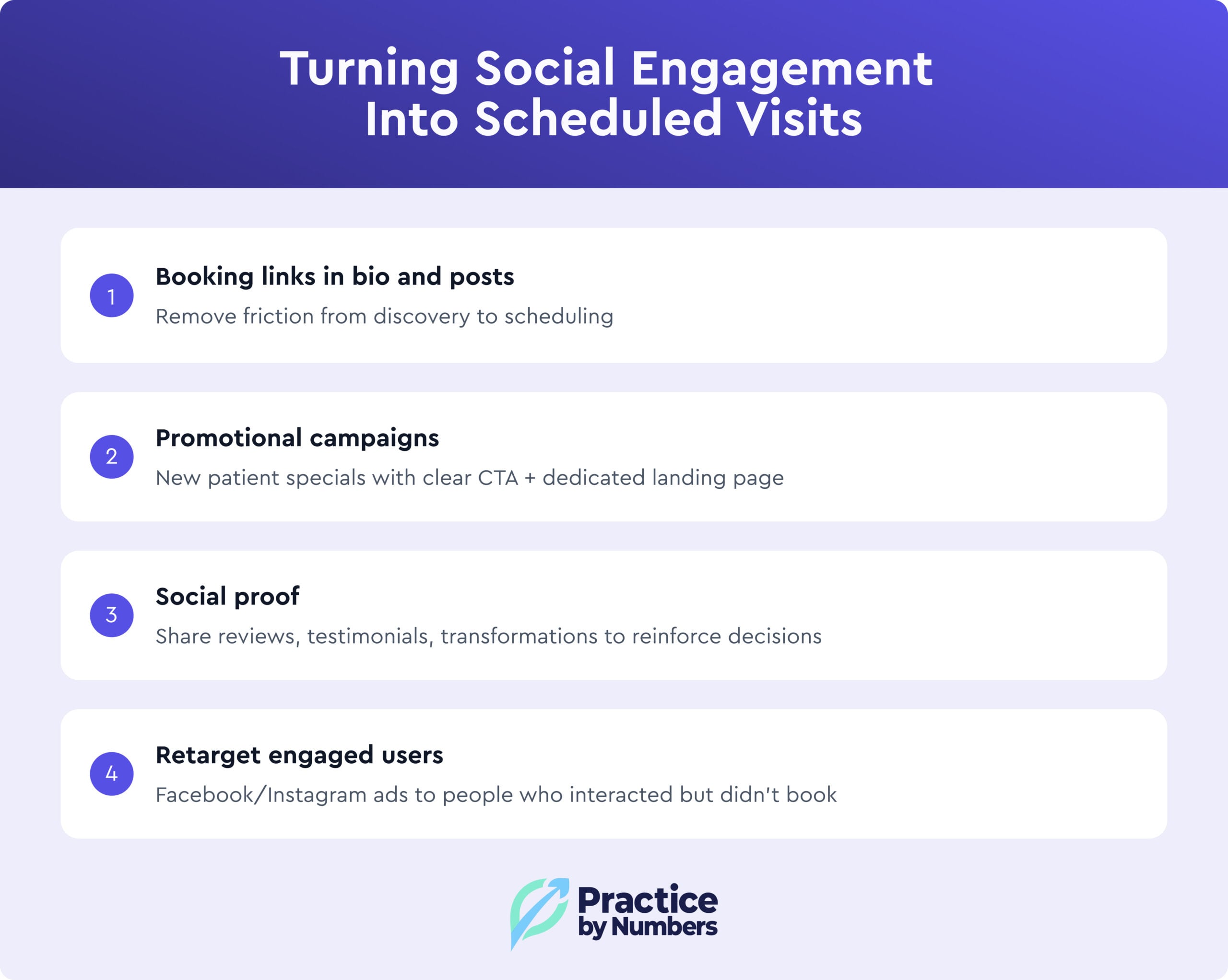
Make booking easy: Include a booking link in your bio and in posts. “Ready to schedule? Click here.” Remove friction. Some people won’t call but will book online.
Run occasional promotions: “New patient special: Free whitening with first cleaning” promoted on social media with a clear call-to-action and dedicated landing page. Convert followers who’ve been warming up through your content.
Use social proof: Share patient reviews, testimonials, and transformation stories on social. “Check out what our patients are saying about us.” This reinforces the decision for people considering your practice.
Retarget social visitors: Use Facebook and Instagram ads to show targeted ads to people who engaged with your content but didn’t book. This keeps you visible as they think through their decision.
How to Measure Social Media Success
One reason practices become frustrated with social media is that they measure the wrong things. Follower counts and likes can be useful indicators, but they aren’t business outcomes. Instead, focus on metrics that align with practice growth:
1. Engagement Quality
Look beyond impressions and evaluate:
- Comments
- Shares
- Saves
- Direct messages
These actions often indicate genuine interest.
2. Website Traffic
Track how many visitors come to your website from social media platforms.
This helps determine whether your content is driving meaningful engagement.
3. Appointment Requests
Monitor how many scheduling requests originate from social channels.
4. Assisted Conversions
Social media often influences patients before they convert through another channel. A patient may discover your practice on Instagram, visit your website through Google, and book weeks later.
Understanding these touchpoints provides a more accurate picture of social media’s contribution.
Social Media Is About Trust, Not Just Reach
The most successful dental practices don’t use social media to chase vanity metrics. They use it to build credibility, strengthen relationships, and reinforce trust long before a patient schedules an appointment.
Patients want to know who they’re choosing. They want to see the people behind the practice, understand your expertise, and feel confident that they’re making the right decision.
When approached strategically, social media helps create that confidence.
And when combined with the right tracking and reporting tools, it becomes easier to understand how those efforts support practice growth over time.
FAQs
Q. How do I handle negative comments or reviews on social media?
Respond quickly, professionally, and kindly. Don’t reveal any patient information. Example: “We’re sorry to hear you had a difficult experience. We’d love to make it right. Please call us directly to discuss.” Never argue publicly or get defensive.
Q. What’s the best time to post on social media for dental practices?
Mid-morning (9-11 AM) on weekdays usually works well. But check your specific audience using Instagram and Facebook analytics. You’ll see when your followers are most active. Post when your audience is most likely to see it.
Q. Should I use Instagram Ads or Facebook Ads to promote social media posts?
Run ads only if you’re getting engagement on organic posts first. Ads amplify engagement but don’t create it. If your posts aren’t getting comments and shares without ads, paying for ads won’t help. Build a following first, then consider ads.
Q. Can I repost the same content across all platforms?
Generally no. Each platform has different formats and audiences. Instagram Reels work great on Instagram, but look different on Facebook. Video works better on TikTok than LinkedIn. Customize content for each platform when possible. At minimum, adjust captions and hashtags.