Dental content marketing is creating useful articles, videos, and pages that answer patient questions. Dental email marketing is sending that content, plus reminders and offers, to the patients already on your list. Content brings new patients in through Google and AI search. Email brings existing patients back to your chairs.
Run together, they cost little, and the results add up over time. One good article on implant costs can rank on Google, get cited in AI answers, become a short video, and go out in your monthly email to 3,000 patients.
- Dental content and email marketing work together to attract new patients, engage existing ones, and drive more appointments.
- Create helpful, answer-first content to improve visibility across Google and AI search.
- Repurpose articles into videos, social posts, and newsletters to maximize reach.
- Use automated recall, reactivation, and treatment follow-up emails to encourage bookings.
- Personalize emails, keep messages concise, and include a clear call to action.
- Follow HIPAA, CAN-SPAM, and email consent requirements.
- Track clicks, appointments, AI visibility, and campaign performance to measure results.
Why This Matters Now
Patients research before they book, and more of that research now happens in AI tools. rater8’s 2026 Patient Choice Report found 47% of patients use AI to find a healthcare provider, up from 31% at the end of 2025. AI tools build their answers from pages that explain things clearly.
Email covers the other half. Your existing patients already trust you, and many are overdue for a cleaning or still deciding on treatment. A timely email is often all it takes to get them booked.
Part 1: Dental Content Marketing
1. Write answer-first content
Patients search in questions: “How much does a crown cost without insurance?” or “Is a root canal painful?” Answer engine optimization (AEO) means structuring content so search engines and AI tools can pull a clear answer from it.
For every service and FAQ page:
- Put a 2 to 3 sentence answer at the top.
- Use the patient’s question as the heading.
- Add details, costs, steps and timelines below.
- Add FAQ and Dentist schema markup so search engines can read the page.
👉 See Complete 360 Degree Digital Marketing Strategy for Dentists
2. Pick the right formats
Format | Best for | Where it lives |
|---|---|---|
Service pages | Explaining treatments and costs | Your website |
FAQ and blog articles | Answering specific patient questions | Your website |
Short videos (under 60 seconds) | Showing your team and office | Social media, YouTube, website |
Longer videos (3 to 5 minutes) | Walking through a procedure | YouTube, embedded on service pages |
Patient stories | Building trust (with written consent) | Website, social, email |
3. Make it trustworthy
Google holds health content to a higher standard. Show who wrote it and why patients should believe it:
- Have a dentist review every clinical article and name them on the page.
- Add a short author bio with credentials and years in practice.
- Show the date each page was last reviewed.
- Link to sources like the ADA when you cite a number.
4. Repurpose every topic
Plan 1 main topic a month and turn it into 4 or 5 pieces:
- A blog article or service page update.
- 2 or 3 short videos answering parts of the question.
- 1 section of your monthly newsletter.
- 3 or 4 social posts.
This keeps your team’s workload steady and your message consistent across channels.
Part 2: Dental Email Marketing
1. Run the campaigns that drive appointments
Campaign | Who gets it | When | Goal |
|---|---|---|---|
Appointment reminders | Scheduled patients | 1 week and 1 day before | Fewer no-shows |
Recall | Patients due for hygiene | 2 to 4 weeks before due date | Booked cleanings |
Reactivation | Patients not seen in 12 to 18 months | Monthly | Returning patients |
Treatment follow-up | Patients with unscheduled treatment | 1, 2 and 4 weeks after the visit | Accepted treatment |
Newsletter | All opted-in patients | Monthly | Trust and referrals |
Benefits reminder | Insured patients | October and November | Year-end bookings |
For subject lines, timing and benchmarks for each, see our guide to email campaigns for dentists.
2. Build your list the right way
Your patient database is your list. Collect email addresses and marketing consent on new patient forms, then add:
- A sign-up checkbox on your online booking form.
- A short sign-up form on popular blog articles (“Get dental tips once a month”).
- A front desk script for patients who haven’t shared an email yet.
Keep a record of when and how each person opted in.
3. Write emails patients open
- Use a clear subject line. “Your cleaning is due in March” works for recall. “3 questions to ask before getting implants” works for a newsletter.
- Send from a person. A sender name like “Dr. Patel at Smile Studio” feels personal and is easy to recognize.
- Give each email one job. One main button: book, call or read.
- Design for phones. Short paragraphs, large buttons, a click-to-call number.
- Personalize with care. First names and due dates are fine. Keep diagnoses and treatment details out of subject lines and previews.
4. Stay compliant and out of spam
Dental emails sit under several rules at once:
- HIPAA: Use an email platform that signs a business associate agreement (BAA) if any email includes patient information like appointment details. Get written authorization before using a patient’s story or photo in a campaign.
- CAN-SPAM: Include your practice address and an unsubscribe link in every marketing email, and honor opt-outs within 10 business days.
- State laws: Some states now require clear opt-in consent before marketing emails. Check yours.
- Inbox rules: Since 2024, Gmail and Yahoo require large senders to authenticate their email (SPF, DKIM and DMARC), offer one-click unsubscribe, and keep spam complaints under 0.3%. Outlook added similar rules in May 2025. Your email platform handles most of this, but someone needs to set up your domain records.
A 90-Day Dental Marketing Campaign Plan
Here’s how content and email work together in practice, using 3 monthly themes:
Month | Content | Social | |
|---|---|---|---|
Month 1: Preventive care | Article: “How often do you need a dental cleaning?” | Recall push to overdue patients plus newsletter | 3 short videos from the hygiene team |
Month 2: Cosmetic | Updated whitening and veneers pages with cost ranges | Newsletter with before-and-after story (with consent) | Before-and-after posts, team favorite treatments |
Month 3: Benefits | Article: “How to use your dental insurance before it resets” | Benefits reminder to insured patients with unscheduled treatment | Countdown posts and booking link |
Run the reactivation and treatment follow-up emails in the background every month.
Use AI to Save Time, With a Human Check
AI tools can draft articles, write subject line options, turn a video into a blog post and summarize campaign results. Use them for first drafts.
Then have a person review everything. A dentist should check every clinical claim. The office manager should check prices and offers. Never paste patient information into an AI tool that isn’t covered by a BAA.
Measure What Matters
Metric | What it tells you |
|---|---|
Appointments booked from each email | Whether the campaign worked |
Click rate | Whether the content interested patients |
Unsubscribe and spam complaint rate | Whether you’re sending too often |
Organic traffic to content pages | Whether your articles get found |
AI mentions | Whether ChatGPT or Google’s AI Overviews name your practice |
Treatment acceptance after follow-ups | Revenue from existing patients |
Open rates are less reliable since Apple Mail started preloading emails and counting them as opened. Use clicks and bookings as your main signals.
Make Your Dental Content and Email Marketing Work Together
Dental content marketing helps patients discover and trust your practice, while email marketing keeps existing patients engaged and encourages them to return. Together, they create a consistent way to attract patients, build relationships, and generate appointments.
Start with patient questions, turn your answers into reusable content, and use targeted email campaigns to reach the right patients at the right time. Track which efforts lead to actual bookings so you can refine your strategy.
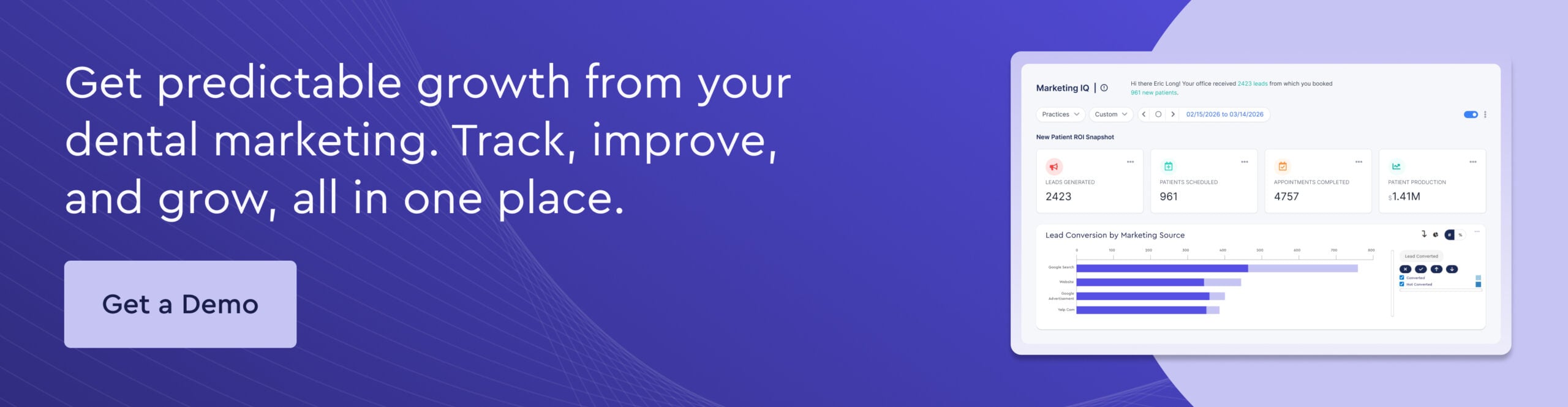
With Practice by Numbers’ Marketing Suite, you can connect marketing campaigns with practice management data to see which messages bring patients in and contribute to practice growth.
👉 Here’s PbN Dental Marketing Suite Explained. See What’s Included and How It Works