The right dental assistant can transform how smoothly your operatory runs and how patients feel. The wrong one slows down every provider they work with.
The difference usually comes down to a specific mix of skills: some clinical, some technical, and some people-focused. Here is what to look for when hiring.
TL;DR
- Clinical competence is the foundation: chairside assisting, infection control, sterilization, and radiography.
- Anticipation is a high-value skill that speeds procedures and improves provider efficiency.
- Digital dentistry requires assistants who can confidently use software, digital imaging systems, scanners, and patient communication tools.
- Strong interpersonal skills improve patient comfort, trust, and treatment experiences.
- Organization and workflow management help practices stay productive throughout the day.
- Working interviews often reveal more than resumes because they showcase real-world performance.
Why Dental Assistant Skills Matter More Than Ever
Today’s dental practices are expected to deliver exceptional patient experiences while maintaining efficiency and profitability. Providers are balancing tighter schedules, increasing patient expectations, staffing shortages, and growing technology adoption.
A skilled assistant helps reduce friction in nearly every part of the patient journey.
Their impact can be seen in:
- Faster procedure times
- Improved schedule flow
- Reduced provider stress
- Better patient experiences
- More consistent infection control compliance
- Smoother treatment coordination
- Higher team productivity
When assistants perform at a high level, dentists can focus on clinical care instead of workflow management.
Clinical Skills That Matter Most
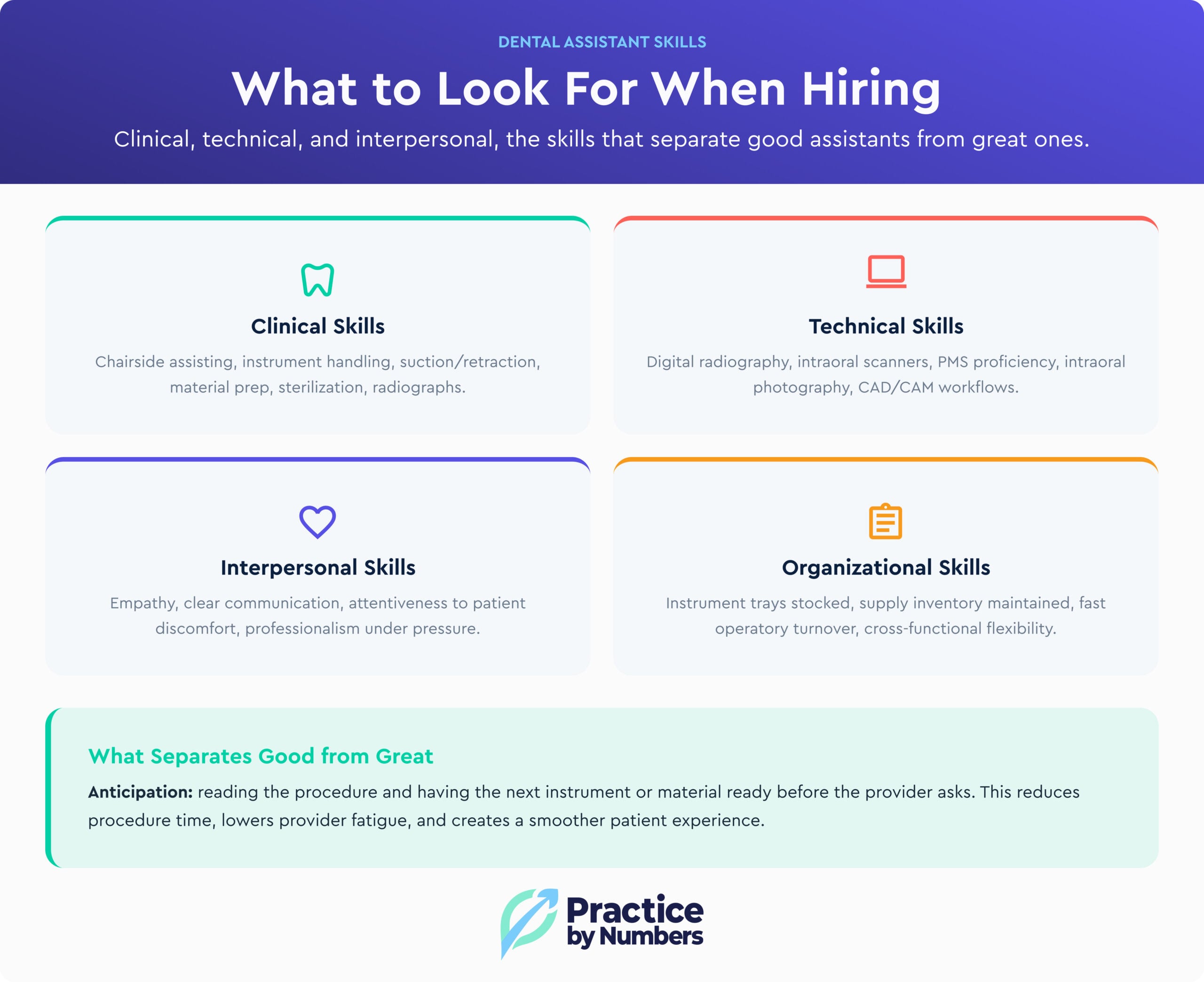
Clinical competence is the starting point. A dental assistant needs to be solid at chairside assisting for restorative, surgical, and hygiene procedures. That means:
- Handling and passing instruments properly
- Good suction and retraction technique
- Preparing materials like impressions, temporaries, cements, and composites
- Following sterilization and infection control protocols
- Taking and processing dental X-rays (where state rules allow)
What separates good from great is anticipation such as reading the procedure and having the next instrument ready before the provider asks. Assistants who anticipate shorten procedures, ease provider fatigue, and make the visit smoother for the patient.
Technical Skills for Modern Practices
Digital dentistry has raised the bar. On top of the traditional skills, look for:
- Comfort with digital X-ray systems and intraoral scanners
- Ease with practice software for charting and scheduling
- The ability to take and manage intraoral photos
- Familiarity with same-day restoration workflows, if your practice uses them
These skills are increasingly a must. Practices running digital workflows can’t afford to train assistants on basic technology from scratch. Candidates who already have these skills contribute much sooner.
People Skills That Shape the Patient Experience
Patients spend more time with the dental assistant than almost anyone else in the practice. The assistant seats them, preps them, stays with them, and often gives post-op instructions. That makes people skills as important as clinical ones.
Look for empathy and the ability to calm an anxious patient, clear communication in plain language, attentiveness to spot discomfort before the patient says anything, and professionalism when things get stressful.
An assistant who is clinically excellent but cold creates a mixed experience. One who is warm but clinically weak creates risk. The goal is both.
👉 See How Patient Relationship Management Boosts Practice Revenue
Organizational Skills
The best assistants help beyond the chair. They keep trays organized and stocked, watch supply inventory, keep sterilization running smoothly, and turn operatories over quickly between patients.
In smaller practices, assistants may also pitch in at the front desk, answering phones or confirming appointments. That flexibility is valuable when everyone needs to wear a few hats during busy stretches.
👉 Learn How to Secure Access Across Your Practice With Enterprise Security
Adaptability and Teamwork Are Increasingly Important
Dental practices evolve constantly.
New technology, changing workflows, staffing shifts, and growing patient expectations require assistants who can adapt quickly.
Look for candidates who:
- Accept coaching well
- Learn new systems quickly
- Collaborate effectively with providers and hygienists
- Support teammates during busy periods
- Remain flexible when priorities change
The most successful assistants are often those who view themselves as contributors to the entire practice rather than a single operatory.
How to Evaluate Skills During Hiring
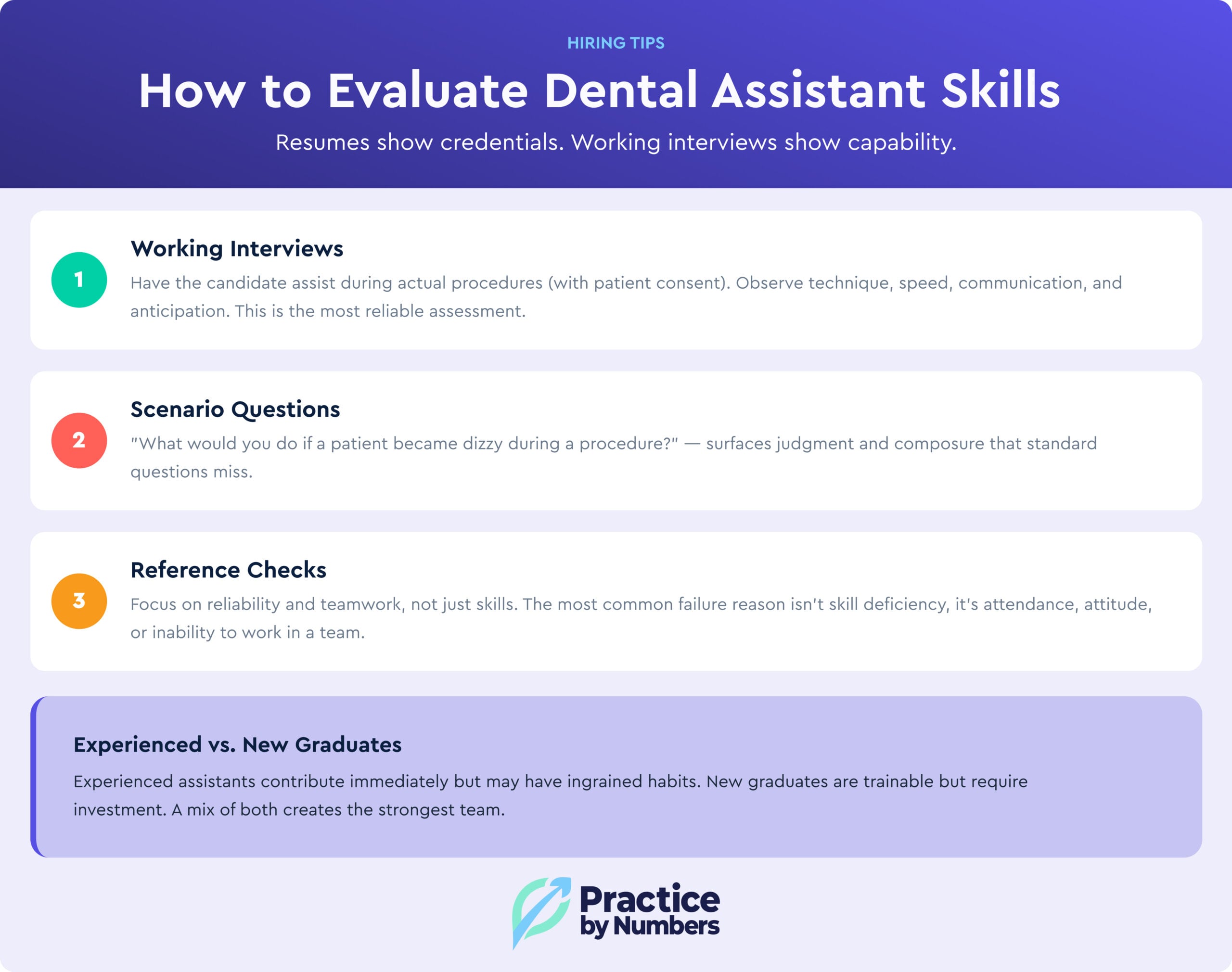
Working interviews tell you the most. Have the candidate assist during real procedures (with patient consent) and watch their technique, speed, communication, and anticipation. A resume shows credentials. A working interview shows what they can actually do.
Scenario questions reveal judgment. “What would you do if a patient felt dizzy during a procedure?” or “How do you handle a provider who’s running behind?” These surface composure that standard questions miss.
Reference checks should focus on reliability and teamwork, not just skill. The most common reason assistants don’t work out isn’t skill, it’s attendance, attitude, or trouble working with a team.
👉 See 10 Dental Practice Management Tips Every Office Should Try
FAQs
Q. Should I hire an experienced assistant or train someone new?
Both approaches can work. Experienced assistants contribute immediately but may require adjustment to your systems and culture. New graduates often require more training but can be easier to develop within your preferred workflows. Many practices benefit from maintaining a mix of experience levels.
Q. What certifications should a dental assistant have?
Requirements vary by state. The CDA (Certified Dental Assistant) credential from DANB is widely recognized. Many states also require radiology certification, and expanded-function certifications can allow assistants to perform additional duties depending on regulations.
Q. Which dental assistant skill is hardest to teach?
Anticipation is often considered one of the most difficult skills to develop. Clinical procedures can be taught, but the ability to read situations, predict provider needs, and stay ahead of workflows typically comes with experience and strong situational awareness.
Q. How do I retain great dental assistants?
Competitive compensation matters, but retention is also driven by workplace culture, recognition, career development opportunities, continuing education, and a clear path for professional growth. Assistants who feel valued are significantly more likely to stay long term.